
Reading view

People who are blind from birth never develop schizophrenia – what this tells us about the psychiatric condition
Reshetnikov_art/Shutterstock.com

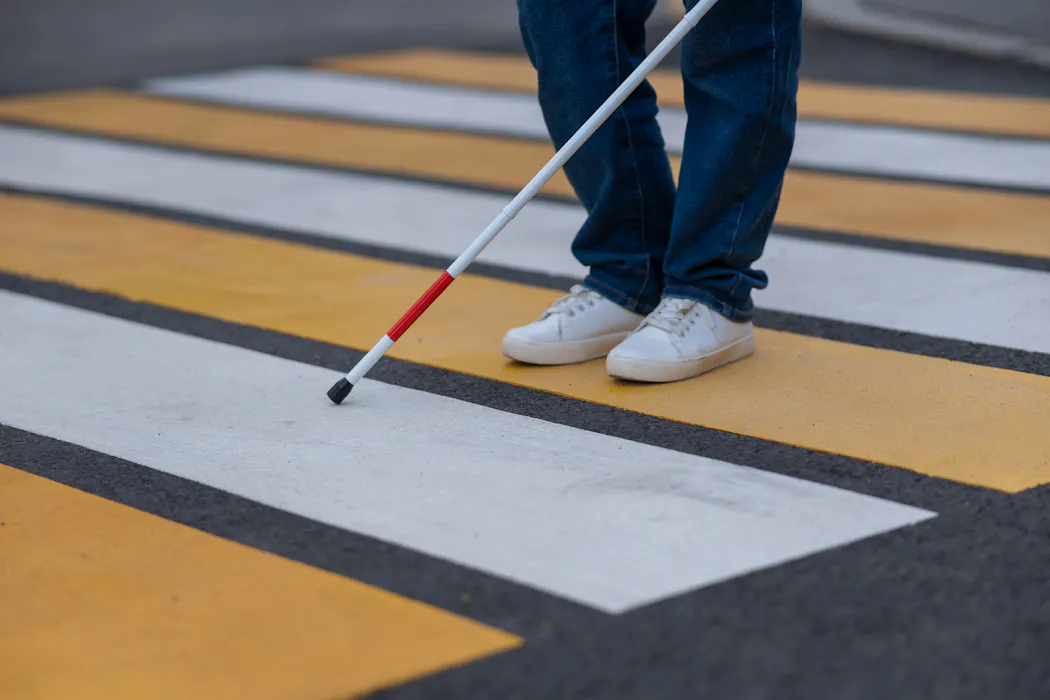
In 1950, two researchers noticed something that didn’t quite add up. Hector Chevigny, a writer who had lost his sight in adulthood, and psychologist Sydell Braverman were studying the psychological lives of blind people when they stumbled upon an intriguing pattern: schizophrenia, a serious mental illness affecting people across virtually every known society, appeared to be entirely absent in people who had been blind from birth.

The observation sat largely ignored for decades, held back by limited understanding of the disease and a lack of patient data. Then, in the early 2000s, large national health databases allowed researchers to follow entire populations from birth into adulthood, and the pattern held up.

The most rigorous evidence comes from a 2018 whole-population study tracking nearly half a million children born in Western Australia between 1980 and 2001. Of those, 1,870 developed schizophrenia, but not one of the 66 children with cortical blindness did.

That sample of blind children is small, but the pattern holds across more than 70 years of evidence: not a single congenitally blind person with schizophrenia has ever been reported. The protection seems to be specific to cortical blindness, which is caused by damage to the brain’s visual cortex.

People who lose their sight later in life, or whose blindness is caused by damage to the eyes rather than the brain, can still develop the condition. This makes it clear that blindness itself isn’t the deciding factor. Something specific about the visual brain is.

This might seem odd. Schizophrenia is most commonly associated with hearing voices or holding unusual beliefs, not with vision. But the explanation lies not in what people see, but in how the brain uses vision to make sense of the world.

Scientists now understand schizophrenia as, at least in part, a disorder of prediction. The brain is constantly generating expectations about its surroundings and checking them against signals from the senses. In schizophrenia, this process appears to go wrong. Weak or random signals are given too much weight. Coincidences feel significant. Thoughts can seem to come from somewhere outside oneself. The boundary between imagination and reality begins to blur.

A question of prediction

Vision plays a powerful role in shaping this system, particularly in early life. The visual cortex is one of the brain’s largest and most richly connected regions, involved not just in sight but in learning, attention and emotion. When it receives no input from birth, the brain develops differently. Brain imaging studies show that in people with congenital cortical blindness, this area is often repurposed for tasks such as language, memory and reasoning.

Some researchers believe this early reorganisation may offer a kind of protection. Without visual input generating a constant stream of ambiguous or unpredictable signals, the brain may settle into more stable ways of interpreting the world, reducing the risk of the misfiring predictions that characterise schizophrenia.

Timing matters enormously. Losing vision later in life, even in childhood, does not appear to offer the same protection. By then, the brain has already been shaped by years of visual experience.

None of this suggests that blindness could ever be a practical safeguard against schizophrenia. But it does open up new ways of thinking about the condition and potentially new ways of treating it.

Schizophrenia explained.

Most current treatments target brain chemistry, particularly the dopamine system. These drugs help many people, but they don’t work for everyone and can carry significant side-effects. If schizophrenia is partly about how the brain learns to predict and interpret reality, then future treatments might also address perception, learning, and how the brain weighs up uncertain information.

Research is now looking at drugs that act on glutamate, a brain chemical involved in learning and communication between nerve cells. Glutamate systems are particularly active in the visual cortex and in circuits that help the brain filter out what’s important from what can be ignored. These aren’t treatments based on blindness itself, but on what congenital blindness reveals about how a stable, well-organised brain develops.

The field is still at an early stage. But the hope is that by better understanding brain development from the very beginning, scientists might one day find ways to reduce the risk of schizophrenia or prevent its most severe forms from taking hold.

Nearly a century later, the curious observation that Chevigny and Braverman had accidentally made continues to shape how scientists think about one of the most complex and least understood medical conditions.

The Conversation

The authors do not work for, consult, own shares in or receive funding from any company or organisation that would benefit from this article, and have disclosed no relevant affiliations beyond their academic appointment.

  •  

The Bondi Beach terror attack mobilised a team of volunteer medics. Here’s what we learned

Warning: this article contains details of injuries sustained during a terrorist attack.

The 2025 Bondi Beach terrorist attack was different to other terrorism incidents. What stands out was the response.

Lifeguards, off-duty doctors and nurses, and members of the public worked alongside ambulance paramedics and community first-responders to triage and treat the injured. In all, 16 people died, including one of the gunmen.

I’m a paramedic, medical doctor, researcher and the clinical lead of Community Health Support – a volunteer medical first-responder charity set up by the Jewish community in Sydney. I had been training our teams for a disaster like this for four years, and helped co-ordinate the organisation’s emergency response at Bondi that day.

In a paper published in the Medical Journal of Australia, my colleagues and I describe how our organisation prepared for and responded to the Bondi attack, how we helped our community recover, and the lessons we learned.

How the day unfolded

At 6.42pm on December 14 2025 two gunmen began shooting at the crowd of about 600 Jewish community members celebrating Hanukkah at Bondi Beach in Sydney.

Within minutes, 000 emergency lines were overwhelmed with callers.

At the same time, people sheltering from the bullets began applying first aid to their injured friends and family.

Local lifeguards and volunteer lifesavers rushed to the aid of the 42 injured survivors who ended up going to hospital, and the many more who were treated at the scene. Doctors, nurses and good samaritans, who just happened to be nearby, also responded. These so-called spontaneous or “zero responders” arrived before “first responders” such as ambulance crews, Community Health Support medics, and police.

Two minutes after police declared the scene safe to enter, the forward commander for Community Health Support entered the scene with the first few paramedics from NSW Ambulance. He radioed it was safe for our team of 19 responders, about 500 metres away, to follow him in.

Here’s what we learned as we helped triage and treat survivors at the scene.

Map of Bondi Beach showing positions of perpetrators, victims and emergency responders.
This map provides an overview of the attack and response. CHS, Community Health Support; EOC, Emergency Operations Centre; NSWA, New South Wales Ambulance. MJA, CC BY-NC-ND

Terror attack injuries are different

Sadly, the events at Bondi confirmed what experts had recently begun to suggest. The pattern of injuries we see in terror attacks are different to those typically seen in war zones, despite the same weapons being used.

Soldiers wear ballistic vests and helmets, so when they are shot, it is usually in the arms and legs.

When civilian victims are shot in a terror attack, it is more likely in the torso and head, making these injuries more deadly. This pattern of injuries also makes it much harder to stop life-threatening bleeding.

For heavily bleeding limbs, a specific type of tourniquet can be lifesaving. This arterial tourniquet is a bandage-like device with a windlass (winding rod) in the middle to tighten it and compress the artery.

These devices became widely used during the Iraq and Afghanistan wars and became synonymous with military medicine.

All Community Health Support responders and ambulance paramedics carried these tourniquets in their medical kits at Bondi. Unfortunately, tourniquets can’t be improvised using belts or clothing – these just don’t work. Very few arterial tourniquets were needed because of the injury pattern of civilian terrorism.

For patients with penetrating trauma to the torso, the only definitive treatment is to get them into an operating theatre without delay.

We had to prioritise

Community Health Support volunteers and NSW Ambulance paramedics are trained in triage during mass casualty incidents, such as a terror attack. This system prioritises who to treat first to save the most lives in the short time before patients can bleed to death.

To an outsider, this may sound harsh, but we typically don’t do CPR (cardiopulmonary resuscitation) during mass casualty incidents where people have been shot or stabbed.

Community Health Support volunteer
All Community Health Support responders carried arterial tourniquets but few were needed on the day. Author provided/CHS

That’s because CPR works when someone’s heart is the first organ that has stopped, or someone’s stopped breathing from lack of oxygen. Unfortunately, when there’s no blood to circulate due to bleeding out from a gunshot or stabbing, CPR is mostly futile.

We found it was emotionally difficult to keep treating the highest priority patients when others were asking for help to resuscitate victims, despite the unsurvivable nature of their injuries.

Ambulance services use a traditional triage tag system for mass casualty incidents. Patients are tagged with a red tag if critical, yellow for urgent, green for walking wounded, and black for deceased.

However, we felt it was psychologically harmful to ask our volunteers to potentially tag their own friends and family members as “deceased”. Instead, in preparation for mass casualty incidents like this, we implemented the “ten second” triage system from the United Kingdom. This is where patients are triaged faster (in about ten seconds), and tagged as “not breathing” rather than “deceased”.

These people are placed on their side until there are enough trained medical responders to go back and consider CPR (after prioritising living patients with major bleeding).

We faced unknown risks

Within an hour of the shootings starting, police found several undetonated improvised explosive devices (homemade bombs) and began moving patients and rescuers away.

This turns on its head the traditional idea adopted during the Cold War to classify zones as hot, warm or cold. Back then, these labels categorised the level of risk to rescuers entering an area where a nuclear or chemical weapon had detonated. This thinking, of categorising areas based on an unchanging perception of risk, has continued to this day.

But it suffers from one small drawback: terrorists don’t play by the rules, and situations change rapidly.

We suspect these homemade bombs could have been used to inflict more injuries to responders rushing in to help the wounded. In the past, such second waves of terror attacks have specifically targeted first responders.

So in the future, we need to think of risk as something that changes and comes in “phases”, rather than simply in terms of zones. It means emergency responders need to be on constant alert, and keep teams in reserve in case there are other nearby attacks.

Reflections for the future

It is essential communities prepare themselves for disasters. Thanks to preparation, our responders, the ambulance teams, and local hospitals rose to the occasion on an extremely difficult day.

As we reflect on lessons learned, we continue to share these with our colleagues in disaster medicine globally.

We hope our lessons go some way to helping the next community prepare for tragedy when it inevitably strikes.

The Conversation

Dr Aidan Baron was the medical incident controller for the Jewish community on the day of the Bondi Beach attack, and is the clinical lead with Community Health Support.

  •  
❌