Reading view

The cradle of Earth’s rich ocean life was a massive coral reef system 20 million years ago
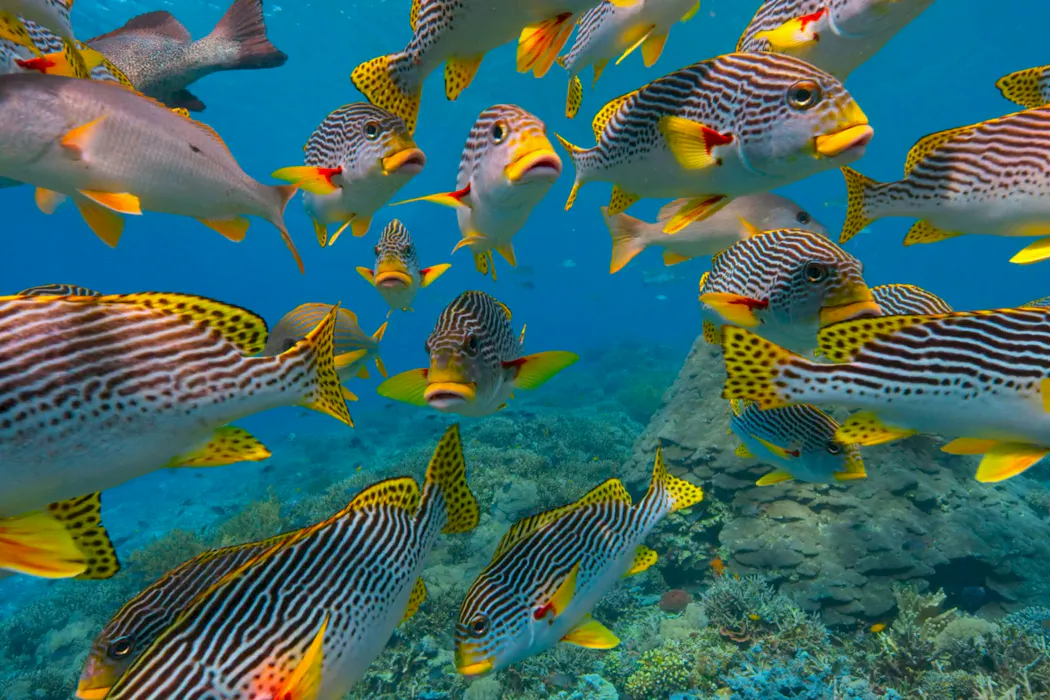
Oleksandr Sushko/Unsplash

New research published today in Science Advances reveals that the largest expansion of coral reefs in the past 100 million years happened about 20 to 10 million years ago, between Australia and Southeast Asia.

This vast reef system likely laid the foundations for the extraordinary diversity of marine life we see today.

Coral reefs are among the most diverse ecosystems on Earth. They support about a quarter of all marine species while covering less than 1% of the oceans. Yet scientists have long grappled with the question of how such immense diversity arose in the first place. Where did it begin, and what made it possible?

Our new study uncovers a turning point deep in Earth’s history – a time when reefs didn’t just grow, but expanded on a scale far beyond anything we see today. This expansion may have created the ecological space needed for modern coral reef life to flourish.

Coral reefs are major biodiversity hotspots. Ahmer Kalam/Unsplash

An enduring mystery

Biodiversity simply refers to the variety of life in a given place. On coral reefs, this diversity is staggering: thousands of species of fish, corals and other organisms coexist in tightly packed ecosystems.

However, despite decades of research, the origins of this richness have remained an enduring mystery.

Our new study reveals that changes in environmental, biological and tectonic conditions about 20 million years ago promoted the dramatic expansion of coral reefs across a region stretching between Australia and Southeast Asia.

Today, this area is known as the Indo-Australian Archipelago. It’s recognised as a global hotspot of marine biodiversity, especially in an area called the Coral Triangle.

The expansion of reefs in this area coincided with the emergence of many familiar reef organisms, including plating corals and iconic fish groups like parrotfishes.

To uncover this, we combined evidence from geological records, fossils and genetic data. Together, these independent lines of evidence allowed us to pinpoint when and where modern reef biodiversity began to take shape, without relying on any single source alone.

Results suggest reef expansion itself played a crucial role in generating biodiversity. As reefs grew larger, they likely created new habitats and ecological opportunities, allowing species to evolve and diversify.

We have now named this ancient network of reefs the Great Indo-Australian Miocene Reef System. The large reefs in this system were mostly built by corals and crustose coralline algae, an essential group of algae for holding together reef structures. These reefs also provided very important habitat for fish groups that we see on coral reefs today, such as surgeonfishes and butterflyfishes.

Remnants of an epic reef

Surprisingly, the region where this expansion occurred is not where the largest reefs are found today. Instead, reefs off northwestern Australia – including Ashmore Reef, Scott Reef, and the Rowley Shoals – may be remnants of what was once one of the largest reef systems to have ever existed.

Previous geological work has shown this ancient west Australian barrier reef rivalled the extent of the present-day Great Barrier Reef. The new findings go further, suggesting individual reefs within this system may have been far larger than any modern reef.

Remnants of one of the world’s largest coral reef ecosystems are dotted along the north-western coast of Australia today. Google Earth

In fact, the roots of modern marine fish and coral biodiversity may lie in this unexpected place off Australia’s west coast. Over millions of years, biodiversity spread and accumulated elsewhere, particularly across the Indo-Pacific Ocean.

However, there are still uncertainties. Reconstructing ecosystems from millions of years ago requires combining incomplete records. Some aspects of reef size and how these ecosystems connected remain difficult to resolve, as the geological record only contains the remnants of entire reef systems.

But the overall pattern is clear. A massive expansion of reefs about 20 million years ago coincided with the rise of modern marine diversity.

The message is also simple. To understand where biodiversity is today, we need to look deep into the past. The richest ecosystems on Earth may owe their origins to places that no longer appear exceptional – hidden chapters of Earth’s history that continue to shape life in our oceans.

Coral reefs support thousands of species in a small area. Francesco Ungaro/Unsplash
The Conversation

Alexandre Siqueira receives funding from the Australian Research Council through a DECRA Fellowship.

  •  

Sending women to the ‘Khia Asylum’ is music’s latest cruel trend. But it reflects an old historical bias

Jordan Strauss/AP, Amy Harris/AP, Evan Agostini/AP, Richard Shotwell/AP, The Conversation

What do Bebe Rexha, Katy Perry, Meghan Trainor and Rita Ora all have in common? They’re all trapped in the “Khia Asylum”.

The Khia Asylum (pronounced “kye-ah”) is a metaphorical space carved out for famous music artists – primarily women – who have lost their so-called public “relevance”. The name references American one-hit wonder Khia, known for her 2002 track, My Neck, My Back (Lick It).

On one hand, the Khia Asylum falls into the category of post-modern digital playfulness: its associated content is highly ironic, cynical and at times brain rot adjacent.

On the other hand, it’s a gendered pejorative that mirrors the historical pathologising of women who, in one way or another, don’t meet society’s impossible expectations of them.

While male artists enjoy more freedom to fail, or spend time away from the limelight, their female counterparts are dubbed “flops” for doing the same.

Once someone has entered the “asylum”, escape is usually only possible through significant commercial success, or a dazzling re-brand.

A symptom of toxic fan culture

The Khia Asylum phenomenon is said to have emerged out of “Stan Twitter” (now X) in 2024.

This is an organised subculture made up of a range of fandoms, including Beyonce’s Beehive, the BTS Army, and extreme wings of the Swifties and Beleibers. The term “Stan” – inspired by Eminem’s song of the same name – signifies extreme fandom and devotion.

Despite these origins, however, the Khia Asylum has taken on new life on TikTok as part of “floptok”. Members of floptok are said to live on the (also metaphorical) island of Floptropica, where the Khia Asylum is located, and where “flops” are satirically celebrated.

The floptok community ultimately decides who is placed in the asylum, but there are some general guiding principles. Mainly, an eligible artist should be someone the general public is aware of, but simply doesn’t care about.

Bebe Rexha is an oft-cited example. Rexha achieved a considerable fame around 2015 to 2018, for songs such as Me, Myself & I, I’m A Mess and Meant to Be. But she has since dropped out of the mainstream, and most people are now indifferent to her next career move.

Where are all the men?

The Khia Asylum itself is overwhelmingly gendered, both in its origins and its focus on female artists. It reflects the cruel nature of the online attention economy, in which women disproportionately face the threat of irrelevance.

While the asylum does have a “male wing”, it functions differently. The male members of the asylum, which include Gotye and B.o.B., aren’t scrutinised to the same extent.

Moreover, the career slumps of artists such as Justin Timberlake and Justin Beiber could easily be topics of conversation on floptok, but rarely are. Bieber’s recent Coachella set came after a four-year break from touring, yet he wasn’t dubbed a flop.

Meanwhile, Mariah Carey – who has won six Grammys and sold more than 200 million albums – is cyclically in the Khia Asylum. According to Floptok Wiki:

She is also a Flop goddess with celestial abilities and divine singing power […] She is known to bless everyone from November to December 26th with Christmas joy until she goes back into hibernation.

The ‘hysterical’ woman trope

The Khia Asylum by its very name latches onto a longstanding institutional practice of associating women with mental instability.

As far back as Ancient Greece, men have pointed to the female body as the source of irrational and unstable behaviour.

Hippocrates, “the father of medicine”, helped spread the theory of the “wandering womb”. This claimed the uterus could detach itself and wander around a woman’s body, causing various medical afflictions, and “hysteria” – a false diagnosis characterised by symptoms such as anxiety, fainting, depression and strong emotions.

French theorist and historian Michel Foucault (1926–84) identified a shift in how madness was perceived in the mid-17th century, during a period he called the “Great Confinement”. While previously treated as a quirk, madness was being redefined as a social problem that needed to be removed from “sane” society. This led to the birth of asylums.

Foucault also explains how, in the 18th and 19th centuries, it became common to view the female body as highly sexual, and therefore fragile. This fragility could cause a range of symptoms that typified hysteria – but really just represented behaviours that men found undesirable. It became the norm to institutionalise women with hysteria.

Foucault saw the “hysterization” of women as a means to control the female body through medical study. Similarly, the Khia Asylum can be seen as a means to control female artists through social critique.

Escaping the asylum

Escape from the asylum is possible; some artists such as Madonna and Dolly Parton have pardons.

Several artists currently in the asylum have releases coming up this year, with the floptok community framing these as “parole hearings”. A single song might be sufficient for escape, such as Sabrina Carpenter’s 2024 breakout track Espresso.

Zara Larsson recently claimed her freedom on the back of her 2025 album Midnight Sun.

Another notable escapee is Charlie XCX, whose 2024 album Brat made her “the moment” of pop culture.

Some artists in the asylum, such as Bebe Rexha, have leaned into the label. But doing so has only kept her trapped. It seems the more you want out, the more floptok thinks you deserve to be there.

The Conversation

James Hall does not work for, consult, own shares in or receive funding from any company or organisation that would benefit from this article, and has disclosed no relevant affiliations beyond their academic appointment.

  •  

‘I don’t believe no screens is possible’: how parents manage devices and little kids

Vanessa Loring/ Pexels

Parents are told to avoid screens altogether in the first two years of a child’s life.

At the same time, digital devices are part of everyday family life used for communication, work, learning, and at times, simply getting through the day.

Our new research talks to first-time parents about how they navigate – or try to navigate – this tricky time.

What is the guidance on screen use?

Australia’s national 24-hour movement guidelines recommend no screen time for children under two and a maximum of two hours for children over five.

Advice from prominent bodies such as the World Health Organization are similarly clear about limiting screen use for children.

As well as concerns about children being too sedentary, this advice comes amid ongoing research about the potential harms of too much screen use. These include sleep problems, language delays and social-emotional issues.

However, this rigid health advice conflicts with education guidelines that children are introduced to – and gain skills in – digital technologies before they start school.

There is also a growing understanding among researchers that strict guidelines around screen use are not compatible with real life and can be confusing to parents.

In January 2026, the American Academy of Pediatrics issued a new policy statement noting both concerns about screen use but also potential benefits if the content is good quality and appropriate for children. The academy argued we cannot view children’s media use through the lens of “screen limits alone”.

Our research

Our study wanted to understand how first-time parents interpret and apply screen use guidance in the early years.

This is a group navigating a steep learning curve. Without prior experience to draw on, many rely heavily on external advice while also feeling pressure to make the “right” decisions.

Our study involved 23 Australian parents of children aged under four, recruited via social media and community advertising. Parents’ views were sought via interviews and focus groups.

What we found

Parents reported a variety of interpretations of screen time recommendations. For some, it was about strict adherence. Evangeline* (mother of a six-month-old) shared her firm stance on restricting screen use:

I don’t want her to be using a phone or using an iPad or even watching TV until she’s at least a couple of years old.

Others took a more flexible stance, depending on their household’s needs. Chad (father of an 18-month-old) explained

I don’t believe no screens is possible […] I believe that probably using screens for a large period of time is a problem, but I also don’t necessarily think that if the TV’s on for 15 minutes occasionally that that’s going to break the world either.

The quest for sanity

Parents in our study spoke about using screens to stay in touch with family and to manage competing demands such as preparing meals, caring for multiple children, or simply taking a moment to reset. So while “clear guidance” around screens was valued, strict rules were often not feasible in practice.

Parents expressed frustration that current guidelines oversimplify the issue as “no screens” versus “screens”. As Carmela (mother of a 17-month-old) told us:

I can’t just sit looking after a baby for the entire time. You’ve got to have some sanity. I think most parents now are going that way but feel guilty for it.

Yann (mother of a six-month-old) wanted guidelines that acknowledged the realities of family life today.

it’d be nice to say ‘okay, well, realistically [the] majority of you are going to use screens under 18 months, what are some guidelines? Here’s some shows we might recommend.’

Chad also wanted more clarity on what the overarching problem was with a limited amount of screen use in infancy.

What’s the actual risk factor here? […] ‘cause if my son’s really unhappy and you turn on the TV for 15 minutes […] and then he’s happy for the next four hours, is that really worse than being unhappy?

These reflections highlight the gap between expert recommendations and real-world parenting.

Parental guilt

Parents described the emotional weight of decisions about screen use and their kids.

Many were already using screens in their homes but felt guilty about doing so. Social media and parenting groups often intensified these feelings. Managing children’s screen use was not just about following advice but about navigating judgement, uncertainty and the tension between ideals and real life.

Or as Natalie (mother of a three-year-old) told us, she didn’t want to hear more social media opinions on the matter.

I don’t want to get 100,000 voices out there giving me their responses to add to the parental guilt and the parental angst.

What can parents do?

Our research suggests parents do not necessarily need more rules. They need more support to help them make informed decisions.

Parenting decisions are shaped by context, including children’s needs, family routines, work demands and available support. Parents need guidance that reflects this complexity.

This means moving towards more balanced, practical advice, focusing less on how long children spend on screens, and more on how they are using them.

For parents, research shows its important to:

  • focus on what kind of content your child is consuming. Is it designed for children? Is it developmentally appropriate? Does it invite thinking, creativity, or learning?

  • are they watching alone, or with another adult or sibling? Are there opportunities to talk, ask questions, or connect with what they’re seeing? Co-viewing supports language development and comprehension.

  • does it help your child connect with others (for example, their family or peers), or engage actively (for example by responding to or participating in what they are seeing)?

Improving support is not about telling parents to do more or less. It is about offering guidance that helps families make informed, thoughtful choices about screens based on their individual child, their context, and what works in their everyday lives.

*names have been changed.


Read more: Why parents need to be like Big Ted and ‘talk aloud’ while they use screens with their kids


The Conversation

Stephanie Milford does not work for, consult, own shares in or receive funding from any company or organisation that would benefit from this article, and has disclosed no relevant affiliations beyond their academic appointment.

  •  
❌