Reading view

Denmark’s ‘hands-off’ approach to parenting could offer a blueprint for raising more resilient, self-reliant kids

Children play at Copenhagen's Superkilen Park. In Denmark, parents generally give their kids wide latitude to explore, use tools and push boundaries. Lorie Shaull/Wikimedia Commons, CC BY-SA

Much has been written about Denmark’s consistently high scores in global happiness rankings, so it might not come as a surprise that Denmark is also rated the best place to raise children, according to U.S. News and World Report. The small Scandinavian nation also scores near the top for child well-being, a measure of physical health, mental health, education and social relationships.

Government policies like generous parental leave, robust public investment in education and universal healthcare have certainly played a role in these rankings. Danes also score high on social trust, with 74% of Danes agreeing that most people can be trusted, whereas only 37% of Americans say the same.

But another factor could be contributing to Danish children’s well-being: They’re often encouraged to take part in risky, unstructured play.

This might seem at odds with a parent’s desire to do what they can to keep their kids safe. But as a native of Denmark and a psychologist, I’ve explored how the country’s hands-off parenting style may be one key to raising more resilient, self-reliant kids.

The benefits of unstructured play

Danes have two words for the English word “play.” There’s “leg,” which refers to unstructured play; and “spille,” which is used for games or activities with pre-established rules, such as playing soccer, chess or the violin.

Each type of play has benefits. But studies have shown that unstructured, spontaneous play requires more compromise and creativity, since kids have the freedom to change or make up the rules. Children learn to take turns and work through problems – skills that are harder to develop when adults step in or when the rules are predetermined.

Then there’s risky play, a form of unstructured play that involves exciting activities with a possibility of physical injury. On a playground, this might mean climbing tall towers, going headfirst down a slide or roughhousing. Off the playground it might involve building a fire, swimming, biking or using tools like saws, hammers and knives.

Norwegian early childhood education researcher Ellen Beate Hansen Sandseter pioneered the study of risky play. She’s explored its evolutionary functions – specifically, how it helps children become competent, independent adults. Other researchers have shown that risky play boosts mental health by teaching children to be more resilient and manage their emotions.

Positive risks vs. negative ones

When it comes to risky play, it’s useful to distinguish between positive risks and negative ones.

On a playground, a positive risk is a challenge that a child can recognize and decide to take. They can weigh if they want to try a zip line, or determine when they’ve reached their limit while ascending a climbing net for the first time. The goal is for the child to explore boundaries and learn to manage emotions like fear and anxiety. Sure, there’s the risk of scrapes and bumps. But success can breed more self-confidence.

A negative risk, on the other hand, is a danger that the child does not have the experience or knowledge to foresee. Using playground equipment that has rotted wood, wielding a tool like a drill without proper instruction or swimming in rapids could lead to serious accidents without any learning benefits.

Many playgrounds in Denmark are designed to encourage positive risks. The country has become known for its junk playgrounds, the first of which was created during World War II. These are play areas built with discarded tires, boards and ropes instead of fixed equipment. Kids are often given access to tools so they can build structures and remake the space on their own terms.

The point ultimately isn’t to put kids in harm’s way. It’s to let them explore on their own, test their limits and try new things.

The competent child

Of course, no parent wants to see their child get injured. But research suggests that Danish parents and American parents have distinct perceptions of risk – and different thresholds for what they consider dangerous.

One study compared U.S. and Danish mothers’ reactions to pictures showing a child engaged in 30 different types of play, such as sledding, biking, using a saw to cut wood and climbing a tall tree. It found that Danish mothers, on average, were more likely to say that they would be comfortable with their own child in these situations. In subsequent interviews, Danish mothers were also more likely to talk about practicing risky activities with their kids, such as how to use tools. (One described how she showed her 5-year-old to use an axe to chop wood.)

In fact, Danish daycares often teach children how to use a sharp knife, with some handing out knife diplomas once children have learned the skill. Learning how to ride a bike, meanwhile, can be practiced on what are known as “traffic playgrounds,” which have child-sized streets, bike lanes, traffic lights and signs.

This difference in risk tolerance could stem from differences in parenting approaches. Danish parents see their children as innately competent, meaning they trust their ability to navigate risks and challenges. Adults, in turn, try to create environments for these natural competencies to flourish; they work to encourage cooperation instead of using control.

In contrast, American parents are more likely to see kids as vulnerable and in need of protection. Mental health is a major concern, with 40% of American parents extremely or very worried that their child will suffer from anxiety or depression at some point, according to a 2023 Pew Research Survey. Somewhat ironically, kids who have less independence are more likely to have mental health challenges.

A Danish kindergarten where days are spent exploring the forest.

When permissiveness goes too far

Letting kids take the lead can work well, but sometimes they can’t see or anticipate certain risks.

Danish youth, for example, drink more alcohol than their European peers. A recent survey showed that almost 7 out of 10 Danish ninth grade students had consumed alcohol in the last month, and 1 out of 3 had been drunk in the past month. One study found that Danish parents who are stricter about alcohol consumption are less likely to have teens who frequently drink. Danish culture, overall, has a very permissive attitude toward drinking alcohol, so those parents are few and far between.

Furthermore, Danish 10-year-olds have among the highest rate of smartphone ownership in the world, even as studies have shown that smartphone ownership among children is associated with higher rates of depression, stress and anxiety, as well as less sleep.

But these statistics don’t relate to risky play, which even emergency physicians and nurses champion. Instead, they show how permissive parenting styles can sometimes have negative effects.

The benefits of risky play – like learning to tolerate failure, distress and uncertainty – aren’t just important parts of being a kid. They’re important parts of being human.

The Conversation

Marie Helweg-Larsen has received funding from the National Institutes of Health.
  •  

Potential signs of life on distant planets sound exciting – but confirmation can take years

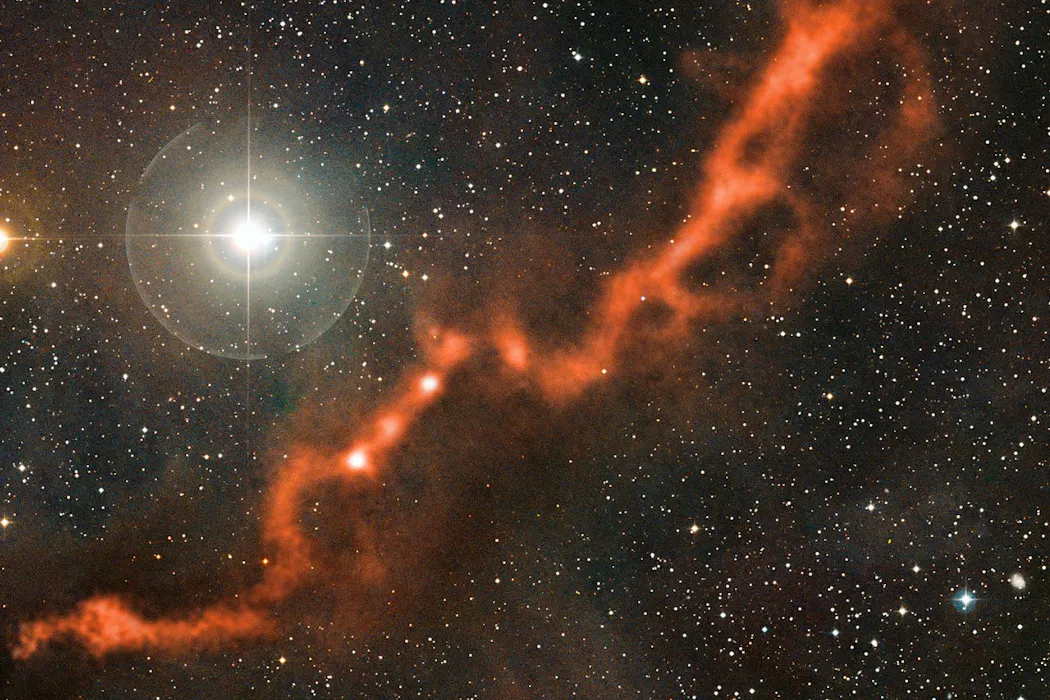
The Taurus molecular cloud is a relatively close star-forming region at 450 light-years away. It has been the site of many astromolecule discoveries. European Southern Observatory

Astronomers can use telescopes to find specific molecules in the atmospheres of neighboring planets, in nebulae – clouds of interstellar dust and gas – hundreds or thousands of light-years away, or in galaxies beyond the far reaches of the Milky Way.

So far, astronomers have found more than 350 molecules in the spaces between and around stars in just under a hundred years – the first such molecule was reported in 1937. Each year, the cosmic chemical stockroom grows by anywhere from a handful to a couple of dozen new finds. Many of these molecules are precursors to biomolecules, meaning they might provide hints about life’s origins elsewhere in the cosmos.

As an astrochemist, my research is all about chemicals found in space, especially in distant cosmic clouds where infant stars are born. Even so, the precise observations captured by these telescopes never cease to amaze me.

With this ongoing boom in astrochemical census data, there is a lot to be excited about. Sometimes, however, this excitement can be premature. Finding molecules in places people will likely never visit is no simple task, so vetting and sometimes correcting these observations is a continual process – especially for molecules whose signals aren’t as strong.

‘Seeing’ molecules in space

Astronomers can’t visit neighboring planets, let alone distant star-forming regions. So, how do they see what is out there?

Astronomers observe the cosmos with telescopes that collect all different wavelengths of electromagnetic energy. For astrochemistry, they typically use radio telescopes. These satellite-dishlike instruments are used to “see” radio waves, which have wavelengths much longer than the human eye can perceive.

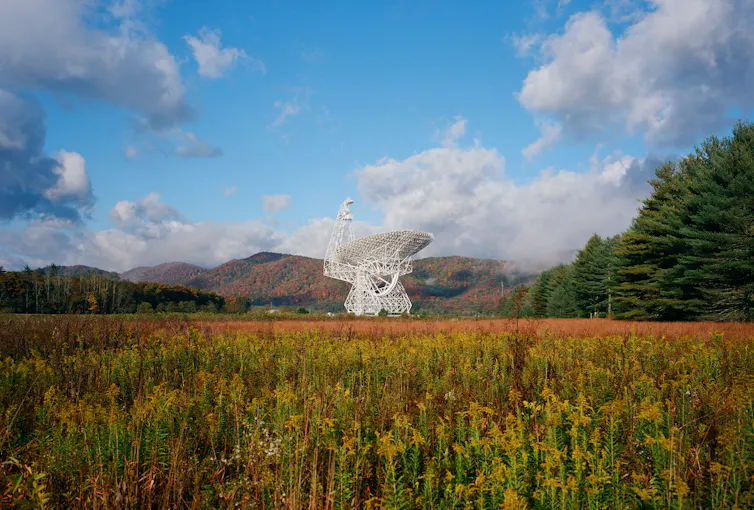
Large white radio telescope at center with cloudy blue sky overhead and orange, green, and yellow field in the foreground. Mountains are in the background, and a crop of trees are to the right of the image.
The Robert C. Byrd Green Bank Telescope in West Virginia is a radio telescope that has been used in the discovery of many astromolecules. NSF/AUI/NRAO/John Stoke, CC BY

When molecules freely tumble around as gases in space, they rotate, and this motion releases energy in the form of photons, or electromagnetic particles. Different types of rotations require different levels of energy. Each photon carries that energy with it to a telescope, which records its signal. The more photons of a given energy, the stronger that signal.

If a radio telescope records all of the expected signals for a given molecule – its spectrum – then astronomers can confidently say that they have detected that molecule.

Infrared telescopes, such as the James Webb Space Telescope, or telescopes that detect visible light, such as the Hubble Space Telescope, can also be used for astrochemistry. Both kinds of telescopes, however, collect chemical signals, which are often more difficult to distinguish from one another.

Knowing what to look for

Behind every discovery of a new molecule in space is months or even years of work to capture a chemical’s “fingerprints,” or its spectrum.

I spent about a year doing this kind of work at the University of Cologne in Germany as a Fulbright research fellow. There, I used computer models of astrophysically interesting chemicals to predict what their spectra would look like.

In the lab, I injected the chemicals into a glass tube held under vacuum to mimic conditions in space. Using sensitive instruments, I recorded what a radio telescope would see if it were looking at only that molecule.

Astronomers had already found some of these molecules in space, and my colleagues and I were reexamining them, but we were also looking at molecules that we predicted might exist somewhere in space.

I worked with a team of scientists to adjust the computer inputs over and over until the simulated spectra matched the experimental data. When simulated spectra matched the experiments, that meant that the simulated spectra reliably modeled what a molecule’s fingerprint looks like in space. Reliable model spectra allow astronomers to detect chemical features at frequencies beyond what they can measure in the laboratory.

While my contributions to the Cologne team didn’t lead to a discovery of a new molecule in space, I gained an appreciation for the work behind the scenes of molecule discovery. The laboratory measurements are done precisely so that astronomers can be confident in their detections.

When detections get cloudy

Even with powerful radio telescopes and thorough experiments, some detections aren’t quite as clear as astronomers would like them to be. Sometimes, the signals are too faint for astronomers to be totally confident that they represent the molecules they think they do. Other times, there are too many molecule signals crowded together, causing different signals to blend.

Scientists have detected molecules relevant to biological processes back on Earth in comets and the atmospheres of other planets. These detections are exciting, but most scientists exercise caution to avoid jumping to conclusions because those molecules generally can exist outside of living things.

Sometimes, however, the excitement overshadows the caution and leads to premature conclusions.

Scientists often get excited when new molecules, especially biologically relevant molecules, are potentially present, and they want to share those findings with the world. Some researchers are also concerned about being the first to publish a new result, especially because a lot of telescope data is publicly available after a brief proprietary period.

Perhaps one of the most exciting nondiscoveries in astrochemistry was that of glycine in interstellar space more than 20 years ago. Glycine is the simplest amino acid, a type of molecule essential for life as we know it. Finding this molecule in a nebula would change how scientists think about the evolution of life’s ingredients.

Follow-up studies showed that key signals were missing in the initial report of glycine. As a result, astrochemists now generally agree that glycine had not been found in star-forming nebulae.

Pink and purple infrared images of dust in Sagittarius B2 captured by JWST
This is a mid-infrared image of Sagittarius B2 captured by the James Webb Space Telescope. Sagittarius B2 is a molecule-rich region of space and one of the places scientists thought they had observed glycine before that claim was refuted. NASA, ESA, CSA, STScI, A. Ginsburg (University of Florida), N. Budaiev (University of Florida), T. Yoo (University of Florida). Image processing: A. Pagan (STScI), CC BY

More recently, another molecular discovery has been scrutinized: the potential detection of phosphine in Venus’ atmosphere. Unlike with glycine, scientists have not yet agreed on whether phosphine, which is associated with some biological processes on Earth, is indeed present on Venus.

Initial reports of phosphine on Venus spurred chatter about biosignatures and evidence of potential life on Earth’s much hotter sister planet. However, follow-up studies by other scientists couldn’t confirm the initial results.

Over the past five years, scientists have continued to try to confirm or definitively refute Venusian phosphine.

Vetting claims

When reading about discoveries of new molecules in interstellar space or on other planets, how can you be confident in the detections you are reading about? It’s important to watch out for flashy headlines that claim signs of life have been found elsewhere in the universe. Molecule discoveries that rely on only one or two signals being detected are generally less reliable than those based on five or more signals.

For discoveries that tease hints of life on other worlds, other scientists are almost certainly going to try to reproduce the results. If you wait a few months for the initial fanfare to die down, you can do a web search to see what new results have come out to support – or refute – the original claim.

The Conversation

Olivia Harper Wilkins receives funding from NASA and the National Radio Astronomy Observatory (NRAO).

  •  

Why Trump can’t just decree changes to voting by mail – a former federal judge explains how the president’s executive order is ‘a solution looking for a problem’

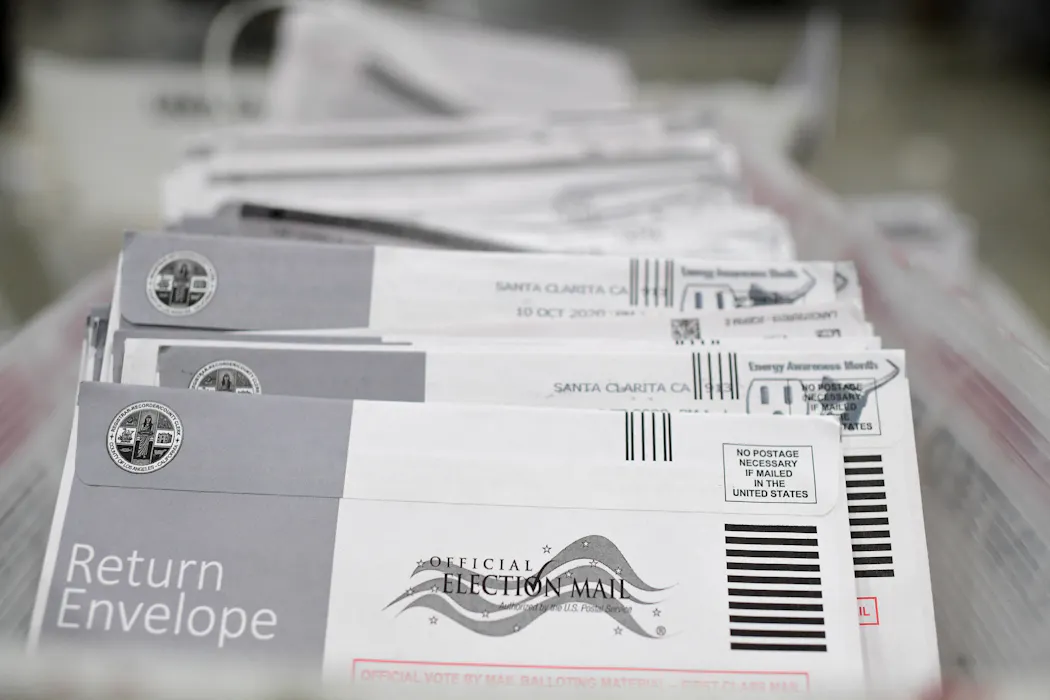
Mail-in ballots in their envelopes await processing at the Los Angeles County Registrar-Recorder's mail-in ballot processing center in Pomona, Calif., on Oct. 28, 2020. Robyn Beck / AFP via Getty Images

John Jones knows about voter suppression. Currently the president of Dickinson College, Jones – nominated in 2002 by President George W. Bush and confirmed unanimously by the U.S. Senate – served for almost two decades as a federal court judge. In that role, Jones presided over a case, filed just prior to the November 2020 presidential election, in which a conservative legal foundation sued Pennsylvania’s top election official, alleging that she had allowed 21,000 dead people to remain on the voter rolls. The group asked Jones to stop those people from voting.

Jones denied the request. “In an election where every vote matters, we will not disenfranchise potentially eligible voters based solely upon the allegations of a private foundation,” he wrote in his memorandum on the case. In this interview with The Conversation politics and legal affairs editor Naomi Schalit, Jones discusses President Donald Trump’s March 31, 2026, executive order to wrest control of mail-in voting from states and give it to the U.S. Postal Service and the Department of Homeland Security; how the constitutional design of U.S. voting bars such federal control; and how Trump’s order would disenfranchise voters and is now the subject of lawsuits by voting rights groups and 23 states.

Article 1, Section 4, of the Constitution says, “The Times, Places and Manner of holding Elections for Senators and Representatives, shall be prescribed in each State by the Legislature thereof; but the Congress may at any time by Law make or alter such Regulations.” When you saw the executive order by the president, what did you think?

My first thought was, this executive order is dead on arrival. It assumes two problems that really don’t exist.

States are empowered under Article 1, Section 4, of the Constitution to conduct elections and set the time, place and manner of those elections.

The president’s March order asserts that states don’t maintain active and appropriate voter rolls. That’s just not true. State after state takes that very, very seriously, and it’s a principle of federalism that states are given the responsibility for conducting elections. This includes maintaining accurate voter rolls, which, despite the noise to the contrary, states have historically done very well.

The second inaccuracy that undergirds this executive order is that there is rampant fraud in mail-in voting. There is absolutely no evidence to show that that is true.

President Donald Trump has repeatedly claimed there is pervasive fraud in mail-in voting, despite a lack of evidence.

So you have those twin rationales that are, in my view, demonstrably untrue. And as someone who believes that we need to defer to the laws and the Constitution, not to mention find accurate facts, this is deeply troubling. It’s just beyond the president’s authority to do this.

There are other problems. They are less critical but equally fatal.

President Trump said on signing the executive order that “the cheating on mail-in voting is legendary.” So the order gives the U.S. Postal Service the job of determining who may cast mail ballots, in cooperation with the Department of Homeland Security. Is that one of the problems you see?

That is not what the post office is equipped to do. I could joke here that they have a hard enough time at the U.S. Postal Service getting the mail delivered. Now they’re supposed to develop a program in concert with Homeland Security so that they could work to disqualify voters because they’re not on the list that Homeland Security provides to them that supposedly contains U.S. citizens. Homeland Security is simply not equipped to do this either. This is out of their skill set as well.

What’s the upshot?

Setting aside all the legal and constitutional hurdles, if this would survive judicial scrutiny, it clearly would disenfranchise voters. We have a country that has an increasing group of citizens who really like to vote by mailincluding, by the way, the president of the United States.

And now the administration is in effect saying, “We want to make it really, really difficult for you to vote by mail,” because of these contrived and, quite frankly, false premises that have to do with voter rolls and fraud in elections. There are legal challenges over this order in federal courts in D.C. and Massachusetts. The result will be a legal race to see which of those courts enjoins the policy first.

A group of protesters holding signs about mail-in voting fraud, outside a large building.
Victoria Beraja, center, and her mother, Lisa Burgess, right, both of Nevada, protest the passage of a mail-in voting bill during a Nevada Republican Party demonstration at the Grant Sawyer State Office Building on Aug. 4, 2020, in Las Vegas. Getty Images

Why does anybody have to sue if this is simply not in the president’s power to make happen?

Because if they don’t sue to enjoin this, since these agencies – the Postal Service and Homeland Security – are under the executive branch, they’ll just go ahead and implement this cumbersome and impossible initiative.

Secretaries of state have pushed back against this. In a separate move by the administration, the Department of Justice has asked states to turn over their voter rolls, and many have refused to do so, standing on the principle that it’s beyond the executive to demand those. Various federal courts have backed the states so far. One of the problems with the request is a lack of confidence that the information can be kept safe by the federal government. And states work very, very hard to do that.

When I was on the federal bench and denied the injunction in the lawsuit filed by a conservative legal foundation that sought to take 20,000 plus voters off the rolls, I did so because there was no good proof that they were, in fact, deceased, which is what the suit asserted. Subsequent to the election, at the now infamous Four Seasons landscaping press conference, Rudy Giuliani was waving my decision in the air and decrying the fact that dead people voted in Pennsylvania. That was simply not true.

These types of hyperbolic claims, made up out of whole cloth, stoke fears. This recent executive order is a solution that is looking for a problem that doesn’t exist.

Why did the framers of the Constitution set up a process where states run elections and not the federal government?

Well, first of all the federal government didn’t have the apparatus to conduct elections. And states had been running elections; they knew how to do it. There was a great deal of trust in the states’ ability to run elections. And there was the core debate of federalism, as to what powers states could retain, and they didn’t want to abdicate many of those powers. There was also a debate about the potential for fraud, that if there was a single entity controlling all the elections – that is, if you centralize elections under one politically motivated executive – it’s a really fraught situation which can be abused.

The Constitution is clear, and unless amended, Article 1, Section 4, is – to use the trite phrase – what it is. The power rests with the states, absent congressional action. There is no mention of the president. None. This executive order is thus, in my view, patently unconstitutional, and I harbor little doubt that it will be found to be so.

The Conversation

John E. Jones III does not work for, consult, own shares in or receive funding from any company or organization that would benefit from this article, and has disclosed no relevant affiliations beyond their academic appointment.

  •  
❌