Reading view

Romy Ash’s novel imagines the next pandemic as an eerily beautiful mushroom disease

Iggii/Unsplash

Do you remember the very early days of the pandemic, before the freedom rallies, before even the vaccinations, when we were spraying boxes of muesli bars with Glen-20 in case that was how the germs were getting to us?

In those days, there was a feeling these lockdowns could perhaps save us from all the things wrong with the world. Emissions were way down. People were creating spontaneous collective musical experiences on the balconies of apartments. The canals of Venice ran clear. Maybe all it took was a deadly virus to make us change?

In the end, everything actually got worse and has continued to get worse. But that spirit is what animates Romy Ash’s eco-fiction novel, Mantle: the idea that a pathogen might make us wake up to ourselves; make us stop, think and change course.

What if we abandoned the idea of our separateness from nature? What if we embraced our porousness – “our bodies are hosts; we’re always living communally” – and treated ourselves as ecosystems, rather than individuals?
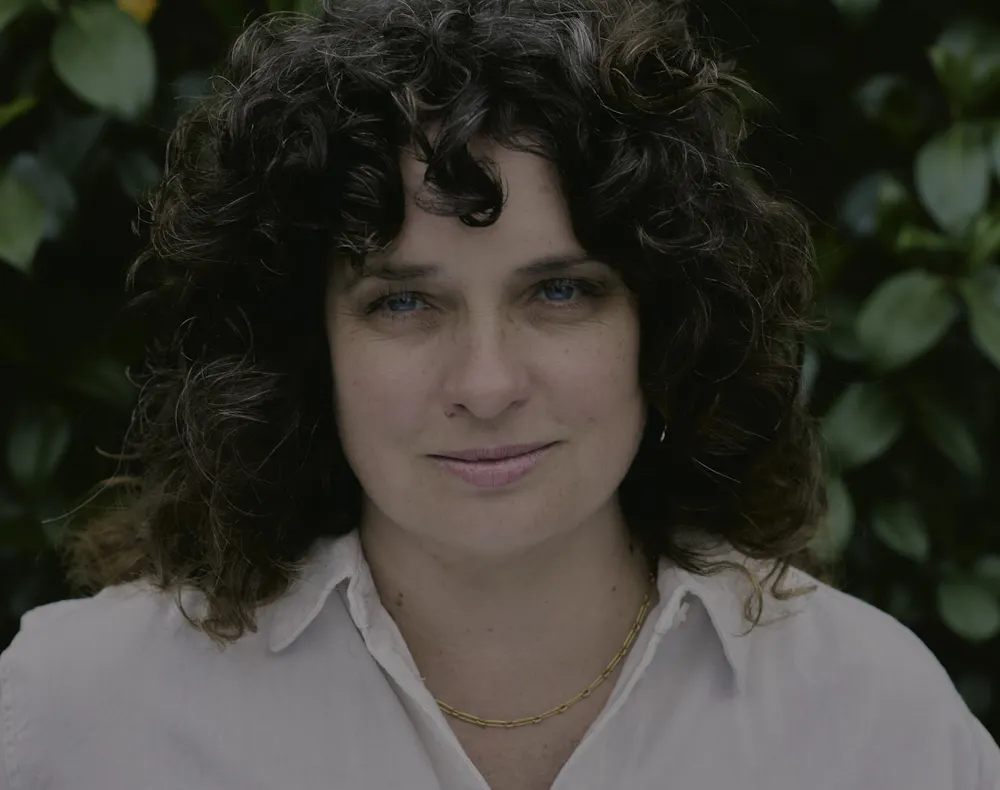
Romy Ash’s Mantle explores the idea that a pathogen might make us wake up to ourselves – and change course. Lauren Bamford/Ultimo

Bad – but beautiful

When she published her first novel, Floundering, in 2012, 31-year-old Ash was touted as the next big thing, with photo spreads in Women’s Weekly and a swag of prizes, including shortlistings for the Miles Franklin, Commonwealth Book Prize and Prime Minister’s Literary Awards. This second novel brings depth, humour and wryness, gained in the life she’s lived in between.

Ursula, her main protagonist, is 50, single and childless. She and her mother, Delores, are the last remnants of their family. Ursula works as an academic in Melbourne, but she’s taken a break to spend a little time with her mother, who lives alone in a self-built home where “the windows are actually shower screens”, in the far south of Lutruwita/Tasmania. It overlooks the salmon farms made infamous by Richard Flanagan’s Toxic.

Ursula has come because she needs some quiet time to work on a geology paper, but she discovers her mother is dying and the paper is quickly forgotten. Are the growths in Delores’ lungs cancer?

Delores is independent, fractious, deeply embedded in the intricacies of small-town Tasmanian life. She has a landline phone and a composting toilet. She “bought here because it was the cheapest place to buy land, and this was the cheapest block”.

As death approaches, Delores declines any treatment and focuses instead on making sure Ursula has all the information she needs: the Corolla is serviced at the BMW mechanic with the mossy cars out front, the best lemons come “from the driveway with one goat” and “there is a list of businesses in town that are not be frequented under any circumstances”.

Ash’s understanding and representation of life in the southern reaches of the Huon Valley, particularly for a writer from “the mainland”, is exquisitely accurate: “Small slight, large grievance, long held. This is the fabric of the town.”

book cover - mushroom pattern

Delores leaves Ursula with a house full of hoarded junk and a rash, which turns out to be widespread among the locals – and entirely untreatable. In the throes of grief, Ursula hooks up with Toby, a diver at the salmon farms. She wakes the next morning to find their bodies connected by fine, sticky threads, “pale, translucent, a soft earthy white”, in the places where their skin was touching. It’s a new fungal pandemic.

The borders close. News trickles in from the mainland. Whatever it is, it’s bad. But at the same time, it’s also beautiful: as they spend night after night together and wake each morning, ever more stuck, Ursula finds herself dreaming Toby’s dreams, learning new skills, losing her fear of the deep ocean. Then her body starts to fruit.

No easy binaries

Mantle is set in a near future, just far enough from now that Ursula can “stare out into the night, hoping for the flash of a swift parrot, even in the dark; even knowing they are extinct”. Unlike many contemporary eco-fiction novels, Mantle has no easy villains (not even, really, the salmon farms). It doesn’t let the reader feel self-righteous about their own environmental stance.

Ash takes a nuanced, exploratory approach to conservation ethics and to our individual roles in the broader crisis of extinction, wildlife depletion and climate change. She introduces us to an old fisherman, Ernie, who has been breeding and planting endangered giant kelp; Ursula laughingly calls him a greenie.

‘I wouldn’t sit next to a greenie at the pub,’ he continues, ‘but I know giant kelp is a bloody nursery, and I know its disappearance is one reason why we aren’t pulling any lobster out of the sea.’
‘I’m a greenie,’ I say. ‘It’s that and the salmon farms.’
‘You’re not a greenie; you’re a city slicker.’
I laugh. ‘Latte drinker,’ I say.

Delores’ best friend Joc tells Ursula:

I don’t eat meat. I do no harm. This is my philosophy. Those men who know the ocean is going to hold them, they’ve got a dive bag with a knife in it, they’ve got a spear gun, but they are also appreciating the wonder.

Ash rejects the easy binaries that can come with seeing “the environment” theoretically, and investigates the ethics that develop among people who live among, and off, other animals. She recognises the complexities that occur when a place has high unemployment and low education, and where the best jobs can be found at the salmon farms; where being a “greenie” is a privilege attached to class.

Next big thing

Ursula is middle-aged, grumpy, horny, an expert in her field, scared of the ocean – and not, in any way, a nature lover or an outdoors type. She is far from your typical eco-fiction narrator, and her perspective welcomes in all kinds of readers.

The novel is also replete with food, because while Ursula stops thinking about her profession – mudstone geography – almost as soon as the book begins, she never stops thinking about the joys of cooking and eating. Ash is a former food blogger and columnist for The Guardian: Mantle is crying out for an accompanying recipe collection (albeit one that’s mushroom-heavy).

This is a novel that explores connection, porousness, the possibilities offered by permeability. “It asks for a numb heart, the patriarchy,” says Joc. Mantle asks, what if we could ask for the opposite; what if we could let ourselves feel?

The Conversation

Jane Rawson was once at Varuna with Romy Ash.

  •  

Albanese’s ratings jump in federal polls; Liberals easily retain Nepean at Victorian byelection

In both the Redbridge and Freshwater polls, Anthony Albanese’s net favourability has jumped eight points since late March to -9. In Redbridge, the Coalition rebounded from a low of 17% in March to 22%.

The Liberals have easily held the Victorian state seat of Nepean at a byelection on Saturday. In Tasmanian upper house elections also on Saturday, a left-wing independent is likely to gain the seat of Huon from a conservative independent.

Redbridge poll

A national Redbridge and Accent Research poll, conducted April 24–30 from a sample of 1,014, gave Labor 31% of the primary vote (down one since the previous Redbridge poll in late March), One Nation 27% (down two), the Coalition 22% (up five), the Greens 13% (steady) and all Others 7% (down two).

By respondent preferences, Labor led the Coalition by 54–46, a one-point gain for Labor. Labor led One Nation by 55–45, a two-point gain for Labor. By 2025 election preference flows, Labor led the Coalition by 53–47, a two-point gain for the Coalition. The March poll’s respondent preferences were likely too weak for Labor.

Albanese’s net favourability jumped eight points to -9. Angus Taylor was up one point to -2, Pauline Hanson up two points to -1, Nationals leader Matt Canavan up one point to -2, Greens leader Larissa Waters down one point to -4 and Energy Minister Chris Bowen down two points since December to -16.

US President Donald Trump had by far the worst net favourability with Australians, down three points since March to -58.

In a three-way preferred PM question, there was no change, with Albanese at 33%, Hanson 23% and Taylor 14%.

Combining the issue scores of Labor and the Greens against the Coalition and One Nation, the right led by 37–30 on cost of living, 33–28 on housing, 53–22 on immigration, 41–26 on national security and by 42–30 on economic management. The left’s one lead was on healthcare, by 35–31.

Freshwater poll

A national Freshwater poll for News Corp, conducted April 28–30 from a sample of 1,046, gave Labor 32% of the primary vote, One Nation 25%, the Coalition 23%, the Greens 12% and all Others 8%, with no changes since the late March Freshwater poll. By respondent preferences, Labor led the Coalition by 53–47, a two-point gain for Labor.

Albanese’s net favourability jumped eight points to -9, Taylor’s was down four points to +10, Hanson’s was down five points to +5 and Canavan debuted at +4. Albanese led Taylor as preferred PM by 44–38 (42–36 previously).

Cost of living was rated the most important issue by 44%, with housing the only other issue in double digits at 12%. By 47–32, respondents were dissatisfied with the government over the rise in fuel prices, a big improvement from 59–18 dissatisfied previously.

By 37–33, respondents were dissatisfied with the government’s response to the Iran war (33–31 previously). By 37–34, they were dissatisfied with the response to the Bondi terrorist attacks. By 41–27, they were dissatisfied with the response to the rise in antisemitism. By 38–31, they thought the government was enforcing the social media ban on children under 16 poorly.

By 63–31, respondents were aware of the government’s plans to cut the NDIS. By 47–25, they supported the NDIS cuts.

Liberals retain Nepean at Victorian byelection

A Victorian state byelection occurred in Liberal-held Nepean on Saturday after the resignation of MP Sam Groth. Primary votes were 38.5% for Liberal Anthony Marsh (down 8.5% since the 2022 election), 24.7% One Nation (new), 21.7% for teal independent Tracee Hutchison (new), 9.3% Greens (up 0.5%) and 2.9% Legalise Cannabis (new). Labor did not contest after receiving 32.6% at the 2022 election.

The electoral commission selected Marsh and Hutchison as its final two candidates. Marsh defeated Hutchison by 63.5–36.5 (56.7–43.3 to the Liberals against Labor in 2922).

Although One Nation has a 3.0% primary lead over Hutchison, The Poll Bludger’s projections have Hutchison beating One Nation into second by 30.6–28.3 on Greens’ preferences. Even if One Nation remains second, the Liberals will still win easily.

This was a good result for the Liberals in easily beating both One Nation and a teal independent. The last Victorian Resolve poll suggested the Coalition is the favourite to win the late November state election, but One Nation could win enough seats to hold the balance of power.

Tasmanian upper house elections

The 15 members of Tasmania’s upper house have rotating six-year terms. Every May, two or three of the 15 seats are up for election. On Saturday, elections occurred in Huon (held by conservative independent Dean Harriss) and Rosevears (held by Liberal Jo Palmer). Analyst Kevin Bonham has profiles of the candidates.

Only primary votes were counted on Saturday, with the winners to be determined by a full distribution of preferences when nearly all votes are counted. Most postal votes won’t be included until Thursday.

In Huon, Harriss won 30.4% of the primary vote, left-wing independent Clare Glade-Wright 27.8%, Labor 16.5%, the Greens 15.3% and two other independents a combined 10.0%. I expect Labor and Greens preferences to help Glade-Wright, and she is likely to gain Huon from Harriss.

In Rosevears, Palmer won 42.6% of the primary vote, Labor 24.7%, the Greens 16.8% and independent Susan Monson 16.0%. Postals are likely to further assist Palmer. Greens’ preferences will flow strongly to Labor, but Palmer is far ahead on primary votes, and Labor would also need a strong flow on Monson’s preferences. The Liberals are very likely to hold Rosevears.

The current upper house has three Liberals, three Labor, one Green and eight independents. If the results in Huon and Rosevears are as expected, there would be no change in party standings, but a left-wing independent would replace a conservative independent. Bonham says Labor has voted with the Liberals in the upper house more often than any other member.

The Conversation

Adrian Beaumont does not work for, consult, own shares in or receive funding from any company or organisation that would benefit from this article, and has disclosed no relevant affiliations beyond their academic appointment.

  •  

NZ-India free trade deal: were early fears about immigration and investment justified?

Depending on which side of the argument you listen to, the recently signed New Zealand-India free trade agreement represents either a huge economic opportunity for New Zealand or a risk to its economic sovereignty.

In an election year, we can expect political positioning over something as significant as this deal, given the broader context. India is a huge market of 1.4 billion people, migration is a burning issue globally and economic growth has been elusive during a period of inflation, war and fuel price hikes.

Broadly, the agreement reduces barriers to trade in goods, services, capital and skilled labour. It’s not surprising exporters are excited about the opportunities. India is projected to grow at 6.5% this year and the next – faster than New Zealand’s other existing trade partners.

The Ministry of Foreign Affairs and Trade’s national interest analysis estimates trade, output and real wages will increase due to the market access for New Zealand goods in the deal.

The economic benefits projected by 2050 may even be conservative estimates, given higher-than-modelled gains were seen once the New Zealand-China free trade agreement was in place.

But the India deal goes beyond trade in goods and encompasses services and investment liberalisation, which was where the most political opposition was faced.

First, it was feared New Zealand could be penalised for not investing enough in India. Second, according to NZ First’s Shane Jones, the agreement opens a door to “unfettered immigration”, displacing local jobs.

The hyperbole notwithstanding, then, what does the text of the agreement tell us about the likely economic impact of the deal on New Zealand?

Can NZ be penalised for not investing enough?

The major sticking point for the Labour Party – whose support for the deal was needed because government coalition partner NZ First opposed it – was concern that New Zealand businesses would be legally obligated to invest NZ$33 billion dollars in India over 15 years.

A close reading of the chapter on investment promotion and cooperation, however, reveals the figure is not legally binding or subject to formal dispute settlement. It is to be mutually achieved through a “review, reporting and three-tier government-to-government” consultative process every five years.

As Trade Minister Todd McClay put it, the $33 billion figure is “aspirational”. It is based on a longer-term projection of India’s economic growth over the next 15 years.

Investment will be facilitated by a dedicated desk within India’s Invest India agency. For example, it will include investment partnerships such as the Bioeconomy Science Institute Maiangi Taiao’s initiative to give expert support to India’s developing kiwifruit industry.

If New Zealand businesses don’t achieve their investment targets after 15 years, there will still be a three year grace period, with avenues for discussion and consultation.

Failing that, India has reserved the right to impose proportionate remedial measures by rebalancing tariff concessions. No specific details are mentioned, but they are intended to be temporary and will end once the investment objective is achieved.

These measures reflect the fact that India has given greater tariff concessions to New Zealand exporters than vice versa.

Focus on temporary labour mobility, not immigration

If anything, the bigger concern has been that the free trade agreement will establish an “open border” for Indian migrants into New Zealand, potentially undercutting local wages and putting even more pressure on an already strained housing market.

In reality, the agreement negotiates temporary cross-border movement for contractual service suppliers in both directions between New Zealand and India. It also allows for working holiday visas (with clear time limits) aimed solely at alleviating short-term skill shortages.

The agreement also allows temporary employment entry for some specific professions on New Zealand’s skill shortage list, all restricted to a non-renewable visa for three years.

Annexes to the agreement explicitly state:

This applies to a natural person of India, including a skilled worker, into the territory of New Zealand, in order to work under a fixed term employment contract concluded pursuant to the law of New Zealand, without the intent to establish permanent residence.

Furthermore, the agreement makes it clear these visas can only be granted for temporary travel for that specific employment purpose:

For greater certainty, these qualifications must be recognised by the appropriate New Zealand authority where under New Zealand law such recognition is a condition of the provision of that service in New Zealand.

This would mean qualified doctors, for example, can come to work in New Zealand for three years under temporary employment visas. But they will still be required to comply with local qualification and training requirements.

The intention is clear: such labour mobility provisions will only allow skilled professionals from India to provide specific services for a finite time, complementing local jobs, not displacing them.

The proof, of course, will be in the implementation of the agreement and its overall impact on trade, investment and economic growth. For now, perhaps, it is time to move beyond politics and give New Zealand businesses a chance to tap the long-term opportunities offered by this deal.

The Conversation

Rahul Sen does not work for, consult, own shares in or receive funding from any company or organisation that would benefit from this article, and has disclosed no relevant affiliations beyond their academic appointment.

  •  

The 2026 Met Gala dress code is ‘Fashion is Art’. But is it?

The first Monday in May marks the annual Met Gala: a collision of celebrities, designers and cultural icons. Established in 1948, the gala was originally a high-society event held to raise money for the Costume Institute of The Metropolitan Museum of Art.

When former editor-in-chief of Vogue Anna Wintour took over in 1995, she shifted the focus from New York’s elites to celebrities, launching it into a fashion juggernaut.

Each year brings a new theme and new dress code. The theme reflects the Costume Institute’s latest exhibition (which opens the following day). The dress code translates this theme into creative direction for gala attendees.

This year’s theme is Costume Art, and the dress code is Fashion is Art. These ideas showcase fashion as an embodied art form, and explore the historical connection between clothing, the body, the wearer and art.

So, is fashion art? And if so, at what point do clothes transform from something practical to something artistic?

Is fashion art?

Throughout his career, German fashion designer Karl Lagerfeld (1933–2019) upheld the separation of fashion and art. “Art is art, fashion is fashion”, he said.

Lagerfeld’s words were based on a distinction that is commonly understood in the art world between fine art and decorative art.

Fine art is a creative expression designed to elicit an emotional or intellectual response. Artists can work on a single piece for years to create something unique. Traditionally, this category has included paintings, sculpture and poetry.

Decorative art is aesthetically pleasing, but also functional, commercial and mass produced. Examples include home decoration and fashion.

Unlike fine artists, decorative artists or designers generally don’t have the luxury of time, and must continually produce products for market consumption. For these reasons, Lagerfeld didn’t see fashion as art.

Conversely, pop artist Andy Warhol (1928–87) declared: “fashion is more art than art is”.

Warhol’s works were defined by themes of pop culture, consumerism, capitalism and the mass media. They held a mirror to society. Fashion does this too. In addition to being emotional, intellectual and creative, it can reveal the norms and values of a society.

Warhol’s art often crossed into the fashion world through collaborations with designers such as Diane Von Furstenberg and Halston.

Italian fashion designer Elsa Schiaparelli (1890–1973) also saw the merit of fashion as art, stating “designing is not a profession but an art”.

Schiaparelli was one of the earliest designers to challenge the distinction between art and fashion. Her works are currently on display at London’s Victoria and Albert Museum, as part of a broader trend of museums and galleries showcasing haute couture as art in its own right.

Haute couture (which translates to “high dressmaking”) is exclusive, high-end fashion that is different from mass-produced ready-to-wear clothing.

One of the first major haute couture exhibits came in 2011 from the Met itself. Over three months, more than 600,000 people visited Alexander McQueen: Savage Beauty, making it one of the Met’s most visited exhibits in history.

Public appetite has only grown since then. Last year, the Louvre Couture exhibit in Paris received more than one million visitors.


Read more: How self-taught, self-made mavericks Vivienne Westwood and Rei Kawakubo redefined punk


Fashion and modern society

Haute couture may be art, but what about everyday fashion? Can that be art too?

Designer John Galliano (1960–) suggested as much when he said, “the joy of dressing is an art”.

Dressing is an active practice and is vital for participation in society – not just for the sake of modesty, but because attire speaks of identity. Clothing designates how people want to be perceived, and can be an important marker of gender, social status, political affiliation and heritage.

Haute couture artists are also becoming more accessible to the public, reflecting a societal shift that recognises – and even craves – fashion as art.

John Galliano was the lead designer at Christian Dior from 1997 to 2011, the so-called “golden age of haute couture”. He is currently partnered with fast-fashion giant Zara in a two-year collaboration deal.

Perhaps then, fashion becomes art when it transcends functionality and becomes performative, creative or inspirational.

Interpreting Met Gala fashions

So how might we approach judging fashion as art at this year’s Met Gala?

First, ask yourself if the outfit evokes emotion. Not just awe or joy – but even shock, hate or fascination. The primary purpose of art is to elicit feeling.

In 2022, Kim Kardashian sparked outrage when she wore Marilyn Monroe’s famous “Happy Birthday, Mr President” dress to the gala.

The theme that year was In America: An Anthology of Fashion. For many people, Monroe and her famous gown represented the height of American culture.

Kim’s use of the dress sparked broader conversations about historical objects, ethics and celebrity culture. Some also accused her of damaging it.

As you watch this year’s gala, it’s worth examining whether any of the outfits stimulate a thought or conversation about politics, history, technology or culture.

Designers often use colours, textiles and shapes to express something about society. These messages may be subtle, or at times quite explicit.

In 2021, American politician Alexandria Ocasio-Cortez wore a white gown with “tax the rich” written on the back, referencing the extreme wealth disparity in the United States.

Fashion reflects who we are, and the world we live in. If that isn’t art, I don’t know what is.

The Conversation

Grace Waye-Harris does not work for, consult, own shares in or receive funding from any company or organisation that would benefit from this article, and has disclosed no relevant affiliations beyond their academic appointment.

  •  

Does your child only read graphic novels? That’s OK – it’s helping them build literacy skills

The Conversation

Some parents worry if their children only read graphic novels – or even mostly read them. A common question goes something like: how do I get my child to read something other than comics or graphic novels? But the answer might be: you don’t have to.

girls on a bed

Graphic novel series such as Heartstopper, The Babysitters Club and Amulet fly off school library shelves. And original graphic novels such as Art Spiegelman’s Holocaust-themed Maus and To This Day, based on Shane Koyczan’s spoken-word poem, are staples of many high-school classrooms.

Rather than hindering or holding back reading skills, reading graphic novels can actually help develop them.

Reading is many things – from breaking the code to understand what you read, to reading for enjoyment and getting “hooked” by a narrative. Debates about the best way to teach reading have been going on for over 80 years. They’ve recently gained strong focus with the ability of science to examine brain function.

Research shows reading graphic novels leads to improved reading and comprehension skills for all students. And studies demonstrate that children and teenagers who read graphic novels have improved, more positive attitudes towards reading. They are more likely than children who don’t read comics and graphic novels to think of themselves as good readers.


Millions of Australians, both children and adults, struggle with literacy.

In this series, we explore the challenges of reading in an age of smartphones and social media – and ask experts how we can become better readers.


This is extremely important: rates of reading for pleasure among young people are on the decline in Australia and around the world, along with a decline in literacy skills.

A proven way to get young readers to both re-engage with reading for pleasure and improve their literacy is to allow – even encourage – them to engage with reading that fits their tastes and interests, linking reading to media they “already recognise as part of their cultural life”. Graphic novels are part of this solution.

The science of learning to read

In 2026, when we talk about the science of reading, our go-to evidence base comes from the National Reading Panel, a United States body set up in 1997 that reviewed more than 100,000 reading studies, held public hearings, and in 2000, published a series of reports about the best ways to learn to read.

It gave us what teaching experts call the Big 6.

The first skill is phonological awareness: understanding the different ways language can be broken down into smaller parts. The next is phonics: teaching children to read and spell by explicitly teaching students the relationships between letters or letter combinations.

These skills are often not explicitly taught after they are mastered. But the other four – fluency, vocabulary, reading comprehension and oral language – continue to be learnt over a lifetime of reading.

When a reader can successfully break the code of a text, reading in schools becomes reading to learn (rather than learning to read).

a boy reading a graphic novel in a library
When a reader can successfully break the code of a text, reading in schools becomes reading to learn. Mikhail Nilov/Pexels

How graphic novels help reading

Young readers often live their lives in a visual culture, where information is accessed through images, videos and moving images such as film. So, it may be counterintuitive to ask readers in classrooms to work solely through static, one-dimensional texts.

Graphic novels have the potential to build reading-to-learn skills, such as fluency and (ultimately) reading comprehension.

Graphic novels also build reader engagement, which supports reading fluency. The elaborate set of codes and conventions specific to graphic novels present the reader with a sophisticated combination of reading cues, both text-based and visual.

a row of kids reading graphic novels
Graphic novels build reader engagement, which supports reading fluency. Kyle Hinkson/Unsplash

Narrative and meaning are created in graphic novels by a complex marriage of image, text and design elements. These include speech and thought bubbles, text or narrative boxes, sound effects (typically portrayed by dynamic visual representation of onomatopoeic words, or words that replicate sound – like the BAMs and POWs of the 1960s Batman TV show), and regular and irregular panels.

High-level decoding and comprehension skills are used to process many elements of a graphic novel. They include the portrayal of facial expressions and physical posture and gestures, the illustrators’ visual style and colour palette, the physical layout of the narrative through the use of panels, break-out images, and linear and non-linear storylines.

The support provided by these visual elements means the graphic novel is increasingly the text of choice for working with many kinds of students.

This includes students with reading difficulties and those characterised as “reluctant” readers (children who can read but choose not to, or resist reading for a range of reasons not directly associated with technical literacy). Graphic novels are also suited to children learning English as a second or additional language.

The skills needed to navigate and comprehend narrative and meaning in a graphic novel are now being recognised as essential ones, in an increasingly visually dominated world.

More than gateways

Positive attitudes towards graphic novels among students and educators is a recent development. For many decades — and still, in some quarters — graphic novels suffered from negative ideas about their literary quality and moral standing, due to their association with comic books.

Class-based prejudices against comic books spilled over to infect attitudes towards the graphic novel. For many decades, they were seen at best as mere “gateway” texts to “real” literature, or means by which to introduce classics such as Shakespeare to classrooms full of unruly and uninterested teenagers.

a page of a comic book
Class-based prejudices around comic books spilled over to infect attitudes towards the graphic novel. Kobe/Pexels

Education professor Richard Allington’s definition of fluency describes the ability to read a text quickly, accurately and with proper expression. It has often been described as the “most neglected” reading skill with calls for it to be taught more actively in reading classrooms.

A graphic novel provides a platform where a reader can interpret meaning rapidly – often without conscious attention, yet with the capacity to deeply understand the story, and become engaged or “hooked” into reading.

As Judd Winick, author of the Hilo graphic novel series for readers aged 8 to 12, has said: “ You see the words inside the balloons above the characters? You have to read them. It’s reading.”

The Conversation

Robyn Cox is affiliated with Primary English Teaching Association of Australia (PETAA). I am a life member.

Judith Ridge does not work for, consult, own shares in or receive funding from any company or organisation that would benefit from this article, and has disclosed no relevant affiliations beyond their academic appointment.

  •  

You don’t get long in parent-teacher interviews. Here’s how to use the time well

SDI Productions/ Getty Images

It’s the time of year when schools and parents typically meet for parent-teacher interviews.

These meetings are often short: in high school, usually only five to ten minutes per subject. In primary school, they might go for around 15 minutes with the classroom teacher.

With limited time, it’s worth thinking about how to make the most of it. What should parents ask, and what should they focus on to get the most of these sessions? Is there anything you should try to avoid?

Go beyond this question

It’s easy and common to start with “So, how are they going?”. But this can simply lead to a quick summary of grades or recent results.

While that’s useful to start off the conversation, it is important the discussion doesn’t end there.

Try these questions as well

You will likely get more useful information if you also ask about how your child learns, not just what they’ve achieved. For example:

  • How do they go when the work gets a bit tricky?

  • Do they seem confident in class, or a bit unsure?

  • Do they ask for help when they need it?

  • What do they usually do if they get stuck?

These kinds of questions give insight into your child’s attitude, confidence and learning habits, which often matter more for long-term progress than a single result. Research shows these learning behaviours are strong predictors of long-term academic progress.

Share your own insights

These interviews are also one of the few chances for parents to contribute their perspective.

You see things at home that teachers don’t, whether that’s your child’s frustration, avoidance, or growing confidence. Sharing this helps the teacher build a fuller picture and makes it easier to support your child effectively.

When both perspectives come together, the conversation becomes much more useful than simply reporting results. Research shows children progress better when parents and teachers work together.

Spend more time looking forward, rather than back

Parent-teacher interviews can sometimes become overly focused on reporting past results and explaining how those results came about. This can make interviews become about assessment results and class rankings.

Analysing results is only useful if it gives a clear idea of what to do going forward.

So, one of the most helpful things to get out of an interview is a clear answer to: “what’s the best way to help them achieve the next step?”.

This mindset helps parents concentrate on what they can influence, instead of what has already happened.

Making simple plans of what comes next

When looking at what comes next, keep the plans simple and easy to implement. Both parents and teachers are time-poor. Complex plans will fall apart as quickly as they are made.

Aim to leave the interview with a clear plan of what to do at home, not a long list.

Ask for one or two practical strategies you can act on. This might be something like reading for ten minutes each night or practising a specific type of maths problem a few times each week.

It can be helpful to come prepared with some suggestions yourself about what you think your child should work on to see if the teacher agrees and how they would adjust it.

Finally, agree on how progress will be checked and when to revisit the plan if needed.

These conversations may be brief, but they don’t have to be superficial. With the right focus, even a five-minute interview can lead to meaningful progress in a child’s learning.

The Conversation

The authors do not work for, consult, own shares in or receive funding from any company or organisation that would benefit from this article, and have disclosed no relevant affiliations beyond their academic appointment.

  •  

Should surrogates be paid for carrying other people’s babies? And how much would be enough?

Nasos Zovoilis/Getty Images

The Australian Law Reform Commission is currently reviewing Australia’s surrogacy laws to ensure they’re fit for purpose and reflect the population’s current views.

One aspect being considered is whether surrogates should be allowed to receive financial payments for gestating a fetus on behalf of another person or couple.

The commission’s final report is expected in July.

There are several types of potential surrogacy arrangements. Let’s look at how they work, what might work best in Australia, and how an appropriate payment could be determined.

Only ‘altruistic’ surrogacy is allowed

Surrogacy laws are inconsistent across Australia but no state or territory allows surrogates to be paid for their services.

However, reimbursement for reasonable expenses associated with the pregnancy and birth are allowed.

Currently, only “altruistic” surrogacy arrangements are permitted. This means the surrogate volunteers to carry the pregnancy and receives no financial incentive or compensation for the time or risk involved.

Other countries that only allow altruistic surrogacy include the UK, Canada, Greece and South Africa.

What is commercial surrogacy?

“Commercial” surrogacy arrangements are available in some countries around the world, meaning surrogates are able to contract their gestational services for a fee. Examples include Georgia, Ukraine and some states in the United States.

In these arrangements, the “commissioning” or “intended” parents (those who intend to raise the child) often negotiate surrogacy contracts through third-party brokers or agencies.

One study of ten surrogacy agencies in the US found significant variation in the amount commercial surrogates were paid. They report most “compensation packages” were listed in the range US$30,000–70,000, but it was not always clear what the breakdown for these packages was.

Another study of 30 specific contracts cited rates of US$18,000–$50,000, with an average payment of US$23,000.

Commercial surrogacy arrangements can vary dramatically in price and may involve transnational agreements: where the surrogate resides in another country, often one less economically empowered than that of the intended parents.

Countries have wound back ‘reproductive tourism’

“Reproductive tourism” is when individuals or couples seeking assisted reproductive services, including surrogacy, travel to places where these services are cheaper or have fewer restrictions for access.

This can lead to the exploitation of women in lower-income countries and can make surrogacy less safe for surrogates, intended parents and future children.

In India, commercial surrogacy arrangements involving foreign nationals were banned in 2015. This ban was then extended to everyone by 2022

Before this, the average payment reported for commercial surrogates was US$5,000.

This made India a popular global destination for those seeking cheaper surrogacy arrangements than in their own home country.

Thailand followed a similar pattern. Once a major hub for international commercial surrogacy, it also banned the practice in 2015.

Thai officials reported that average payments to surrogates before this time were US$10,000–15,000.

The much publicised case of “baby Gammy” a child born through commercial surrogacy in Thailand, is often cited as the catalyst for the changes in surrogacy law in Thailand and beyond.

Baby Gammy was the genetic child of an Australian commissioning couple. But he was born with Down syndrome and a congenital heart condition and was not brought back to Australia with his twin sister.

This sparked international concern over the ethical and legal obligations to children and surrogates involved in transnational surrogacy arrangements.


Read more: Baby Gammy case reveals murky side of commercial surrogacy


How is ‘compensated’ surrogacy different?

Another potential type of paid surrogacy arrangement Australia might consider is “compensated”, rather than “commercial” surrogacy.

In a compensated model, surrogates would be paid a standardised rate for each month of completed gestation, in addition to having their expenses reimbursed. The regulation of the standard fee is often considered the key difference to the commercial model, with no bidding or broker competition allowed.

Israel’s unique state-controlled surrogacy payment model is arguably one example of this type of arrangement. While still typically referred to as “altruistic” rather than “commercial”, this model does allow strictly regulated payments to compensate a surrogate’s “time and suffering”, rather than just permitting reimbursement of direct expenses.

How could this work in Australia?

If a compensated model is permitted in future, the payment rates should be comparable across the country.

Consistent prices and regulatory harmony at the federal level would ensure intended parents are not driven to travel to other states due to differences in service availability or cost.

For those who believe gestational labour should not be commercialised, no method of calculating a fair wage will be acceptable.

But for those who are open to considering a model of compensated surrogacy in Australia, it will still be necessary to determine how much is appropriate compensation.

How could a fair price be calculated?

One way to determine a fair price for compensated surrogacy in Australia would be to make the rate similar to what surrogates are paid for commercial surrogacy in other high income countries, such as the US.

But payment ranges of US$20,000–$50,000 (A$27,800–69,500) are fairly common, and some agencies promise surrogates rates as high as US$100,000-150,000 (A$139,000–208,500). So there is significant disparity in the rates paid.

Assuming surrogacy is a minimum ten-month engagement, monthly payments at the lower end of this range would be around US$2,800. If using the higher US values, monthly rates could fall anywhere between A$7,000–21,000. A US$70,000 payment translates to approximately A$10,000 a month.

As the Australian context differs from the US in many important ways, another method of determining a fair rate of compensation would be to survey the Australian public, including those with lived experience of surrogacy.

Multiple submissions to the Australian Law Reform Commission’s review of surrogacy laws suggested A$1,000–$2,000 per month would be reasonable, based on the results of these kinds of discussions. This is 20–50% of minimum wage.

Another method would be just to use minimum wage as the rate, equating to just over A$4,000 a month.

But gestational labour isn’t the same as other jobs

Just considering a few hypotheticals makes it clear we cannot just slot surrogacy into our existing workplace rules.

If we decide to pay minimum wage, for example, this is calculated on an average 38 hour work week. But pregnancy is 24 hours a day, 7 days a week. Does that mean penalty rates should apply after the first “shift” every day?

Also, this would be one occupation where it is not only possible but essential that you sleep on the job.

Would a reduced rate be payable if the surrogate was otherwise employed during the same “work hours”? Or would a surrogacy payment be better classified as an additional loading on top of their regular salary? How would surrogacy as a “second job” be taxed?

Given the health risks associated with pregnancy, what kind of hazard pay bonuses should apply? What about public holiday loading?

These questions may sound silly, but they make it clear that gestational labour will need to be considered differently to other forms of paid labour.

This should be a comfort for those who are worried that allowing compensated surrogacy might devalue pregnancy as “just another job”.

The review of Australia’s surrogacy laws is trying to ensure couples aren’t forced to travel overseas to have a family. If the commission recommends adding compensated surrogacy as an option in Australia, and the government accepts this recommendation, more debates are likely to follow.

The Conversation

I am a member of an internally funded grant team on surrogacy research at Swinburne University of Technology. I have previously been invited to speak on surrogacy ethics for organisations that potentially have financial interests in the topic, but have not received any payment or incentive for these talks, and all content presented was free from external influences and represented my personal views, rather than those of any institution I was employed by at the time.

  •  

A year on from the election, what has the Albanese government achieved?

This time last year, Prime Minister Anthony Albanese was jubilant. Having just won 94 of the 150 seats in the House of Representatives, Labor had its best result in terms of seats since 1943.

In his victory speech, Albanese said:

[…] I know there is still much more to do to help people under pressure. That is why it means so much that in these uncertain times, the people of Australia have placed their trust in Labor once again.

The times would only go on to become more uncertain. The war in Iran, the Bondi terror attack and the rise of One Nation’s vote have all thrown up new issues for the government (and the country) to deal with in the past 12 months.

So what has the government achieved in the past year? How has it performed on its key election promises and the issues most important to people?

What mattered most to voters?

Despite its historic outcome, the 2025 election was something of a lukewarm endorsement. Labor’s primary vote share was around 35%, only a few points higher than the Liberal-National Coalition under Peter Dutton.

Polling before the election suggested the issues on people’s minds were cost of living (57%) and managing the economy (22%), as well as the quality of healthcare (31%), crime (23%) and climate change (23%).

After the election, when voters were asked to name their most important issues, economic concerns still dominated, expressed as anxiety about cost of living (36%), housing affordability (8%), taxation (10%) or economic management (12%). Climate change and the environment were still top of mind for 17% of people.

Immigration, which has now become more important, was only of primary importance to 6% of people.

Cost of living and the environment

Labor made a lot of promises during the campaign – around 63, according to the Parliamentary Budget Office. This analysis will look primarily at the biggest of those.

Many were oriented toward the concerns people were expressing, especially around the economy. For the first time since 1987, voters believed Labor would make the better economic managers, showing their messaging was well targeted.

On cost of living, progress is visible, though mixed.

With relatively high inflation and interest rates, cost of living was and is an issue that cuts across many policy areas. The war in Iran’s effects on fuel prices have made people’s lives and the government’s job harder since 2025.

In terms of directly putting money in people’s pockets, Labor promised tax cuts over the next few years, which are in train. Modest rebates to energy bills continued until the end of 2025.

On the environment, the government passed previously stalled legislation to create a national Environment Protection Agency and invest more heavily in conservation. These efforts are ongoing, and don’t go far enough for environment groups.

Education, wages and childcare

On education costs, Labor enacted a 20% reduction of students’ HECS debts on June 1. Similarly, 100,000 free places in vocational education per year to train more builders and nurses were made permanent.

Less directly, alongside unions, Labor lobbied the Fair Work Commission to increase the minimum wage beyond inflation. Labor also provided funding to age care providers to pay higher wages and leave entitlements as determined by the commission.

For eligible families, promised subsidies for childcare began in January 2026.

Health

Albanese spent much of the 2025 campaign focused on health, waving his Medicare card around at every opportunity.

Labor promised, and has acted, to deliver policies such as cheaper medicines, improved access to telehealth, and free mental health support.

The government’s signature health promise was improved access to bulk-billed GP visits, aiming for 90% to be bulk-billed by 2030. As out-of-pocket costs for primary care continue to rise, the government made little progress after the election, with rates staying around 72%.

From November 1, however, expanded access to incentives for GPs began to flow, with an uptick to 81% by January 2026.

Whether these incentives are sufficient to equitably meet the public’s needs has been questioned by the sector.

Funding negotiations with state governments to improve health service provision have recently been concluded, but are always fraught. Although not a major election issue, upcoming reforms to the NDIS will place extra strain on this relationship.


Read more: Tightened eligibility and cuts to plans: what the NDIS changes mean for participants


Housing

Access to affordable housing has been hotly debated since COVID and will require sustained action at all levels of government to address.

The rise of One Nation’s vote throughout 2025 and 2026, and increased focus on social cohesion since Bondi, have crossed over into this debate. Playing to the exaggerated link between immigration and housing affordability, the government promised to restrict foreign purchases for two years during the election campaign.

Albanese also promised assistance for first home buyers through government-backed 5% deposits and loans. These have seen some uptake, though house prices have risen higher for eligible properties in major cities, limiting their usefulness.

Promises were also made about investment in infrastructure to enable delivery of more affordable housing and continue investment in social housing. Progress is slow. The federal government is working to reverse decades of underinvestment by delivering around 55,000 new low-income homes by 2030.

But unmet need (and their own target) is much higher, and long-term commitment is not guaranteed. During the 2025 campaign Albanese promised Labor wasn’t planning to revisit changes to tax settings such as capital gains and negative gearing floated in the 2019 campaign.

However, he has recently been trying to draw a link between intergenerational inequity as a threat to social cohesion and moves to water down these policies.

In this way, anxiety about cherished but debated Australian values may be the impetus for unexpected economic reforms.

Overall, the Albanese government has been working to fulfil its modest promises and address people’s pressing concerns.

However, whether the government can continue to do so, and whether what it promised to do is enough, is unclear.

Australians are persistently anxious about the present, and pessimistic about the future. The government will need to work hard to persuade people it’s doing enough. It has two years until the next election to do so.

The Conversation

Pandanus Petter is employed at Australian National University with funding from The Australian Research Council.

  •  

Australia and Japan face a similar dilemma: how to be indispensable to the US without relying on it

Japanese Prime Minister Sanae Takaichi’s visit to Australia this week comes against a turbulent geopolitical backdrop. The war launched by the United States and Israel against Iran – and the subsequent closure of the Strait of Hormuz – have put energy issues at the top of the agenda.

The war has also weakened the United States’ strategic position in the Indo-Pacific. The US has had to divert crucial assets from the region to the Middle East, such as the 31st Marine Expeditionary Unit, based in Japan. There are also concerns about US missile stockpiles, as well as the overall attention of the Trump administration on the region.

As two of the most important US allies in the region, both countries see US military presence as essential to their defence strategies and have been vigilant in countering China’s coercive actions.

Now, however, policymakers in both Tokyo and Canberra are wondering if the US will return to the old status quo after Trump’s departure, or if this is a sign of a bigger shift to a new American grand strategy.

Why is the Australia-Japan relationship so important?

Amid growing uncertainty, predictable partnerships have taken on greater value.

The Australia–Japan relationship has steadily deepened in recent decades, particularly in strategic and defence partnerships. This is exemplified by the contract that Australia signed last month with Mitsubishi Heavy Industries to buy 11 next-generation frigates.

Takaichi’s visit is also being framed around the 50th anniversary of the Basic Treaty of Friendship and Cooperation between the two countries. But the real importance lies in what comes next and how far the alignment between the two countries can extend.

Despite converging interests, Japan and Australia do not see every issue the same way. As their cooperation deepens, these differences are likely to become more visible – and, in some cases, more consequential.

Two ways of reading the relationship

The Australia-Japan relationship can be viewed through two quite different lenses.

The first is through a “middle power” lens. In response to the fracturing world order, both Japan and Australia are building more self-reliant defence, economic and political systems to push back against the hegemonic tendencies of the US and China.

Through this lens, their relationship is the nucleus of a looser coalition of partners that also includes the ASEAN bloc, India, New Zealand and the Pacific island nations. Together, they can form a strong framework capable of withstanding pressure from either direction.

The second way of viewing the relationship is through a “great power order” lens.

Through this lens, Japan and Australia are working to preserve the postwar international order centred on the United States. Both countries are strengthening their alliances with Washington and sustaining US engagement in the Indo-Pacific. This means reinforcing the existing system, not building an alternative to it.

In this view, the greatest threat to both countries comes from authoritarian states, particularly China.

These two readings of the current geostrategic environment can coexist. But where the governments in Tokyo and Canberra decide to put their emphasis matters enormously. This differs depending on the policy area.

Seeking more independence on trade

In economics and trade policy, the new middle-power coalition building has real traction.

Tokyo and Canberra have both been subject to Trump’s tariffs. And both have already shown they can act independently of Washington, and even alongside Beijing, when it suits them.

Both Japan and Australia have led the negotiations to deepen and expand the Comprehensive and Progressive Agreement for Trans-Pacific Partnership (CPTPP) after the US withdrew in Trump’s first term in office. This free-trade agreement includes 12 countries that comprise 14% of global GDP.

And both have ratified the Regional Comprehensive Economic Partnership (RCEP), which is touted as the world’s largest free-trade agreement in terms of members’ GDPs. This group includes China, but not the United States.

Heavy reliance on US for defence

In defence matters, however, the picture is very different. Japan has no appetite for a middle-power approach. The US alliance is foundational – not optional – because of China, North Korea and Russia on its doorstep.

This is Takaichi’s policy. She is following closely in the footsteps of former Prime Minister Shinzo Abe and viewing the United States not as a partner to hedge against, but as an anchor to keep engaged.

Takaichi has also taken a hard line against China. She caused a diplomatic storm last year by suggesting, for instance, that Japan would feel compelled to defend Taiwan if it was invaded by China.

However, the threat posed by China looks different when viewed from Australia. China is not on Australia’s doorstep. So, at least initially, Australia would not be on the front lines of a regional war.

Some have also pointed out that Taiwan’s importance is not well understood by the general public, with many Australians believing tensions in the Taiwan Strait are simply “not Australia’s problem.”

This gap in threat perception has led some analysts to ask whether a more hawkish Japan could pull Australia into a conflict it would not otherwise choose to enter.

Yet Australia is also deeply entwined with the US militarily – through intelligence sharing, AUKUS and the rotational deployment of American forces to Australia. In practice, Australia’s strategic choices in a conflict over Taiwan would be heavily shaped by that existing entanglement, regardless of what Canberra says publicly.

Accepting that reality is, paradoxically, what gives the Australia–Japan relationship its real value. Both countries are deeply tied to the United States for their national security, and neither is in a position to opt out.

The question is not whether to rely on that alliance, but how to make themselves indispensable to it – so that American engagement in the Indo-Pacific remains worthwhile for Washington, not just assumed.

That is a difficult balance to strike. Takaichi’s visit is an opportunity to think through, carefully and honestly, how both countries view this dilemma – and what they are prepared to do about it.

The Conversation

Adam Lockyer has previously received funding from the Australian Department of Defence.

Ryosuke Hanada does not work for, consult, own shares in or receive funding from any company or organisation that would benefit from this article, and has disclosed no relevant affiliations beyond their academic appointment.

  •  

AI road safety cameras are fuelling a surge in driver fines. Are they fair?

Artificial intelligence (AI) road safety cameras have been rolling out across Australia, resulting in a large number of fines.

For example, roughly 184,000 infringements have been issued in Western Australia since the cameras were launched in October last year. In New South Wales, more than 130,000 fines were issued in 2024-2025, the first year the technology was used. In Queensland, about 114,000 fines based on AI image recognition technology were issued in 2024.

But it is the size of the penalties that has drawn much attention and criticism. In WA, penalties start at A$550 and four demerit points for seatbelt infringements. These can add up quickly in cases where people get repeated fines.

For example, one WA driver with a seatbelt exemption was issued almost A$20,000 in fines after multiple seatbelt infringements.

Although fines can be challenged, there are growing concerns about the accessibility and fairness of the appeal process, especially at scale. The technology also raises the question of whether AI camera systems are the best way to promote safe driving.

How do AI road safety cameras work?

AI road safety cameras use computer vision systems to identify patterns in still images captured by roadside cameras.

AI software initially reviews all images. Where no infringement is detected, the image is automatically deleted. Where potential infringements are detected, the images are then flagged for human review before an infringement is sent out to a driver.

The approach is intended to increase efficiency, as it saves officers from having to manually review large volumes of images.

Drivers can challenge these fines where they believe an error occurred, or in cases where a valid excuse can be established.

In Queensland, a driver successfully challenged a fine he received after his passenger shifted their seatbelt under their arm mid-trip. Representing himself in court, the driver argued it would have been unsafe to continuously monitor and check on his passenger mid-trip, especially on a busy motorway.

Many others who have attempted to challenge fines have been less successful. And many have expressed confusion and frustration about the process of challenging fines.

Practical problems

One issue is the practical difficulty of challenging an infringement. When tens of thousands of fines are issued, the burden on drivers who wish to challenge fines increases accordingly.

Some drivers have reported spending hours on hold, navigating unfamiliar procedures, or struggling to work out whether their situations are even relevant to the appeals process.

This uncertainty can lead to stress and frustration. Appealing fines can also involve a significant amount of time and financial cost, especially if a case makes it to court and is unsuccessful.

The difficulty of appealing is related to a second issue: context.

AI camera systems rely on still images, which limit what can be captured. This is less of a problem with speeding infringements, where context is often irrelevant.

Seatbelt use, on the other hand, is more dynamic. Seatbelts can be temporarily moved by a passenger without the driver noticing, for reasons that are not immediately apparent from a single image.

In some cases, drivers have argued they or their passengers were wearing their seatbelt correctly, but the image presented was ambiguous. In one case from NSW, a woman argued her seatbelt was on correctly, sitting between her shoulder and collarbone. She was not successful in overturning the fine.

Drivers with medical conditions have grounds for challenging fines, but the details need to be carefully documented. Temporary injuries present difficulties. Brief seatbelt adjustments can be reasonable in context, but difficult to defend retrospectively, many weeks later, especially if there is no documentation.

With a human officer on the roadside, these situations could be addressed in real time, through explanation or education, potentially preventing extreme outcomes, such as the driver who was issued with almost $20,000 worth of fines and faced the accumulation of nearly 200 demerit points.

The real issue, then, is not about whether individuals can challenge infringement notices, but whether the system operates fairly at scale. If AI cameras aim to promote safe drivers, this goal should extend beyond detection alone.

Measuring what matters

As with any automated system, much depends on the choice of proxy – the measurable indicator that stands in for what we care about.

The problem of treating a narrow proxy decisively has been well documented in other domains. In education, for example, student test scores can be used as a proxy for teaching quality. But as data scientist Cathy O’Neil has shown, these systems ignore crucial classroom context and have been relied on for high-stakes decisions, such as the dismissal of teachers.

The risk with AI-based enforcement is similar.

If the proxies for “safe driving” are too narrowly chosen, they distort what safety actually requires, creating the illusion that the proxy is standing in for the real goal.

Although AI cameras can show seatbelts are off, or incorrectly positioned, the problem arises when seatbelt positioning comes to dominate the discussion, while other driver safety issues, such as tiredness, distraction, tailgating, or aggressive driving, are harder to capture with automated roadside systems.

Improving road safety does not require abandoning AI enforcement. What it does require is that AI-mediated systems capture a reliable proxy, operate fairly at scale, and support education and prevention, not simply punishment.

The Conversation

Adam Andreotta does not work for, consult, own shares in or receive funding from any company or organisation that would benefit from this article, and has disclosed no relevant affiliations beyond their academic appointment.

  •  

Honeybees may be helping spread tree-killing myrtle rust – new research

Robert Michael/Getty Images

We know introduced honeybees as the ever-busy helpers of our gardens, farms and orchards.

In pollinating crops and fertilising fruit, they support more than a third of the food we eat and are worth billions of dollars to New Zealand’s economy.

But they could also be unwittingly helping one of the worst natural threats facing Aotearoa’s native forests: myrtle rust.

By collecting spores as food, then carrying them from plant to plant, honeybees may be under-appreciated vectors of this recently-arrived fungal disease.

Our recently published research adds further weight to this idea, challenging the assumption that myrtle rust spreads mainly by wind alone.

How myrtle rust hitches a ride

Indigenous to Central and South America, myrtle rust was first detected in New Zealand in 2017. Since then, it has spread across much of the North Island and into parts of the South Island and the Chatham Islands.

It attacks plants in the myrtle family, including treasured native species such as pōhutukawa, rātā and mānuka, as well as exotic species such as guava, feijoa, bottlebrush, lilly pilly and eucalyptus. It poses a particularly serious threat to vulnerable native plants such as ramarama and swamp maire.

As the disease has emerged in more places, researchers have been paying closer attention to the possible role of honeybees in helping move it between plants and across landscapes.

These famously efficient foragers constantly buzz between flowers, collecting nectar and pollen before returning to the hive with their furry bodies coated in yellow dust.

Myrtle rust spores closely resemble pollen grains: they are yellow, spherical and often found on flowers and infected leaves. That makes them easy for honeybees to take for a traditional food source.

Pōhutukawa leaves infected by myrtle rust. Department of Conservation, CC BY-NC-ND

To test whether this has been happening, we compared myrtle rust spores with familiar pollen sources such as kiwifruit and willow.

We found the spores themselves contained all the essential amino acids young bees need to grow, along with enough protein to support healthy colony development.

We also fed bee larvae royal jelly – a honey bee secretion used in the nutrition of larvae and adult queens – mixed with myrtle rust spores. The larvae developed just as well as those fed high-quality pollen from familiar sources such as kiwifruit and willow.

This suggests bees may not be collecting the spores by accident, but deliberately using them as a nutritious food source, which could increase the likelihood of repeated transport of spores.

We also tested whether the spores stayed alive after entering the hive. Honeybee colonies were placed near active myrtle rust outbreaks, and we sampled both returning bees and pollen stored inside the hive.

Spores were found on nearly half of returning bees and in almost half of the pollen cells. Further experiments showed those spores could remain viable inside colonies for at least nine days.

That means hives themselves may act as reservoirs for the disease, with managed hives potentially carrying infectious spores long distances when they are moved between sites.

Rethinking the risk

Our analysis suggests the very same behaviour that makes honeybees such invaluable pollinators may also make them highly effective carriers of myrtle rust.

The relationship may also represent what scientists call “invasional mutualism” – where two introduced species help each other succeed. In this case, the honeybee gains a new food source, while the fungus gains a powerful long-distance transport system.

That raises important biosecurity questions, not only for beekeepers but for the wider protection of native ecosystems.

Honeybees live in highly organised colonies and communicate with each other about good food sources. Once they find one, they recruit other workers and return to it repeatedly.

If myrtle rust spores are being treated like pollen, that means infected plants could become repeated targets, increasing the chances of spores being picked up and spread to new host plants.

There is also the issue of hive movement. Beekeepers often shift hives long distances to follow flowering crops and mānuka blooms, creating the possibility that spores could be transported far beyond the original outbreak.

If hives are moved from heavily infected areas into native forest or conservation land, they may unintentionally help trigger new outbreaks.

A stand-down period could potentially help reduce that risk, giving any spores carried back to the hive time to die off before bees are introduced near vulnerable native forest. Otherwise, infected hives could help drive more serious outbreaks in those ecosystems.

In Australia, myrtle rust has become a biological disaster, threatening at least 15 native species with extinction, while costing the nursery and lemon myrtle industries millions of dollars in annual management and lost production.

In Aotearoa, where taonga species are also under threat, the stakes are just as high.

Understanding how the disease moves – not just by wind, but potentially by bees as well – is essential if we want to slow its spread before irreversible damage is done to our native forests.


The authors acknowledge the contribution of Dr David Pattemore.


The Conversation

Sacchi Shin-Clayton received research funding from the New Zealand Ministry for Primary Industries and the New Zealand Institute for Bioeconomy Science Limited, Plant & Food Research Group.

Jacqueline R Beggs does not work for, consult, own shares in or receive funding from any company or organisation that would benefit from this article, and has disclosed no relevant affiliations beyond their academic appointment.

  •  

How to make public spaces accessible, safe and attractive for an aging population

To be truly inclusive, public outdoor spaces must meet the needs of the entire population, regardless of age, physical ability or mobility.

Although many cities have adopted universal accessibility policies in recent years, it’s important to consider whether these policies have actually improved accessibility and the experiences of citizens who live there.

Public spaces can become a source of fatigue and stress for older people if their features are not properly designed.

Several fields of research in urban design, urban planning, and architecture offer valuable tools for understanding the level of accessibility in public spaces. Three dimensions are particularly relevant, since they directly concern the way a built environment meets the needs of people with motor, visual or cognitive impairments. These three dimensions — comfort, legibility, and geometric clarity — enable us to assess whether a space is truly designed for everyone.

As an architect, urban planner, and full professor at the Université du Québec à Montréal, I study the universal accessibility of public environments by identifying the physical and spatial dimensions that promote their equitable use.


This article is part of our ongoing series The Grey Revolution. The Conversation Canada and La Conversation are exploring the impact of the aging boomer generation on Canadian society, including housing, working, culture, nutrition, travelling and health care. The series explores the upheavals already underway and those looming ahead.


The importance of comfort

Environmental studies focus on how people live and use public spaces. According to Jan Gehl, a Danish architect and urban planner, a space suitable for pedestrians must provide protection, comfort and appeal.

  • Protection ensures safety, for example through pavements separated from vehicle traffic or clearly marked pedestrian crossings.

  • Comfort facilitates movement through features like flat, continuous surfaces, the absence of obstacles, benches, handrails and adapted access.

  • Appeal is based on a combination of physical and sensory elements, such as greenery, light and the presence of activities, which promote a pleasant experience for users.

These criteria benefit everyone, but are especially essential for older people or those with reduced mobility. Pleasant and comfortable spaces encourage people to walk more and take advantage of the city. That, in turn, promotes social inclusion and enhances well-being.

The pedestrian route in Parc Safari in Hemmingford, south of Montréal, is an example of a tourist development that prioritizes comfort.

Flat, paved surfaces and the absence of ground-level obstacles, such as uneven steps or steep slopes, ensure comfortable and unimpeded movement. To provide a pleasant and safe experience, it is essential to maintain uniform surfaces and consistent levels, which facilitate the passage of pushchairs and wheelchairs as well as the movement of people with mobility challenges.

5 critical urban elements

Urban planning studies on the “image of the city” focus on how people perceive and navigate their environment. Kevin Lynch, an American urban planner who taught at the Massachusetts Institute of Technology (MIT) and Harvard, profoundly influenced urban design with his work how cities are perceived. His research has identified five elements that help people find their way around the city:

  • Pathways (streets, pavements or footpaths).

  • Boundaries (walls, rivers or railway lines) that demarcate a space that may be difficult, or even impossible, to cross.

  • Neighbourhoods recognizable by their atmosphere, function or consistent architecture.

  • Nodes (places of passage or gathering, such as a public square, a crossroads or a station).

  • Landmarks (visible features that help people orient themselves), such as a tower, a bell tower, a sign, or a distinctive tree.

Montréal’s Esplanade Place Ville-Marie is a good example of a place with these qualities.

The design, organized around steps that incorporate a ramp clearly visible from the pedestrian’s line of sight, reduces confusion and makes it easier to understand the connections among the Esplanade’s different levels.

That makes it possible for pedestrians to anticipate the continuity of their route, making movement more reassuring and pleasant. The clarity of this layout ensures that the Esplanade Place Ville-Marie is accessible to all.

When boundaries and landmarks are clearly defined, the city becomes more welcoming and easier to navigate, particularly for people who have difficulty with orientation or trouble following directions. This reduces the anxiety associated with walking in complex environments and enhances the sense of security.

For example, as part of the Bristol Legible City project in the United Kingdom, 97 per cent of visitors highlighted the tangible impact of clear and consistent urban design on the walking experience and user comfort.

Geometrically clear urban layouts

Studies of spatiality analyze the form and geometry of urban spaces to understand how their organization influences human movement and behaviour.

Bill Hillier, a British architect and professor at University College London, is known for his syntactic approach, a method of analyzing urban and architectural spaces.

His work shows that people naturally move along clear, direct axes. Certain cognitive disorders, such as Alzheimer’s disease or mild age-related cognitive impairment, can affect memory, attention and orientation. A geometrically clear urban layout eases orientation for these people and enables them to mentally visualize the spatial layout of the area where they’re walking.

Another important factor is the spatial enclosure effect created by the continuity of façades, fences or building lines, which fosters a sense of containment and security.

The most accessible public spaces are, therefore, often those with simple, linear routes that offer a smooth and predictable path. A well-organized layout makes it easier for elderly people and visitors to plan their upcoming trips, maximizing their enjoyment of a city.

In Montréal’s Old Port, spaces are clearly defined. Along Saint-Paul Street, a continuous row of building façades shapes the street and guides movement, with the view shifting as you walk. A low curb adds to this sense of order and makes the route easy to follow.

Accessibility for all

The elements of comfort, navigability and geometric clarity can guide urban designers, including architects, urban planners, landscape architects and engineers, in creating public spaces that are accessible to all.

Adhering to these criteria from the design stage helps avoid costly and late-stage adjustments while ensuring optimal comfort and safety for all users.

When high-quality public spaces are designed from the outset, it is possible to meet the needs relating to mobility, vision and cognition without designing the space for a single type of user. A thoughtful and inclusive design makes the city more comfortable, accessible and safe for everyone, particularly for an aging population.

La Conversation Canada

François Racine has received funding from the Friends of the Parc Safari Foundation.

  •  
❌