Reading view

England’s ‘once in a generation’ housing law takes effect as US housing legislation sits in congressional purgatory

The U.K. Parliament passed legislation in an effort to control spiraling rental costs and reverse rising homelessness rates. Matt Cardy/Getty Image

Housing costs are eating up more and more of Americans’ monthly budgets.

Half of renters and a quarter of homeowners are cost-burdened, meaning they spend more than a third of their income to pay their rent or mortgage. Roughly 27% of renters are spending more than half of their income on rent.

In March 2026, the U.S. Senate passed a bipartisan housing bill to boost housing supply in the United States. More supply, the thinking goes, will staunch the surge in homes prices and rents. In the nation’s 50 biggest cities, for example, rents for one- and two-bedroom apartments have increased roughly 40%, not adjusted for inflation, since 2020. This legislation, however, is currently stuck in the House, overshadowed by issues like the Iran war and Supreme Court decisions.

While housing reforms in the U.S. remain gridlocked, the U.K. has been dealing with its own housing problems: 70% of Britons say housing unaffordability has become a national crisis. Across England, rents have spiraled, homelessness has risen and deteriorating and dangerous housing conditions have threatened the health of tenants.

In response, the U.K. Parliament passed the Renters’ Rights Act, a major housing law that officials described as a “once in a generation” set of reforms.
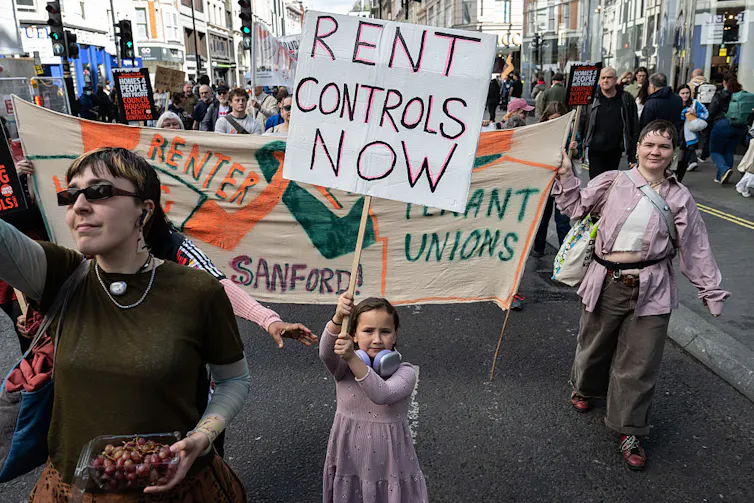
Young girl holds sign reading 'Rent Controls Now' as a large group of people march behind her while holding banners and signs.
Tenant groups and trade unions from across England marched through central London on April 18, 2026, to bring attention to the country’s housing crisis. Guy Smallman/Getty Images

More power for tenants

The bill became law after receiving Royal Assent and took effect in England on May 1, 2026.

Its signature reform is to eliminate no-fault eviction, also known as Section 21 eviction. Under a Section 21 eviction, landlords were able to terminate a month-to-month or fixed-term tenancy without fault, even if tenants paid rent on time and complied with the lease. The only stipulation was they had to provide two months’ notice.

This will sound somewhat familiar to American readers: The vast majority of jurisdictions in the U.S. allow a landlord to terminate a month-to-month tenancy for any reason, as long as the landlord provides adequate notice.

In North Carolina, for example, where I live, a tenant with a month-to-month lease is only legally entitled to a seven-day notice of eviction under state law.

In England, Section 21 evictions were responsible for a 50% increase in the number of people experiencing homelessness from 2021 to 2022. Going forward, a landlord can still remove a tenant for a valid reason, but tenants will no longer be vulnerable to eviction when they have done nothing wrong.
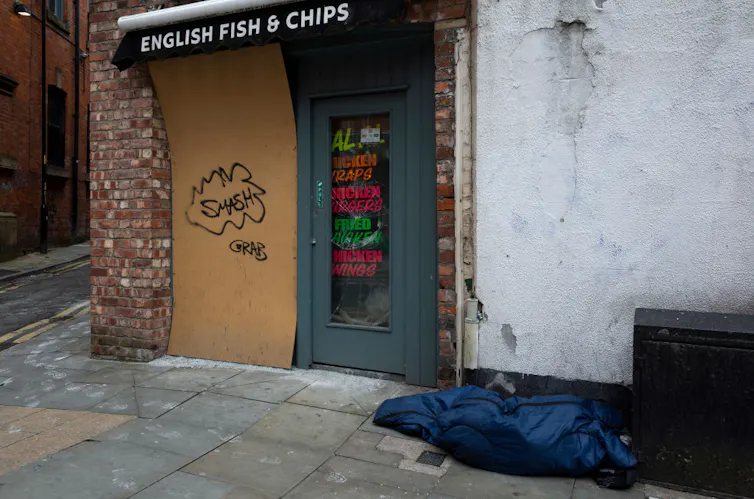
A person sleeps in a blue sleeping bag next to a boarded-up storefront.
No-fault evictions have led to a surge of homelessness in the U.K. in the 2020s. Daniel Harvey Gonzalez/In Pictures via Getty Images

The legislation also limits rent increases. Under the new law, a landlord may only increase the rent to market price, must provide at least two months’ notice before an increase can take effect, and can only increase the rent once per year. A tenant who suspects their landlord has imposed an “above market” rent increase can bring the landlord to court.

It’s important that this change is occurring in tandem with the discontinuation of no-fault eviction. Without restrictions on rent increases, a landlord who lost the ability to use no-fault eviction could still empty a property by simply jacking up the rent to a rate that the tenant could not afford.

Finally, the law also takes steps to improve the conditions of England’s private rental housing stock by applying certain existing public housing standards, like strict timelines to address mold and damp, to the private rental sector.

It gives local housing authorities the ability to levy fines against private landlords who fail to meet these new standards. The new law also creates a rental housing registry that British tenants can search to get information about a prospective landlord or property. This will give tenants crucial information about a property before moving in and entering into a lease with a landlord.

A legislative pie in the sky?

Even though housing advocates have long pushed for these types of reforms to U.S. landlord-tenant law, the current legislation under consideration by Congress doesn’t directly address renters’ rights. Instead, it seeks to streamline costs and regulations for builders to boost the housing supply, while giving access to more financing for buyers.

One reason renters’ rights are often not addressed at the federal level is the U.S. system of federalism, which divides authority between the federal government and the states. By and large, landlord-tenant regulation falls within the realm of state or municipal government.
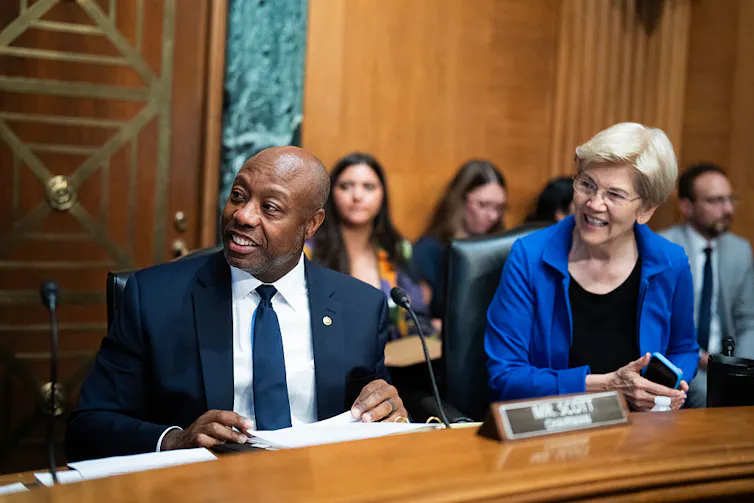
Middle-aged Black man wearing a suit and middle-aged white woman wearing a blue shirt smile while sitting at a dais.
Sen. Tim Scott, R-S.C., and Sen. Elizabeth Warren, D-Mass., attend a Senate Banking Committee markup of a proposed housing bill in July 2025. Tom Williams/CQ-Roll Call via Getty Images

Some state and local governments have used this power to enact rental housing policy. For example, Oregon largely prohibits eviction without cause. Chicago keeps a Building Department registry that tenants can search to see if a prospective rental has a history of building code violations. And New York City’s rent regulations have survived multiple court challenges over the years. As recently as 2023, the U.S. Supreme Court reiterated that states have broad discretion to regulate the landlord-tenant relationship, which includes implementing rent control and rent stabilization arrangements.

This jurisdiction-by-jurisdiction approach means that an American tenant’s rights can vary dramatically based on where they happen to live.

When crisis expands the window of possibility

That said, the U.S. federal government has intervened to protect tenants during acute crises.

In 2009, during the mortgage foreclosure crisis, Congress passed legislation to prevent tenants from experiencing eviction if banks foreclosed on the homes they occupied.

During the COVID-19 pandemic, the Centers for Disease Control and Prevention used its public health powers to institute a nationwide eviction moratorium to slow the spread of infection. Though the Supreme Court struck down the order 11 months later, the fears that opponents to the moratorium raised didn’t pan out: There was no widespread, coordinated nonpayment of rents, nor did the rental housing supply collapse.

These reforms helped widen the Overton window – the range of policies deemed politically possible.

If unaffordability in the U.S. continues to worsen, perhaps rental housing issues will receive more political oxygen, with more legislation proposed at the federal level.

Until then, cities and states will have to continue leading the way.

The Conversation

Allyson Gold does not work for, consult, own shares in or receive funding from any company or organization that would benefit from this article, and has disclosed no relevant affiliations beyond their academic appointment.
  •  

Supreme Court considers how much states can protect consumers when federal agencies won’t

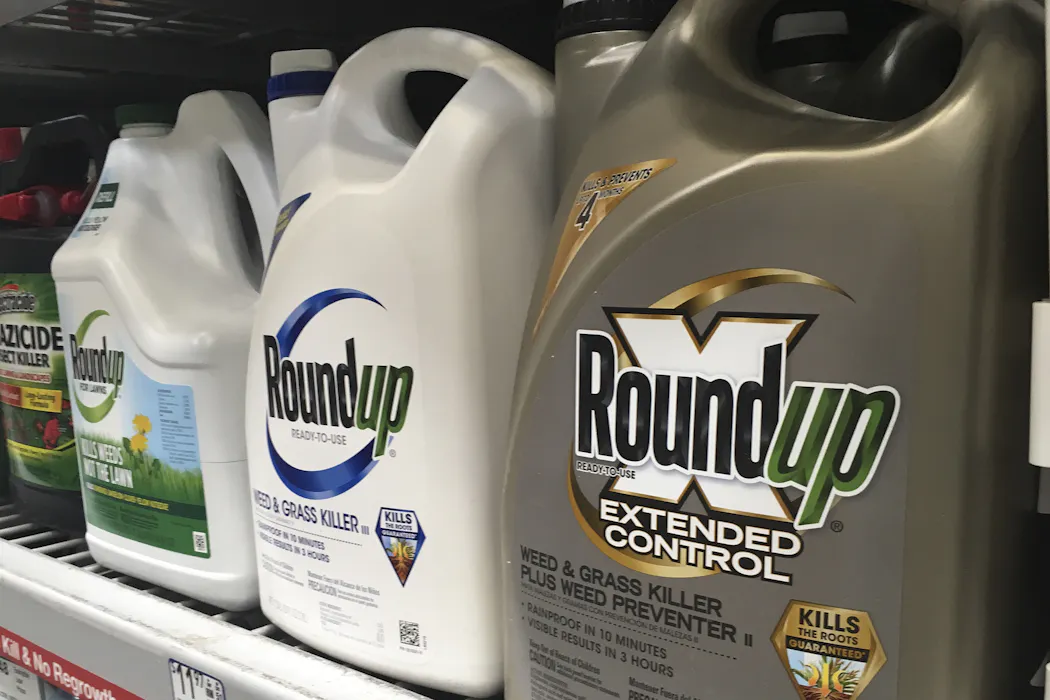
As of April 2026, the U.S. government has not required a warning label on Roundup weed killer. AP Photo/Haven Daley

Chemical giant Monsanto has argued for years that if the U.S. Environmental Protection Agency approves a pesticide label without requiring a cancer warning, states cannot hold its manufacturer liable in court for failing to warn consumers about cancer risks. The U.S. Supreme Court has now taken up the question after hearing oral arguments for and against that position on April 27, 2026.

Between 2009 and 2019, the EPA repeatedly concluded there is no evidence that glyphosate causes cancer in humans. The agency has, therefore, allowed glyphosate-based weed killers, including Monsanto’s Roundup, to remain on the market without a cancer warning on its label. That’s despite a 2015 report from the International Agency for Research on Cancer, a branch of the World Health Organization, that classified glyphosate as “probably carcinogenic to humans” based on “limited” evidence of cancer in humans from real-world exposure and “sufficient” evidence of cancer in experimental animals. A 2025 study had similar findings in lab rats.

Several U.S. lawsuits have used the 2015 report to win legal cases claiming that Monsanto failed to warn them of the chemical’s dangers. One of the first, Hardeman v. Monsanto Co., ended in a US$80 million verdict against Monsanto in 2019. The jury found that Edwin Hardeman, a California man who used the weed killer on his properties, had proved that Roundup had caused his cancer and that Monsanto had failed to warn consumers of the dangers of its product. That finding was upheld on appeal.

In the years since, Monsanto, now owned by German chemical giant Bayer, has paid out over $10 billion to settle about 100,000 claims from people who said their health was harmed after they were exposed to Roundup. But Monsanto continues to say that a federal law passed in 1947 and significantly amended in 1972, the Federal Insecticide, Fungicide, and Rodenticide Act, bars states from imposing any labeling requirement beyond what the federal government has approved – meaning state courts cannot hold the company liable for failing to include a warning that the U.S. EPA does not require.

While the law was originally administered by the U.S. Department of Agriculture, today the Environmental Protection Agency regulates the registration, use and sale of pesticides in the United States. Companies that wish to sell pesticides must, according to the law, demonstrate that they will not “cause unreasonable adverse effects on the environment,” including “water, air, land, and all plants and man and other animals … and the interrelationships which exist among these.”

As a scholar of environmental and food law, I know the Supreme Court’s decision in the case will affect tens of thousands of pending cases of those alleging harm from glyphosate.

A group of people gather in front of a large white building with pillars in the front.
A crowd demonstrates at the Supreme Court in favor of consumer protections on April 27, 2026. Tasos Katopodis/Getty Images

A short history of the case

The case before the Supreme Court began in 2019, when John Durnell, a resident of St. Louis, sued Monsanto in a Missouri state court, claiming that his regular use of Roundup in neighborhood beautification efforts over many years had caused him to develop non-Hodgkin lymphoma, a type of blood cancer.

As it had done in previous cases, Monsanto sought to dismiss the lawsuit by claiming the federal law prevented Durnell from making those claims in state court. But the trial proceeded, and in 2023 a Missouri jury found that Monsanto had, in fact, failed to warn Durnell of the danger and awarded him $1.25 million in damages.

In February 2025, a state appeals court upheld the jury’s verdict, ruling that Missouri’s laws requiring companies to warn of dangers are not preempted by federal law. Both Missouri and federal law, the appeals court found, require companies to label products with adequate warnings to protect public health. The fact that the EPA had not required a cancer warning on Roundup did not, in the court’s view, absolve Monsanto of its separate obligation under Missouri law to warn consumers of known dangers.

The Supreme Court agreed to hear an appeal in the case, seeking to determine whether federal law bars states from holding a company liable for failing to include a warning that the EPA reviewed and chose not to require.

At the Supreme Court

During the oral argument, lawyer Paul Clement, representing Monsanto, claimed that Missouri was trying to require a different label than federal law allows, and that the company could not have added a cancer warning on its own. The company argued that EPA regulations prohibit manufacturers from changing safety warnings without the agency’s prior approval, a step Monsanto never took.

Principal Deputy Solicitor General Sarah Harris, a top Justice Department attorney, told the court the Trump administration agrees with Monsanto’s interpretation of the law.

Durnell’s attorney, Ashley Keller, argued that registration of a pesticide with the EPA does not exempt a company from civil liability for its product’s safety.

Legal commentators have suggested the justices are split but that perhaps a majority favors Monsanto’s position.

People wearing protective clothing lie down in the street.
Protests around the world, including this one in Paris in 2019, have objected to the manufacturing and use of glyphosate, the active ingredient in the weed killer sold as Roundup. AP Photo/Rafael Yahgobzadeh

What comes next

A Supreme Court ruling in Monsanto’s favor would block Durnell’s claim. Other efforts are also underway to defend corporations from similar claims by consumers alleging products were dangerous.

In February 2026, President Donald Trump signed an executive order calling glyphosate “crucial to the national security and defense” because of its role in boosting food production by killing weeds in farmers’ fields.

Congress is also considering a proposal that would prevent state and local governments from imposing stricter labeling requirements than approved by the EPA. That legislation could also prevent courts from holding manufacturers liable for harms caused by products whose labels the EPA had approved. Six states have also introduced bills to limit pesticide manufacturers’ liability. If successful, those efforts would effectively shield pesticide companies from lawsuits similar to Durnell’s.

A broader legal principle is also at stake: whether Congress or federal agencies can block states from protecting people when federal regulators have not required companies to warn the public about potential harm.

In April 2026, Sen. Ted Cruz, a Texas Republican, introduced a bill that would prevent people from filing lawsuits in state courts that seek to hold oil and gas companies responsible for environmental damage, including their contributions to climate change. In late 2026 or early 2027, the Supreme Court is also expected to hear a case about whether existing federal law already blocks those lawsuits.

Together, these efforts reflect concerted efforts to protect large corporations from consumers’ claims that products have harmed them and to prevent states from holding companies accountable when federal regulation falls short.

The Conversation

Sarah J. Morath does not work for, consult, own shares in or receive funding from any company or organization that would benefit from this article, and has disclosed no relevant affiliations beyond their academic appointment.

  •  

Boom in cremation hides surprising truths about what Americans really want when they die

A striking 51.7% of Gen Z respondents ranked casket burial as their first choice, compared with just 27.1% of baby boomers. Ashley Cooper/The Image Bank via Getty Images

Nearly two-thirds of Americans now opt for cremation – a figure that has been steadily increasing over five decades.

On the surface, that proportion tells a simple story: The nation has embraced cremation, while its preference for casket burials has fallen off.

But as a scholar of funeral and cemetery law, I decided to dig deeper into this trend.

I wanted to know whether people were embracing cremation because they actually preferred it, or if they were rejecting casket burial for one reason or another. I also explored whether consumers were open to new options in death care, like water cremation and human composting.

You’re dead – what’s next?

With funding from the Cremation Association of North America and the Order of the Good Death, a nonprofit organization that promotes more informed and less fear-driven conversations about death and dying, I launched the first academic survey on consumer preferences in death care in 2024.

The survey presented over 1,500 American adults in a nationally representative sample with the definitions of six legal methods of disposition in a random order. It asked respondents whether they had “heard” of that method and whether they would “consider” that method. The six methods were cremation, casket burial, green burial, donation to science, water cremation and human composting.

At the end of the survey, respondents were asked to rank the six methods of disposition in terms of preference.

While cremation, casket burial and donation to science are nearly universally available in the U.S., the other three methods of disposition are not.

Green burial – defined as the burial of human remains without embalming, contained only in a biodegradable shroud or casket – is legal in all 50 states and Washington, but is only offered by a small share of cemeteries.

Water cremation, also known as alkaline hydrolysis, is a process in which human remains are placed in a pressurized chamber filled with water and chemicals and eventually reduced to powder. Water cremation is legal in 28 states but not offered by many funeral homes.

Human composting, also known as natural organic reduction, is a process in which human remains are placed in a container filled with natural materials and microorganisms that break the body down to soil. It is legal in 14 states and currently commercially available in only three.

The cremation paradox

A central tension emerged in the survey results: While 72.6% of respondents said they would consider cremation, only 33.4% ranked it as their actual first choice. Casket burial edged it out at 35.9% as the top-ranked preference. Yet the real-world cremation rate – 62% – is nearly double the stated first-choice rate.

So what’s going on?

The survey didn’t ask respondents to explain their reasoning, and it intentionally left out costs because they vary dramatically by region. But the numbers strongly imply that many Americans are choosing cremation not because it is their top preference, but because their actual first choice is either unavailable or too expensive.

For example, 40.4% of respondents indicated that they would consider human composting, and 5.9% ranked it as their first choice. But currently fewer than 1,000 bodies are composted in the United States each year.

That is likely because the vast majority of funeral homes do not offer the service, and consumers may have a difficult time locating the handful of providers. Human composting is also more expensive than cremation. The average cost for a direct cremation is approximately US$2,000, while human composting typically costs $5,000 to $7,000. Given these barriers, it’s certainly possible that many consumers are simply pivoting to their second choice: cremation.

The pattern holds across every region of the country, where actual casket burial rates closely match stated first-choice rates, while cremation rates far exceed them. For example, in the South, the burial rate closely tracked the 45.7% who ranked it as their first preference. But the cremation rate was 53.5%, nearly double the 27.3% who ranked it first.

Baby boomers – the generation currently at the forefront of end-of-life planning – are the most willing to consider cremation at 78.8% and the least willing to consider casket burial at just 54.8%. But are they eagerly choosing cremation or simply defaulting to it due to logistical or financial constraints?

Neo-traditional Gen Zs?

At the same time, the data suggests that the youngest adults in the survey are moving in the opposite direction.

A striking 51.7% of Gen Z respondents ranked casket burial as their first choice, compared with just 27.1% of baby boomers. Only 55.9% of Gen Z was even willing to consider cremation – less than today’s actual cremation rate.

It’s tempting to connect this to widely reported trends among Gen Z toward social conservatism, which includes the generation’s embrace of religions with burial traditions.

The survey does show that conservative respondents strongly preferred casket burial over cremation – 53.1% to 28.4% – and that Roman Catholic or Protestant respondents were significantly more likely to favor casket burial. If Gen Z is trending in those directions, a preference for traditional burial would make sense.

But Gen Z may not understand what casket burial involves.

Nearly half who ranked it first also said they would not consider embalming, even though embalming is typically part of the process. Some young respondents may be confusing casket burial with green burial, or may not grasp the financial realities of their stated preference. A standard viewing followed by a casket burial in the United States generally costs at least $10,000, depending on the cost of the burial plot.

Members of Gen Z, who are roughly between 15 and 30 years old, may also feel a stronger connection to their childhood homes. Other studies have found a correlation between geographic mobility and burial preference, perhaps because burial connects a person to a place in perpetuity.

Only longitudinal data, collected year after year, will reveal whether this data indicates a sticky generational shift or an age effect that fades.

Going green

Although Americans have, for a long time, largely limited themselves to two options, burial or cremation, the survey revealed remarkable openness to new methods.

Only 47.5% of respondents had even heard of a green burial. Yet after reading a brief definition, 56.4% said they would consider it. One-third ranked it as their first or second choice.

Water cremation showed an even more dramatic shift: Only 24% had heard of it, but 39.3% were willing to consider it after learning about it.

These numbers suggest significant unmet demand. Human composting was the first choice of nearly 6% of respondents – a striking figure for a method that has existed for only six years and is available in just a few states.

The big takeaway is that the cremation rate may be artificially inflated because of limitations on awareness, availability and legal access to greener alternatives.

The future of American death care probably isn’t a march toward more cremation. Instead, it’ll probably be a bumpy road of unmet wants, generational surprises and alternatives that need a little more time to get on people’s radars.

The Conversation

Tanya D. Marsh is a board member for Recompose, a funeral home in Washington state that exclusively offers natural organic reduction and a board member for the North Carolina Funeral Consumers Alliance. Funding for the Wake Forest Law Survey on Consumer Preferences in Death Care was provided by the Cremation Association of North America and the Order of the Good Death.

  •  

Trump risks falling in to the ‘asymmetric resolve’ trap in Iran − just as presidents before him did elsewhere

President Donald Trump reacts to a question about Iran at Miami International Airport in Miami, Fla. Mandel Ngan/AFP via Getty Images

Little has seemingly gone as Washington planned in the war against Iran.

The Iranian people have not risen up, one hard-line leader has been replaced by another, Iranian missiles and drones keep hitting targets across the Middle East, Iran closed the Strait of Hormuz, driving oil and gas prices up worldwide, and in sharp contrast to Trump’s demand for “unconditional surrender,” Tehran has rejected a 15-point U.S. plan for a ceasefire.

So how did things go so wrong?

As a scholar who researches U.S. forever wars, I believe the answer is simple: Trump, like other U.S. presidents before him, has fallen into what I call the trap of asymmetric resolve. In short, this occurs when a stronger power with less determination to fight starts a military conflict with a far weaker state that has near boundless determination to prevail. Victory for the strong becomes tough, even close to impossible.

When it comes to Iran, the Islamic Republic wants – and needs – victory more than the United States. Unlike the U.S., the Iranian government’s very existence is on the line. And that gives Tehran many more incentives – and in many cases very effective countermeasures – through which to fight on.

The trap of asymmetric resolve

Typically, in asymmetric wars the stronger side does not face the same potential for regime death as the weaker side. In short, it has less on the line. And this can lead to lesser resolve, making it hard to sustain the costs of war required to defeat the weaker, more determined rival.

Such dynamics have played out in conflicts dating back to at least the sixth century B.C., when a massive Persian army under Darius I was checked by a much smaller, determined Scythian military, leading in the end to a humiliating Persian retreat.

For the U.S. in the modern era, wars of asymmetric resolve have likewise not been kind.

In the Vietnam War, an estimated 1.1 million North Vietnamese civilians and Viet Cong fighters died compared to 58,000 U.S. troops. Yet, the U.S. proved no match for the North’s resolve. After eight years of brutal war, the U.S. gave up, cut a deal, withdrew and watched North Vietnam roll to victory over the South.

People hold aloft flags on top of a bus.
Vietnamese celebrate after the fall of Saigon to North Vietnamese troops in 1975. Jacques Pavlovsky/Sygma via Getty Images

In 2001, the U.S. unseated the Taliban in Afghanistan, set up a new government and built a large Afghan army supported by U.S. firepower. Over the next 20 years, the remnants of the Taliban lost about 84,000 fighters compared to around 2,400 U.S. troops, yet the U.S. ultimately sued for peace, cut a deal and left. The Taliban immediately returned to power.

Many other great powers have fallen into this same trap – and at times in the same countries. Despite far fewer casualties than the Afghan resistance, the mighty Soviet Union suffered a humiliating defeat in its nine-year war in Afghanistan during the 1980s. The same happened to the French in Vietnam and Algeria after World War II.

Asymmetric resolve in the Iran war

A similar asymmetry is now playing out in Iran.

Unlike 2025’s 12-day war that largely targeted Iranian military installations, including its nuclear sites, Trump and the Israelis are now directly threatening the survival of the Iranian government. Killing the supreme leader, a slew of other powerful figures, and encouraging a popular uprising made this crystal clear.

Tehran is responding as it said it would were its survival to be at stake. Prior to the current war, Iran warned it would retaliate against Israel, Arab Gulf nations and U.S. bases across the region, as well as largely close the Straight of Hormuz to commercial traffic.

In short, it is going all-in to cause as much pain as it can to the U.S. and its interests.

Iran has suffered the disproportionate number of loses in the current war, both in terms of human casualties and depleted weaponry. As of mid-March, there have been upward of 5,000 Iranian military casualties and more than 1,500 Iranian civilian deaths, compared to 13 dead U.S. service members.

Yet, Tehran isn’t backing down, saying on March 10, “We will determine when the war ends.”

Such Iranian resolve seemingly confounds Trump. Before the war, he wondered why Iran wouldn’t cave to his demands, and he has since conceded that regime change – seemingly a major U.S. goal at the war’s onset – is now a “very big hurdle.”

This conflicts with how Iran was being presented to the American public prior to the war. Secretary of State Marco Rubio said in January that “Iran is probably weaker than it’s ever been.” It has no ballistic missiles capable of hitting the U.S. homeland, a decimated nuclear program and fewer allies than ever across the Middle East.

No wonder a Marist poll from March 6 found that 55% of Americans viewed Iran as a minor threat or no threat at all.

With Iran proving resilient, American public opinion on the war has been definitively negative. This aspect of war resolve can be especially challenging for democracies, where a disgruntled public can vote leaders out of power.

Fading or low U.S. public support for war was likewise a primary driver in past U.S. asymmetric quagmires.

Indeed, the Iran war is more unpopular than just about any other U.S. war since World War II, with polling consistently finding around 60% of Americans in opposition.

For Iran, as a nondemocracy there are far less reliable figures to compare this to on its side. Before the war, the government faced a major public crisis with widespread protests, but for many reasons – including its brutal crackdown and a potential “rally around the flag” effect – Iranian public opinion has proved far less salient.

Protesters hold placards reading 'stop the war on Iran!'
New Yorkers at a ‘Stop the War in Iran’ demonstration on March 7, 2026. Ryan Murphy/Getty Images

What’s next?

The Trump administration is attempting to mitigate the impact that asymmetrical resolve has by saying the length and scope of the operation will remain limited.

To reassure the public and calm financial markets, Trump keeps promising a short war and delaying bigger strikes to give space for negotiations that he, not the Iranians, says are ongoing.

History suggests that once faced with a smaller military power showing greater resolve, the larger power has two trajectories. It can succumb to the hubris of power and escalate, such as was the case in Vietnam, Iraq and Afghanistan. Or it can wind down the conflict in an attempt to save face.

Often in the past, leaders of a stronger side opt for the first option of escalation. They just can’t escape thinking that a little more force here or there wins the conflict. President Barack Obama wrongly thought a surge of 30,000 additional U.S. troops into Afghanistan would bring the Taliban to their knees.

Despite signs that he wants out of the Iran war, Trump could still fall to the hubris of power. More U.S. troops are on the way to the Gulf, and B-52 bombers have been flying over Iran for the first time.

As Korea, Vietnam, Iraq and Afghanistan show, following hubris into escalation against a determined foe like Iran will probably come at great cost to the U.S.

The other option – that of winding down the war – is still available to Trump.

And Trump has gone down this route before. He signed a deal in 2020 with the Taliban to end the war in Afghanistan rather than surge more troops in. And just last year, Trump declared victory and walked away from an air war in Yemen when he realized ground forces would be required to overcome the resolve of the Houthis.

The U.S. president could try the same with Iran – saying the job is done then walking away, or entering real, sustained negotiations to end the war. Either way, he’ll need to give something up, such as unfettered access through Hormuz or sanctions relief.

Trump likely won’t like that. But polling suggests Americans will take it. After all, who wants another Vietnam?

The Conversation

Charles Walldorf is a Senior Fellow at Defense Priorities.

  •  
❌