Reading view

Imran’s sisters call for public pressure as authorities deny jail meeting

ISLAMABAD: Party leaders were once again denied a meeting with incarcerated PTI founder Imran Khan in Adiala jail on Tuesday as his sisters appealed to the public to gather in large numbers outside the jail to exert pressure on the government.

All three sisters of Imran arrived at Adiala jail, as per routine, as Tuesday is the designated meeting day, but were told by law enforcement officials that they could not proceed.

PTI Secretary General Salman Akram Raja, former chairman of the Public Accounts Committee Junaid Akbar, who is also president of PTI Khyber Pakhtunkhwa, and other leaders were present outside the jail.

Talking to the media outside Adiala Jail, Aleema said she hoped a large number of people would soon gather there to exert pressure on the government, but she appeared disappointed by the meeting’s closing time.

She said that it was unfortunate that the courts were not delivering justice.

Noreen Khan, speaking to the media, said: “They believe they are not answerable to anyone. Imran Khan is the identity of Pakistan and he will stay in the country. However, they will not stay in Pakistan.”

Uzma Khan said that more pressure was needed to secure a meeting with Imran.

“Khan sahib had said that parliamentarians should come out and reach Adiala jail. It will make news if they are arrested. Imran Khan is in solitary confinement. Leaders are underground; I urge them to come out of their houses,” she added.

Raja said that there was no single leader in the PTI. “We are all workers and we come here to the jail,” he added.

He added that he had no differences with Aleema. “Imran Khan has already assigned responsibilities to all party leaders,” he added.

Meanwhile, PTI Central Information Secretary Sheikh Waqas Akram strongly criticised the government for a persistent and total disregard for court orders and the continued denial of visitation rights to the party’s founding chairman and his spouse, Bushra Bibi.

In a statement, he said, “Despite clear judicial directives allowing meetings with family members, lawyers, and political leaders twice a week, these orders are repeatedly ignored.”

Akram asserted that Imran remained the most popular political leader in the country and could not be erased from the hearts and minds of the people.

HRCP Report

In a separate statement, the PTI expressed a strong reaction to the latest annual report of the Human Rights Commission of Pakistan (HRCP), calling it a charge sheet highlighting the deteriorating state of human rights in the country.

“The report exposes the incompetence, authoritarian governance, and violations of the Constitution by the current ‘Form-47’ government”, the party said.

“The HRCP report confirms that freedom of expression in Pakistan is under severe pressure, journalists are being harassed, media houses are facing unofficial restrictions, and the voices of those speaking the truth are being suppressed through force. This situation poses not only a threat to democracy but also damages the credibility of state institutions.

“The report raises serious concerns regarding enforced disappearances, extrajudicial actions and unchecked powers of law enforcement agencies, saying the rule of law in the country has weakened. Political activists, particularly PTI leaders and workers, are reportedly facing fabricated cases, illegal detentions and inhumane methods such as solitary confinement,” it stated.


  •  

PTI’s Raja stands by decision on Punjab Coordination and Monitoring Committee composition

ISLAMABAD: PTI Secretary General Salman Akram Raja on Tuesday affirmed his decision regarding the composition of the newly formed Punjab Coordination and Monitoring Committee, saying that no existing member would be excluded and no new name would be added to the body.

On Monday, Raja notified a five-member body under the convenership of Amjad Khan Niazi to “coordinate organisational matters between the four regions of Punjab through engagement with the presidents and general secretaries of the said regions”.

PTI leaders Naeem Haider Panjotha, Shaukat Mahmood Basra, Ali Ijaz Buttar and Mehr Abdul Sattar were also named as members.

However, several PTI members and workers have been criticising Raja’s decision to nominate Niazi as the convener of the body, because he had parted ways with the party in the wake of the events related to the May 9 protests.

Speaking to Dawn, Raja said, “I know that some leaders have been criticising Niazi that he left the party, but they should not forget that Imran Khan himself had accepted his excuse and made him his political coordinator.“

“There is a vacuum in PTI Punjab as 80 per cent of the leadership is either in jail or underground. So, Niazi is the best option to deal with the issues and continue the political struggle in the province,” he maintained.

The terms of reference, announced by the secretary general, also detail other responsibilities, such as coordinating the planning and preparing for elections at all levels, monitoring and ensuring completion of party organisations at all levels, coordinating the activities of all affiliated wings of the party, engaging and advising regional presidents and general secretaries with respect to the effectiveness of party organisations at various levels, and proposing and monitoring the execution of political events in the province.

In addition, the body is to monitor prisoners’ welfare and provide legal support with respect to court cases. The committee is required to provide a weekly report of its activities to the Secretary General, according to the notification issued by Raja.

Replying to a question, Raja said that immense pressure was being exerted to change the members of the committee, but he would not do so.

“There were so many candidates to become members of the committee, but after failing to secure a slot, they have been criticising it. Niazi met Imran and informed him that he had to quit the party due to pressure. Later, the PTI founder appointed him as his political coordinator.”

“Basra is a seasoned worker and the party’s deputy general secretary. Sattar is a symbol of struggle and he spent five years in jail due to his stance against Okara Military Farms,” he asserted.

He added that the PTI founder had “given a direction to encourage youth” and that is why Panjotha had been made a member of the committee.

“He never skips meetings and regularly visits Adiala jail,” he added.

In response to a question, he said that PTI would continue its political struggle.

Meanwhile, PTI leader Basra said that as many as 60 first information reports had been registered against him and that he was facing multiple cases.

“We will take all possible steps to make the party stronger and more active so that Imran Khan is released,” he said.

A PTI leader, requesting anonymity, said that the formation of a Punjab Coordination and Monitoring Committee had become a matter of debate within party circles.

“While there are a number of leaders who have been opposing the decision, there are also leaders who have been supporting it,” he said

  •  

Nearly 20,000 patients ‘missing’ after initiating treatment at HIV centres, NA committee told

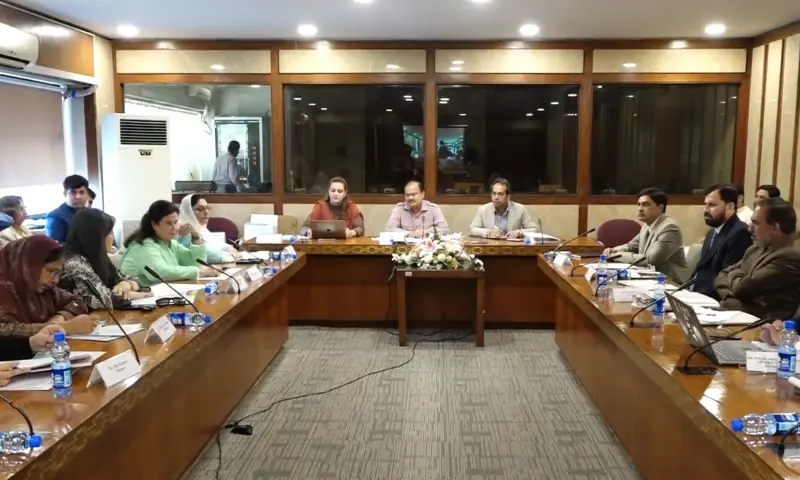
ISLAMABAD: The National Assembly’s Standing Committee on Health was informed by the health ministry on Tuesday that nearly 20,000 patients who initiated treatment at antiretroviral therapy (ART) centres for human immunodeficiency virus (HIV) and AIDS are now “missing”.

The committee also rejected the health ministry’s request to hold an in-camera briefing over the issue of HIV.

The NA committee, chaired by MNA Dr Mahesh Kumar Malani, had taken strong notice of the rising trend of HIV and AIDS cases in Pakistan and sought a briefing from the ministry.

Pakistan has become one of the fastest-growing HIV epidemics in the WHO Eastern Mediterranean Region, with new infections rising by 200 per cent over the last 15 years — from 16,000 in 2010 to 48,000 in 2024.

The ministry informed the committee that an estimated 369,000 people were living with HIV in Pakistan, while only 84,000 cases were currently registered, highlighting a significant detection gap. In 2025 alone, 14,000 new cases were reported.

In a critical revelation, the committee was informed that out of the 84,000 registered cases, nearly 20,000 patients who initiated treatment at ART centres were now “missing”, raising serious concerns about follow-up, counselling and patient retention. The ministry stated that a comprehensive master plan was being developed to address these gaps.

Malani informed the meeting that Health Minister Mustafa Kamal had requested an on-camera briefing. The chair added that the matter was already the focus of public attention, particularly due to reports of over 600 cases of HIV and AIDS reported in Islamabad.

However, committee members Aliya Kamran and Shazia Sobia Aslam Soomro opposed the proposal to hold the meeting on-camera. They emphasised that the issue was of significant public importance and should remain transparent.

Kamran stated that lives were being lost due to AIDS, while Sobia stressed that media presence in the committee proceedings was essential.

During the briefing, Kamal clarified that no new outbreak of HIV or AIDS has occurred this year. He referred to the Taunsa cases reported in 2024, highlighting that for the first time, all related facts were openly shared with the media. He noted that concealing data would be a criminal act.

However, the minister highlighted that HIV/AIDS programmes in Pakistan were largely supported by the Global Fund (GF).

“For the current three-year cycle, Pakistan has received funding amounting to $65 million. Of this, $3.9m has been allocated to the government, while the remaining funds have been distributed to organisations such as Nai Zindagi and UNDP (United Nations Development Programme),” he said.

He claimed that Pakistan has been placed in an “Additional Safeguard Category” by GF. Screening centres across the country receive medicines and syringes through these partner organisations, he said.

The minister also informed the meeting that medical supplies worth $800,000, provided by the GF, were stolen within Pakistan.

The committee noted that Pakistan’s HIV prevalence stood at 0.2 per cent compared to the global average of 0.5pc. However, localised outbreaks such as in Taunsa, Kot Momin and parts of South Punjab pointed to serious failures in infection prevention and control (IPC), unsafe medical practices and weak enforcement, it said.

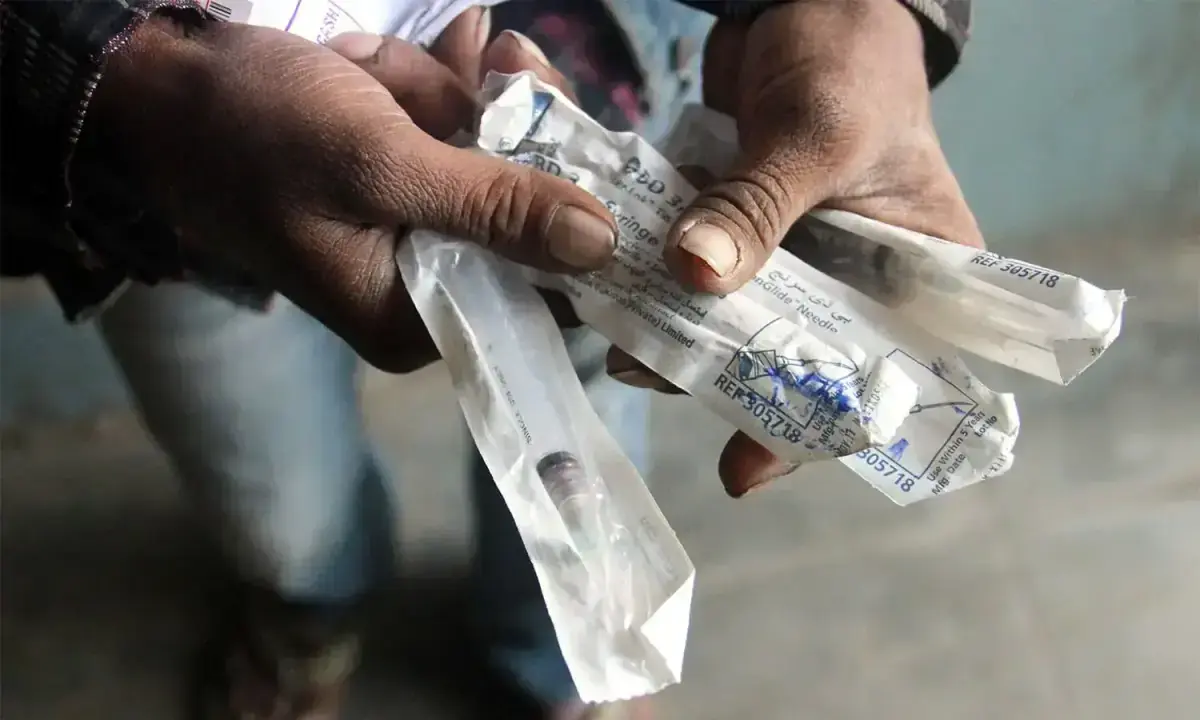
Members raised alarm over the continued availability of banned syringes in the market despite regulatory prohibitions since 2021, weak monitoring of blood banks and transfusion camps, lack of sustained public awareness campaigns, persistent stigma discouraging testing and treatment and the growing number of “missing patients” who drop out after initial diagnosis.

The meeting was attended by MNAs Zahra Wadood Fatemi, Farah Naz Akbar, Shazia Sobia Aslam Soomro, Shaista Khan, Nikhat Shakeel Khan, Aliya Kamran, Darshan, Sabheen Ghoury, Chaudhry Muhammad Shahbaz Babar and Farukh Khan. The minister for national health, senior officials from the health ministry and its attached departments also participated in the meeting.

Three hospitals in Karachi have recorded a dramatic increase in the number of paediatric HIV cases over the last nine months and their numbers continue to grow, it emerged in April.

Experts at a press conference held on Saturday demanded that the government declare a national health emergency over the “dangerous spread” of the disease, now affecting children in large numbers. They also called for the strict implementation of basic infection control measures and the law on single-use syringes.

The experts further pressed for setting up a national dashboard with credible information on the status of major infectious diseases, including HIV, hepatitis B, C and mpox.

  •  

Formation of coordination body stirs up bad blood in PTI

• Party leaders ‘unenthused’ by notification of five-member body to look after Punjab’s affairs
• Appointment of Amjad Khan Niazi as convenor, who parted ways after May 9 episode, raises eyebrows

ISLAMABAD: The formation of a Punjab Coordination and Monitoring Committee seems to have once again stirred up bad blood among PTI leaders.

The five-member body, which was notified by party secretary general Salman Akram Raja on Monday, has been met with derision within party circles, with the province’s regional presidents expressing a lack of faith in those named to the committee.

Interestingly, Amjad Khan Niazi, who parted ways with PTI in the wake of the events of May 9, 2023, is named as convenor of the body.

The notification, seen by Dawn, states that Niazi, Naeem Haid­­er Panjotha, Shaukat Mahmood Basra, Ali Ijaz Buttar and Mehr Abdul Sattar would also be part of the committee, which is tasked with “coordinat[ing] organisational matters between the four regions of the province of Punjab through engagement with the presidents and general secretaries of the said regions”.

The terms of reference also detail other responsibilities, such as coordinating the planning and preparation of all elections, monitoring and ensuring completion of party organisations at all levels, coordinating the activities of all affiliated wings of the party, engaging and advising regional presidents and general secretaries with respect to the effectiveness of party organisations at various levels, and proposing and monitoring the execution of political events in the province.

In addition, the body is to monitor prisoners’ welfare and provide legal support with respect to court cases. The committee is req­uired to provide a weekly report of its activities to secretary general, according to the notification signed by Raja.

According to insiders, bad blood between Salman Akram Raja and Firdous Shamim Naqvi provides some context to this notification. The inclusion of Niazi is said to be unpopular among party cadres, and recently led to a heated exchange between Raja and Naqvi.

“Naqvi alleged that since Raja changed the PTI leadership in Lahore, the city became dead/inactive. The very next day [i.e. Monday] Salman Akram Raja issued the notification,” a source said.

Another senior party leader said that there was long story beh­ind the notification, which has created further rifts within the party.

“Initially, Dr Yasmin Rashid was president of the PTI Punjab Coordination Committee. After her arrest, Hammad Azhar was appointed acting president. However, he also had to go underground after he was declared a proclaimed offender. Subse­quen­tly, Imran Khan had directed to give the responsibility to Sheikh Waqas Akram and Sardar Latif Khosa,” he said.

The party leader said that when Sheikh Waqas Akram was elevated as the party’s central information secretary, the coordination committee became dysfunctional.

During a subsequent meeting, Imran Khan had instructed Salman Akram Raja to give some responsibility to Aliya Hamza Malik, after which she was made chief organiser, a post which did not exist, the leader said. Later, after she was also convicted by a court, the post fell vacant.

However, the party leader insisted that PTI Punjab did not need a president or chief organiser, in the presence of regional presidents nominated by Imran Khan and answerable to the central leadership.

He claimed that last week, a meeting was held, which was attended by all four regional presidents of Punjab: Rai Hassan Nawaz, Taimur Malik, Bilal Ijaz and Ahmed Chattha, as well as the opposition leader in Punjab Assembly, Raja and Sheikh Waqas Akram.

In the meeting, the leader said Raja had given a commitment that a new Punjab head will be appointed after getting consent from Imran Khan.

However, the notification came out of the blue.

When contacted, PTI Central Information Secretary Sheikh Waqas Akram told Dawn the appointments were made in view of the situation of Punjab.

He expressed hope that the coordination and monitoring committee will contact all leaders and workers of Punjab and help reorganise them.

Published in Dawn, May 5th, 2026

  •  

PTI accuses govt of ‘unprecedented economic crisis’, slams claims of stability

ISLAMABAD: PTI accused the government on Monday of driving Pakistan into an “unprecedented economic and governance crisis” that has “crushed the common man”.

In a statement, PTI’s Information Secretary Sheikh Waqas Akram stated that the “stability” claimed by the government was nothing but a “cruel joke on 250 million Pakistanis”.

Akram said that after four years of no reforms, inflation had returned sharply, with the Consumer Price Index rising 11 per cent year-on-year and the Sensitive Price Indicator increasing 15pc. He added that fuel and electricity prices had surged significantly, with petrol and diesel nearing Rs400 per litre and power tariffs reaching Rs60–80 per unit, while food costs, including flour and roti, had also risen markedly across the country.

He further slammed the Punjab government’s ban on inter-provincial wheat movement, calling it a blatant violation of Article 151 of the Constitution.

“A Form-47 chief minister who herself sits on an illegitimate seat has no regard for the federation. The prime minister, enslaved to the Takht-e-Lahore, refuses to intervene even as flour prices spiral out of control across KP and other provinces,” Akram added.

“Food imports have surged by $2 billion, and Pakistan now ranks among the 10 most food-insecure countries in the world, with 11 million citizens at risk of extreme hunger. This government has no food security plan, no energy plan, no growth plan, no export plan, no Foreign Direct Investment (FDI) plan and no plan to cut wasteful expenditure. It couldn’t even win a majority on the floor of the house. Yet it continues to rule through coercion and manipulation,” he alleged.

“Development is being sacrificed at the altar of elite extravagance. This is not stability; this is fiscal surrender and economic strangulation,” he asserted.

Akram also termed the government’s tax policy as “punish the documented, protect the powerful”.

On the energy front, Akram called the government’s decision to borrow Rs1.25 trillion to retire circular debt “the same old disease with new excuses”.

“With power circular debt at Rs1.7 trillion and gas circular debt at Rs2.6 trillion, the regime continues to shift the burden onto consumers instead of fixing theft, losses, recoveries and exploitative contracts,” he added.

“PTI has always maintained that real economic progress is impossible without clean, elected democratic governance, strong institutions, ease of doing business and merit-based decision-making.”

“Unless these fundamentals are fixed, no amount of photo-ops, statements or desperate meetings will bring lasting change. Pakistan possesses the potential, the strategic location and the market, but under this setup, it will continue to lose opportunities and dignity. The people of Pakistan are paying the heaviest price for a government that exists only to finance the lifestyles of its rulers,” he concluded.

  •  

HRCP highlights severe contraction of civic space, erosion of judicial independence in 2025

ISLAMABAD: The Human Rights Commission of Pakistan’s (HRCP) on Monday launched its annual report for 2025, observing a severe contraction of civic space, the erosion of judicial independence and deepening insecurity over the past year.

The report, titled “State of Human Rights in 2025”, was launched in Islamabad, with HRCP Chairperson Asad Iqbal Butt, former chairperson Hina Jilani, co-chair Munizae Jahangir, vice-chair Nasreen Azhar and Secretary General Harris Khalique present.

Butt, while speaking to reporters, said it was a fact that human rights in Pakistan were in their worst state.

“It is not a report, it is a charge sheet. In 2025, as many as 273 persons faced enforced disappearance. Around 13 were traced from state agencies’ centres, but others are unknown,” he said.

Butt added that thousands of people have been missing for years and that if anyone has committed a crime, they should be produced in a court of law.

Khalique said that multiple constitutional and human rights-related violations were part of the report and on the record.

The report observed with alarm that the right to freedom of expression — particularly to question authority and demand accountability — was deeply suppressed in 2025, with far-reaching consequences for the rule of law and the protection of fundamental freedoms.

Additionally, legal and institutional mechanisms were increasingly used to curb dissent. Amendments to the Prevention of Electronic Crimes Act (Peca), as well as the use of sedition and anti-terrorism laws, led to the widespread targeting of journalists, political workers, activists and lawyers.

Reports of intimidation, enforced disappearances and restrictions on movement contributed to a climate of fear and self-censorship, limiting public discourse and obscuring human rights violations.

HRCP further claimed that amendments to the 1997 Anti-Terrorism Act (ATA) at the federal and Balochistan levels allowed law enforcement agencies and even the armed forces to detain any person for up to three months without charge or judicial oversight, expanding the scope for undermining fundamental rights of liberty, due process and protection from arbitrary detention.

In particular, the report highlighted a marked deterioration in judicial independence, particularly following the passage of the 27th Constitutional Amendment, which reconfigured judicial appointments and expanded executive influence.

According to the report, key court decisions during the year further narrowed democratic space, raising serious concerns about due process and the separation of powers through judgements that enabled the military trials of civilians, and effectively delegitimised the PTI by denying the party the reserved seats it had been granted in 2024.

Security challenges compounded rights violations. HRCP claims that counter-terrorism operations disproportionately affected Khyber Pakhtunkhwa and Balochistan, resulting in significant civilian and law enforcement casualties.

Enforced disappearances, extrajudicial killings, and collective punishments persisted, according to HRCP, while vulnerable groups — including women, children, religious minorities, and transgender persons — continued to face violence and discrimination without adequate redress.

The report further highlighted that miners and sanitation workers in particular remained vulnerable to accidents with little reported progress in improving their safety.

Moreover, HRCP noted that climate-related disasters, particularly in Gilgit-Baltistan, caused multiple deaths and destroyed infrastructure, but the government’s response remained reactive rather than long-term.

The report did, however, note several positive developments. The passage of the National Commission for Minorities Act represented a long-awaited step toward institutional protection for religious minorities.

Moreover, the Child Marriage Restraint Acts for Islamabad Capital Territory and Balochistan marked progress in safeguarding children’s rights, HRCP reported, while the higher courts issued important judgments advancing women’s rights in areas such as inheritance and marriage.

Targeted welfare initiatives and institutional reforms at the provincial levels also offered relief, but incrementally, HRCP said.

  •  

Pakistan reports two polio cases, tally for current year reaches three

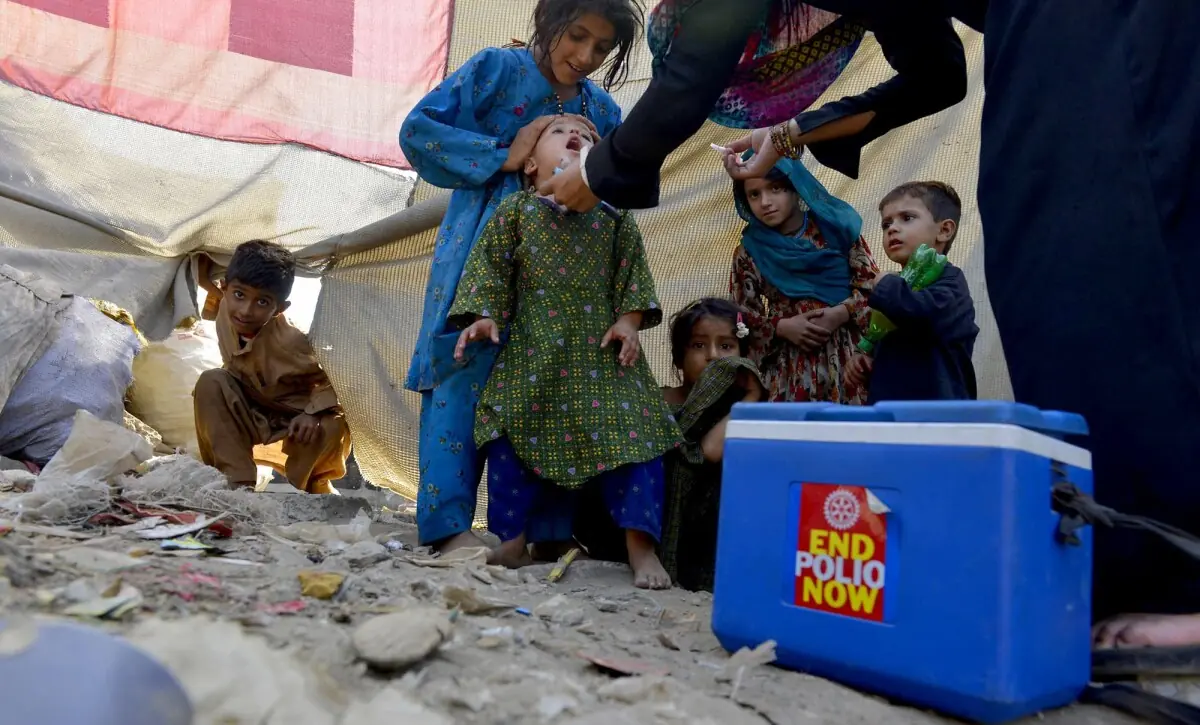
ISLAMABAD: Pakistan reported two polio cases on Friday from Khyber Pakhtunkhwa (KP), bringing the total number of cases for the ongoing year to three.

An official of the Pakistan Polio Eradication Programme, speaking on condition of anonymity, said that the National Emergency Operations Centre for Polio Eradication (NEOC) has confirmed two new cases of wild poliovirus — one in Bannu and another in North Waziristan.

He added that access constraints in these areas continue to facilitate transmission of the virus, posing an ongoing risk to children’s health and well-being.

“The two new cases were reported through the poliovirus surveillance network and confirmed by the WHO-accredited Regional Reference Laboratory for Polio Eradication at the National Institute of Health (NIH).” he added.

The first case of the year was reported from Sindh, while the detection of two cases in Khyber Pakhtunkhwa (KP) has raised the polio tally to three.

The official said that, with the sudden increase in heat, it seemed that the high transmission period would start much earlier this year. “Usually, the high transmission season starts by the end of May and ends in September,” he added.

It is pertinent to mention that the polio virus remains less active at low temperatures and becomes more active at higher temperatures. As a result, summer is referred to as the high transmission season.

Polio is a paralysing disease that has no cure. Multiple doses of the oral polio vaccine and completion of the routine vaccination schedule for all children under the age of five are essential to provide children with high immunity against this terrible disease.

The Pakistan Polio Programme conducts multiple mass vaccination drives in a year, bringing the vaccine to children at their doorsteps.

Pakistan and Afghanistan are the only two countries in the world where polio cases are still reported. The World Health Organization has imposed polio-related travel restrictions on Pakistan, requiring since 2014 that all international travellers carry a polio vaccination certificate.

  •  

PTI leaders turn up for Adiala jail visit following 2-week gap

ISLAMABAD: After skipping Adiala jail visits for two consecutive weeks, PTI leaders on Thursday managed to reach the prison for a meeting with incarcerated party founder Imran Khan, which was once again denied.

The Islamabad High Court (IHC) has allowed Imran twice-a-week meetings — on Tuesdays and Thursdays — with his family, lawyers and other associates. Despite court orders, Imran’s meetings with the family and the party leaders have been largely restricted.

While Imran’s sisters continue to show up at the jail on Tuesdays, party leaders were nowhere to be seen the past two weeks, prompting criticism of the leadership.

On Wednesday, a list of PTI leaders’ names was sent to the Adiala jail superintendent for a meeting with Imran. The initial list sent to the jail administration included the names of PTI Chairman Barrister Gohar Ali Khan, Advocate Hamid Khan and Barrister Ali Zafar.

However, PTI Secretary General Salman Akram Raja — who has been authorised by the IHC to share the names of leaders who intend to meet Imran with the jail administration — withdrew the list and issued a new one. In addition to Raja, the fresh list also included Humayun Mohmand, Ali Muhammad Khan, Sahibzada Sibghatullah, Mehboob Shah and Ali Bukhari.

On Thursday, all six leaders reached Adiala jail in an effort to meet with the PTI founder. But despite their endeavours, they were yet again denied a meeting with Imran.

Speaking to Dawn, Raja said all six leaders included in the list arrived at Adiala jail on Thursday and “stayed there for two-and-a-half hours, with the hope that meeting with Imran would be allowed”.

“The party has decided to approach the Supreme Court again to ensure party leaders’ meetings with Imran,” he said.

“Our appeal has been pending since October 2025. We have time and again appealed to Chief Justice Yahya Afridi to ensure that our petition would be heard,” he said.

  •  

PMDC announces closure of admissions for academic session 2025–2026

ISLAMABAD: The Pakistan Medical and Dental Council (PMDC) announced on Thursday that admissions for the 2025–2026 academic session have been closed, and students admitted after April 15 will not be registered.

A notification issued by the council said all recognised medical and dental colleges have been directed not to grant admissions after the closing date.

PMDC further clarified that any admission granted beyond the stipulated deadline would constitute a violation of the PMDC Act, 2022, and the relevant regulations governing undergraduate medical and dental education. Consequently, such students will not be issued registration numbers, rendering their admissions invalid.

The directive has been issued with the approval of the competent authority and is binding on all institutions and admitting universities across the country.

The council also urged all stakeholders to ensure strict compliance with the regulations to maintain transparency, merit, and standardisation in medical and dental education.

On April 8, PMDC stated that universities could permit a one-time relaxation of up to three per cent in the MDCAT passing requirement for admissions to medical and dental colleges, aimed at filling vacant seats for the 2025–26 academic session.

The notification stated that the decision had been made solely to fill vacant seats, “ensuring strict merit-based transparency and institutional accountability by the admitting universities, with the admission process for these vacant seats to be monitored accordingly.”

Later, the Pakistan Medical Association (PMA) expressed strong disappointment over the council’s decision and called for the immediate withdrawal of the notification.

The association argued that seats remain vacant not due to a shortage of qualified candidates, but because of prohibitive fee structures.

  •  

Healthcare Devices Association of Pakistan alarmed by illegal syringes spreading HIV and hepatitis

• Warns banned, reusable devices still in market; devices falsely claiming ‘auto-disable’ are actually reusable
• Pushes for safe, compliant single-use syringe adoption; urges authorities to launch crackdown on entire supply chain

ISLAMABAD: The Healthcare Devices Association of Pakistan (HDAP) has expressed grave concern over the illegal manufacture and use of banned reusable syr­inges across the country, including the discovery of devices fraudulently labelled as “auto-disable” when they remain fully reusable.

HDAP warned that the practices pose a direct threat to public health by spreading disease.

“These are not merely regulatory violations. They are acts that have directly contributed to the transmission of HIV and other blood-borne infections among the most vulnerable members of our society, including children,” the association said in a press release.

HDAP strongly condemned the illegal availability, distribution and use of banned reusable disposable syringes, whether through unauthorised manufacturing, import or other unlawful channels.

“The continued use of such un­­safe products significantly incre­a­ses the risk of transmission of blo­od-borne diseases including Hepa­titis B, Hepatitis C and HIV,” it stated.

In line with HDAP’s mission to promote and protect the highest standards of patient care and ethical standards through networking, advocacy and expertise enhancement, the association reiterated its commitment to the promotion and supply of only proven quality, safe and internationally compliant healthcare products that meet approved regulatory standards.

It called upon federal and provincial authorities to move beyond reactive measures and implement “sustained enforcement” against all involved in the unlawful practice, from manufacturers and importers to distributors and healthcare operators using the banned products.

Reiterating its mission to uphold high standards of patient care, HDAP said it is committed to the supply of only safe, internationally compliant and regulated healthcare products. “HDAP reaffirms that its membership stands for quality, compliance and patient safety,” it stated.

“The association will continue to support its members in meeting these standards and will work with relevant authorities to ensure that those who engage in unlawful practices are held accountable.”

The organisation pledged to work with government institutions and healthcare stakeholders to eliminate the problem, strengthen market surveillance and promote the use of approved auto-disable syr­­inges to safeguard public health.

Published in Dawn, April 30th, 2026

  •  

Drap lab in Karachi achieves WHO prequalification, ministry says

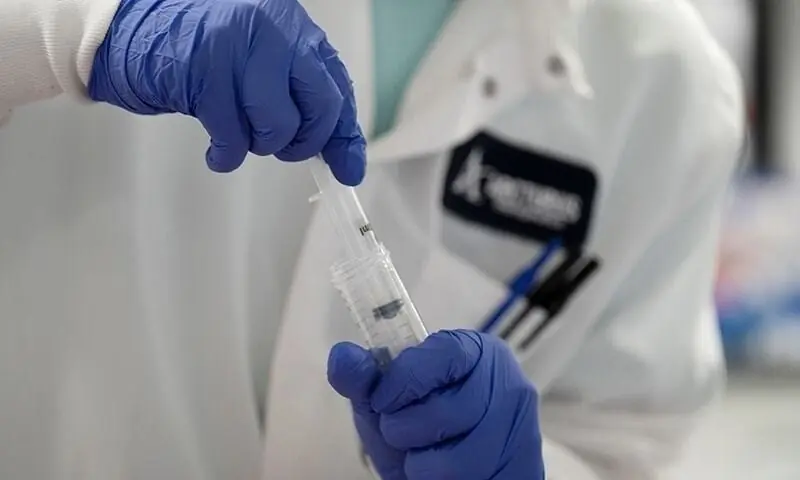
ISLAMABAD: The national health services ministry has announced that the Central Drugs Laboratory (CDL) Karachi, a statutory laboratory of the Drug Regulatory Authority of Pakistan (Drap), has successfully achieved World Health Organisation (WHO) prequalification, elevating the country’s pharmaceutical testing capabilities to international standards.

It added that this certification signified that Drap’s testing services met the rigorous global benchmarks established by the WHO, ensuring that the therapeutic goods tested within the facility were safe, effective and of high quality.

Drap CEO Dr Obaidullah Malik told Dawn that the development showed that the WHO had confidence in the quality of testing and the approach of the system in Pakistan.

“It shows that Pakistan has fixed all the loopholes and our tests will be accepted across the world,” he said.

Central Drugs Laboratory meets ‘global benchmarks for safety and quality’

To a question, Malik said earlier, samples were sent to Singapore and some other venues for testing.

“It’s not that the medicines of the WHO, being distributed in Pakistan, will be tested in the country. Now Pakistan will be considered a prequalified testing facility for the whole globe. For example, if India exports medicines to the African continent under the umbrella of the WHO, the medicine can be tested in Pakistan,” he explained.

Federal Health Minister Mustafa Kamal congratulated the leadership of Drap and the technical team at CDL.

Speaking on the occasion, the minister emphasised that the achievement was a cornerstone of the government’s broader health reforms.

“The WHO prequalification of CDL Karachi is a historic moment for the people of Pakistan,” he stated.

The minister further noted that the mi­­lestone was critical for the national eco­­nomy and the ‘Made in Pakistan’ brand.

“By achieving this international validation, we are not only safeguarding public health but also empowering our pharmaceutical industry to compete globally,” he said.

Vaccine policy

Meanwhile, the health ministry has announced the approval of the country’s first-ever National Vaccine Policy.

Kamal said the federal cabinet had formally approved the policy, marking a historic milestone in Pakistan’s public health landscape.

He emphasised that for the first time in the nation’s history, a compre-hensive national framework had been established to enable local production of vaccines.

“Previously, Pakistan did not have a unified and comprehensive national policy on vaccines,” he said.

“This policy has been developed through extensive consultation with key stakeholders to ensure a robust and sustainable approach to vaccine development and distribution.”

Published in Dawn, April 30th, 2026

  •  
❌