U.S. President Donald Trump arrived in Beijing on Wednesday evening for a state visit to China. This is the first U.S. presidential visit to China in almost nine years and Trump's second since November 2017.
At a time of persistent global uncertainty, the business communities of China and the United States have continued to navigate economic headwinds through pragmatic cooperation, delivering a strong vote of confidence on their mutually beneficial economic ties.
The European Union’s health agency (ECDC) said on Wednesday there was nothing to suggest that the Andes strain of hantavirus had mutated following a deadly outbreak of the illness on a cruise ship.
The deaths of three passengers from a rare hantavirus outbreak on a cruise from Argentina to Cape Verde sparked international alarm.
Seven other passengers are confirmed to have the virus, including a French woman in a critical condition, while an eighth case is considered “probable”, according to an AFP tally. All of the passengers have been evacuated and are now in quarantine.
“Preliminary investigations based on the whole genome sequencing that is available to us suggest that there are no indications that this virus is acting any differently from the known virus circulating in some regions of the world,” Andreas Hoefer, of the Stockholm-based European Centre for Disease Prevention and Control, told journalists.
“All sequences obtained to date are virtually identical, which means that there is likely only a single transmission event from an infected animal to a human,” Hoefer, a microbiologist and molecular epidemiologist, added.
The disease is usually spread from infected rodents, typically through urine, droppings and saliva.
Laboratory testing in South Africa and Switzerland confirmed the virus to be the Andes strain — the only hantavirus strain known to pass between humans.
There are no vaccines or specific treatments for hantavirus. Both ECDC and World Health Organisation guidelines include a 42-day quarantine and constant monitoring of high-risk contacts because the incubation period can take six weeks.
“Due to the long incubation period, it is still possible that more cases among the passengers who are now actually in quarantine will occur,” ECDC director Pamela Rendi-Wagner said.
“This cannot be excluded.” Gianfranco Spiteri, ECDC’s head of global epidemic intelligence and health security, said the risk of transmission was greatest for those who showed symptoms of the illness.
But he acknowledged that people might be contagious in the first couple of days before symptoms appear.
“So in terms of taking a preventive and highly precautionary approach, we recommend, for example, that contact tracing should be done for two days before [the] onset of symptoms as well,” he said.
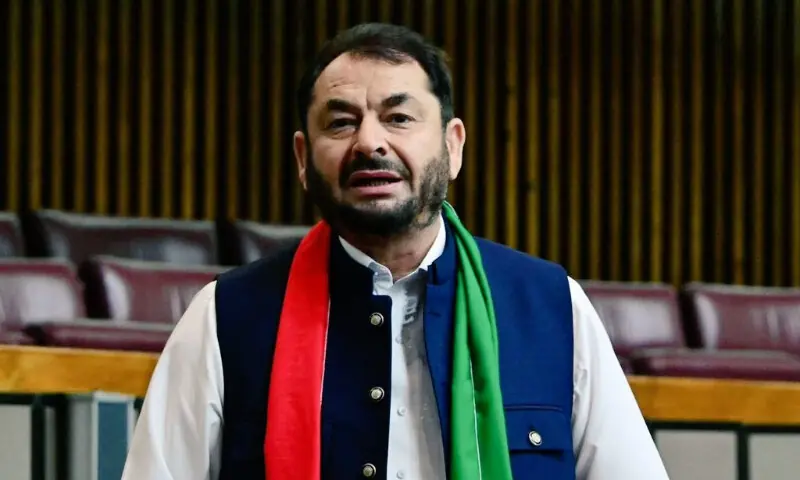
ISLAMABAD: PTI on Thursday defended MNA Iqbal Afridi’s son, who surrendered his passport and sought asylum in a European country, saying he had no other option left to prevent detention and harassment.
The matter came to light during a recent meeting of the National Assembly Standing Committee on Interior, where State Minister for Interior Talal Chaudhry alleged that MNA Iqbal Afridi’s son had sought asylum in Italy.
The minister had alleged that the young man held a diplomatic passport, and proceeded to Italy via a European nation that does not require Pakistanis who hold official passports to obtain a visa before arrival.
Talking to Dawn, Sheikh Waqas Akram, the information secretary of PTI, said he had personally spoken to Afridi about the issue.
“Afridi’s son is 28-year-old so he does not carry a diplomatic passport. According to rules, only dependents, which include children below 18 years and spouses of MNAs, can carry a diplomatic passport,” he said.
Waqas further claimed that Afridi’s son travelled to at least four countries and finally reached Italy.
“Afridi cannot be held accountable for the decision made by his 28-year-old son,” he said.
“Moreover, it is a fact that whenever ‘they’ came to arrest Afridi, they would pick up his son. His son had no option left but to leave the country. They should reflect and feel ashamed that people are leaving Pakistan and seeking political asylum,” Waqas said.
Meanwhile, in a video message on X, Afridi said that his son had previously been abducted and that authorities had also raided his home several times.
“My son was compelled to leave the country,” he said, adding, “When these institutions and the government treat youngsters like this — not allowing him to speak the truth and not letting him post anything in support of his leader — then what will they do?”
He lamented that no one wants his son to be separated from him. “My son has been separated from me for life; they should be sympathising with me instead of criticising me,” he said.
He also revealed that about 40–50 days ago, National Assembly Speaker Ayaz Sadiq contacted PTI leaders. “The speaker asked me about my son. I said he is independent and that fear was the reason for his leaving the country.”
“When I asked the speaker what I could do, he replied, ‘You should not speak against the government and institutions,’” Afridi said.
“My son left due to oppression,” he said.
“We didn’t come to Pakistan from India; our ancestors were living in Pakistan before its foundation. Being loyal to Pakistan and the struggle for the rule of law and the Constitution is our only mission,” he added.
Govt alleges misuse of diplomatic passports
The controversy over a proposal to extend blue passports to the children of senators deepened on Wednesday after the State Minister Chaudhry said the facility was already being misused, citing the case of a PTI MNA’s son who allegedly claimed asylum in Europe using an official passport.
The committee meeting was chaired by Senator Faisal Saleem Rehman, which considered the Passports (Amendment) Bill, 2026
Speaking after the meeting, Chaudhry said, “The son of Afridi was entitled to a blue passport. He went to a European country where a visa is not required on a blue passport,” Chaudhry said. “From there, he claimed asylum. We received this information through diplomatic sources. Such incidents damage the country’s reputation.”
The remarks came a day after Senator Abdul Qadir introduced a bill seeking to allow parliamentarians, particularly senators, to retain gratis official passports for life even if they have not completed a full five-year term in the National Assembly or a six-year term in the Senate. Under the existing law, only parliamentarians who complete their full term retain the facility for life.
Another proposed amendment seeks to extend eligibility for blue passports to the children of senators up to the age of 28.
Chaudhry said the interior ministry had already restricted the issuance of blue and diplomatic passports and would reduce the number further. “These passports will be issued only to those who are genuinely entitled and genuinely require them,” he said.
“This issue is directly linked to the ranking of your passports,” he added. “Countries that give visa-free entry or on-arrival visa facilities do not sign agreements if a country issues blue and diplomatic passports in bulk.”
He said parliament should decide the matter, adding that if civil servants were misusing the facility, parliamentarians should point it out. “The law and the rules can be changed, but no one should try to benefit from any loophole,” he said.
Responding later, Afridi said there was neither political stability nor peace in the country and multinational companies were leaving. “Let me know how many Pakistanis have claimed asylum before,” he said, adding that his son should not be singled out.
Chaudhry told the meeting the interior ministry had no objection to granting lifetime official passports to sitting and retired senators, but expressed reservations over extending the facility to senators’ children up to 28 due to reported misuse.
The committee raised concerns over the issuance of official passports to children of senior civil servants and directed the ministry to provide a detailed list of active blue passports issued so far. It also called for strict action against misuse and unanimously approved the bill for lifetime official passports for senators.
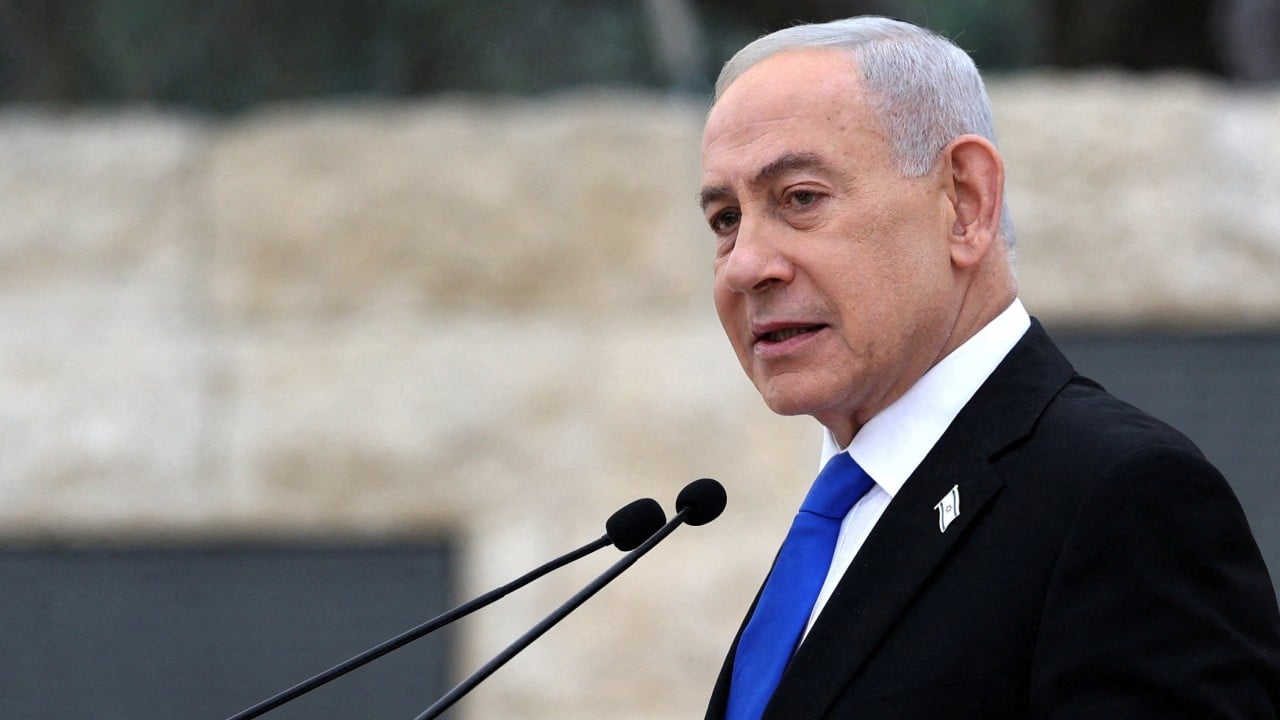
Israeli Prime Minister Benjamin Netanyahu’s office said on Wednesday that he secretly visited the United Arab Emirates during the Iran war and spoke to the Emirati president, in what would be their first confirmed meeting.
According to the statement, the meeting resulted in a “historic breakthrough” in relations between Israel and the UAE.
A source familiar with the meeting said Netanyahu and Sheikh Mohammed bin Zayed (MBZ) met in Al-Ain, an oasis city by the Oman border, on March 26 and that...
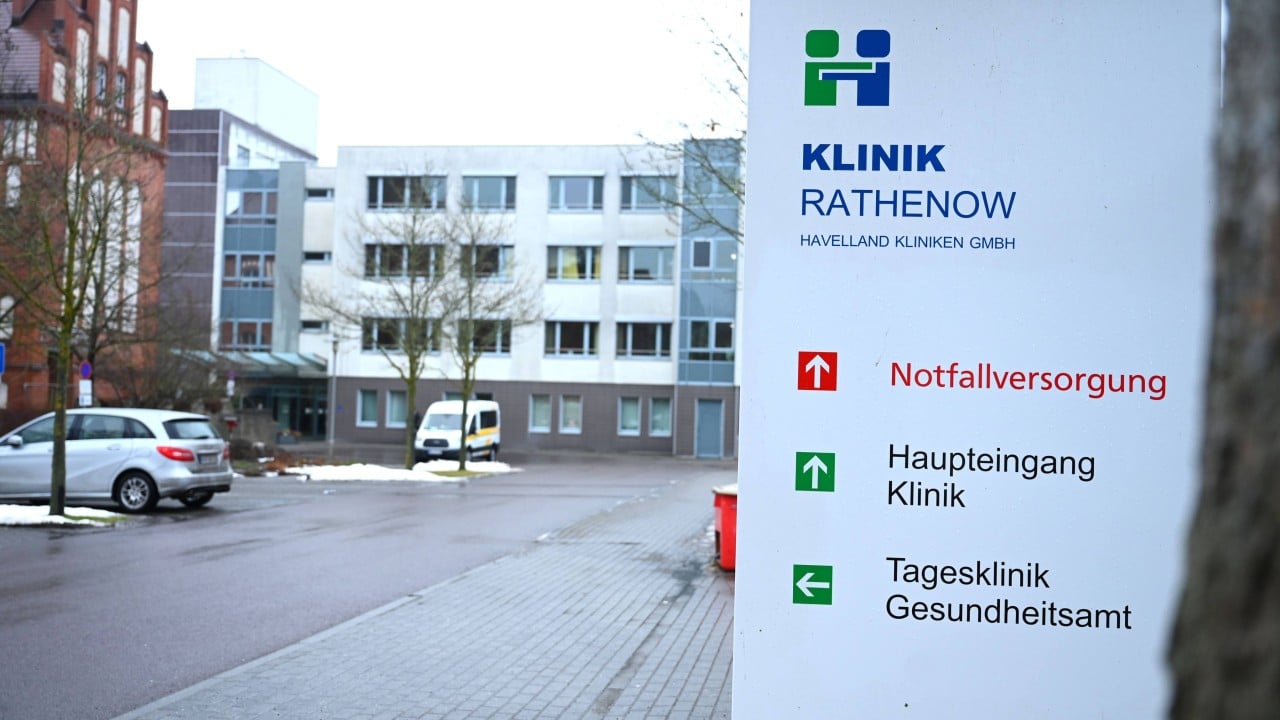
A paediatrician at a hospital near Berlin has been charged with sex offences in 130 cases, many of which are said to have taken place at the hospital, prosecutors said on Wednesday.
The extent of the offences, which include serious sexual abuse of children and rape, had previously been unknown. The paediatrician has been in pre-trial custody since November, with prosecutors citing a risk of reoffending as a reason for the man’s continued detention.
In January, it became known that the doctor was...
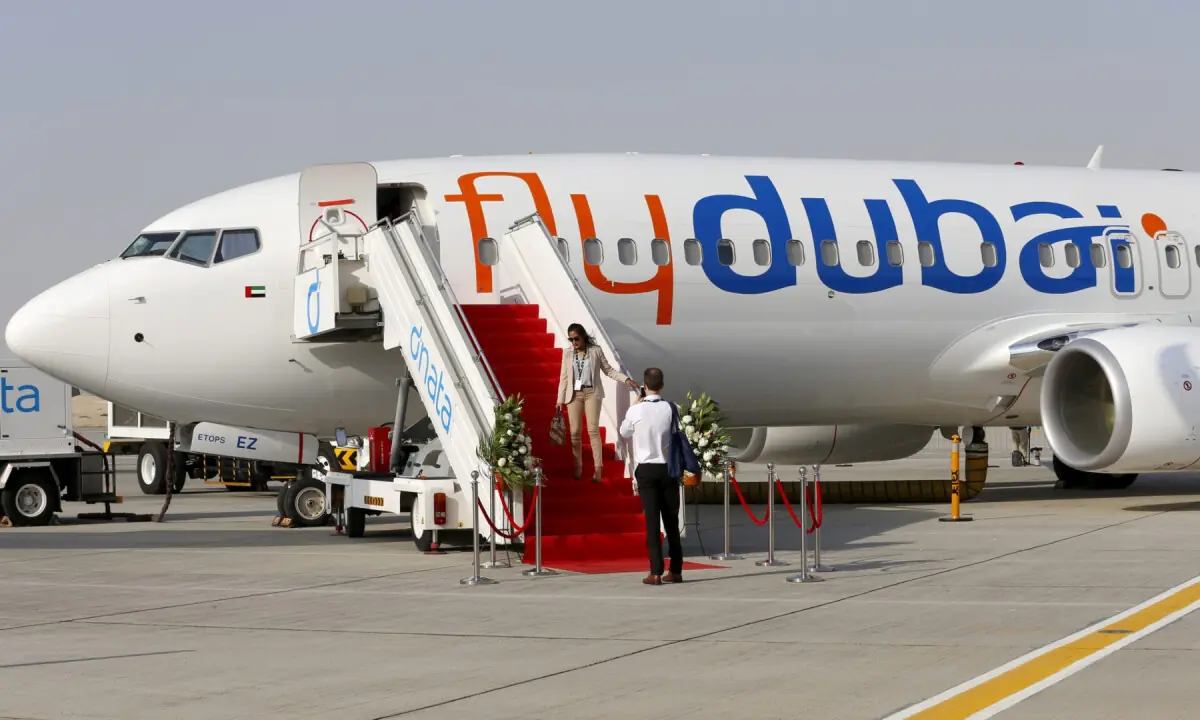
Flydubai has suspended its flight operations from and to Islamabad, Lahore and Peshawar till October 26 due to “operational reasons”, the airline’s flight inquiry in Pakistan said.
However, flight operations from and to Karachi will continue as usual, the airline confirmed.
Flydubai, a low-cost airline based in the United Arab Emirates, launched its operations in Islamabad and Lahore in July 2024, and commenced flights to Peshawar in May last year.
According to aviation monitor Flightradar24, flydubai’s flights between Islamabad and Dubai (FZ353, FZ354), Lahore and Dubai (FZ359, FZ360), and Peshawar and Dubai (FZ375, FZ376) were cancelled since at least May 7.
A statement on flydubai’s website, issued on March 31 — days after the Iran war began — says that the airline is “currently operating flights across its network with a reduced schedule”.
It advised passengers to regularly check flight status and operational updates for the latest information before heading to the airport.
While the statement did not mention the Middle East conflict that sparked on February 28 with US-Israeli strikes on Iran, it said, “We continue to closely monitor the situation and update our flight schedule accordingly. The safety of our passengers and crew remains our highest priority.”
Late last month, the International Air Transport Association (IATA) warned that the jet fuel crisis tied to the Iran war could hit Asia hardest first.
“I think we will see airlines starting to reduce some of their schedules as we go towards the peak summer period in anticipation of some fuel shortages,” IATA head Willie Walsh said.
ISLAMABAD: The Islamabad High Court (IHC) on Wednesday set aside the supersession and deferment of top bureaucrats in promotion matters and ruled that high courts can assume jurisdiction in cases relating to assessment of “fitness” and “suitability” for promotion.
In a detailed judgment authored by Justice Raja Inaam Ameen Minhas, the court held that denial of fair consideration for promotion was amenable to judicial review and such disputes did not fall within the exclusive jurisdiction of the Federal Service Tribunal.
The judgment came on a series of petitions filed by BS-20 officers belonging to the Police Service of Pakistan (PSP), Pakistan Administrative Service (PAS), Inland Revenue Service (IRS), Pakistan Customs Service (PCS), and the health sector, which had challenged their supersession or deferment by the Central Selection Board (CSB) during meetings held in March 2025.
The court set aside the CSB’s decision and directed that the cases of the officers be considered afresh.
The court observed that although promotion to BS-20 and BS-21 was not a vested right and depended on fitness and merit, the process adopted by the authorities must conform to the “constitutional guarantees of fairness, transparency and due process”.
Justice Minhas ruled that the CSB proceedings and the subsequent communication of reasons suffered from procedural impropriety. He observed that the affected officers were informed about the adverse decisions months after the board meetings.
The court noted that while the board concluded its deliberations in March of last year, the reasons for supersession and deferment were communicated to some officers in September and to others in December.
The judgment observed that the Federation could not benefit from its own failure by withholding reasons and later claiming that the petitions were premature.
Among the prominent petitioners was Dr Mutahir Shah, a senior official of the Pakistan Institute of Medical Sciences (Pims), who challenged his deferment for promotion to BS-20 as the joint executive director of Pims.
According to the judgment, Shah had earlier approached the Federal Service Tribunal after authorities excluded his name from the promotion roster despite his being the senior-most eligible officer. The tribunal had directed the government to consider his case in the ensuing CSB meeting.
However, the CSB subsequently deferred his promotion, citing a “mixed reputation” regarding integrity and professional competence and recommending further performance watch.
The court also examined the cases of several PSP officers denied promotion to BS-21.
Dr Muhammad Akhtar Abbas, posted in Lahore in BS-20, was superseded after the CSB declared him an officer of “average competence and peccable integrity”.
Nisar Ahmed Khan, who serves as director general of the Coordination Unit for Implementation of Initiatives in Khyber Pakhtunkhwa, was denied promotion over allegations relating to integrity and professionalism, including concerns arising from an alleged voluntary return case.
Similarly, Mujahid Akbar Khan challenged his supersession after the board termed him professionally weak and referred to adverse additional information placed before it.
The petitions also included Sheikh Yaseen Farooq and Israr Ahmed Khan, both of whom were declared officers of average competence with questionable integrity.
In the case of Agha Muhammad Yousaf, the CSB cited “controversial financial integrity” while denying him promotion.
The lone PAS officer among the petitioners, Bilal Ahmed Butt, challenged his supersession after the CSB referred to his alleged “chequered history”, failure to attend mandatory training thrice and doubts regarding his financial integrity.
A large number of IRS officers also approached the court after being superseded or deferred for promotion to BS-20.
These included Iqbal Ahmad Sheikh, Karachi’s appeals commissioner; Shakeel Ahmed Shakeel, Islamabad’s director of internal audit; and Mirza Nasir Ali, Karachi’s law director. The CSB termed them officers of average competence with questionable integrity.
The board deferred the promotions of Muhammad Muti ur Rehman Mumtaz and Muhammad Zahid on “performance watch”, observing that they carried mixed reputations regarding financial integrity.
Other IRS officers who challenged the adverse recommendations included Wilayat Khan, Syed Ali Adnan Zaidi, Mumtaz Ali Bohio, Muhammad Amin Qureshi, Attiq ur Rehman Mughal, Muhammad Aslam Jamro and Dr Sajid Hussain Arain.
The court also reviewed petitions filed by PCS officers Arbab Qaiser Hamid and Dr Nasir Khan, who had repeatedly faced supersession in earlier CSB meetings as well.
During the proceedings, counsel for the petitioners argued that the CSB relied on “vague, cyclostyled and non-speaking reasons” without confronting the officers with any adverse material.
The petitioners maintained that many of the officers had never faced disciplinary proceedings, corruption references or show-cause notices during their careers. They contended that the board had abandoned the objective quantification mechanism envisaged under the Civil Servants Promotion Rules, 2019.
The Federation defended the process and argued that promotion to BS-20 and BS-21 involved comparative assessment by senior bureaucrats and that the CSB exercised structured discretion under the 2019 promotion rules.
However, the court held that while it would not act as an appellate forum over the merits of the CSB’s assessment, administrative actions remained subject to judicial review “on grounds of illegality, irrationality and procedural impropriety”.
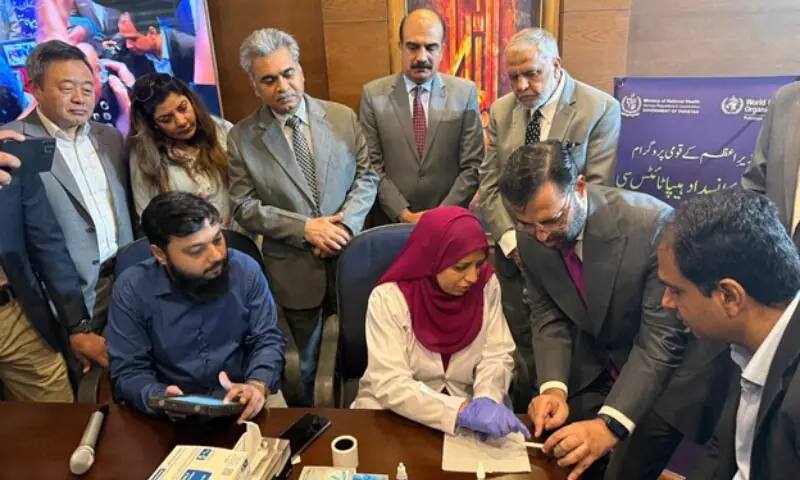
ISLAMABAD: The Ministry of Health and the World Health Organisation (WHO) on Wednesday launched the Prime Minister’s Hepatitis C Elimination Programme, aiming to end the disease by 2030, according to a press release issued by the ministry.
“Pakistan and the WHO today launched the Prime Minister’s Hepatitis C Elimination Programme in Islamabad with the goal of reaching 1.6 million people in the area over the next 6 months, and over 164 million across the country in subsequent phases.”
“The main goal is to eliminate Hepatitis C as a public health threat by 2030, as agreed upon by the World Health Assembly,” the press release said.
Speaking at an event in Islamabad, Federal Health Minister Mustafa Kamal said that Rs67 billion had been allocated to combat one of Pakistan’s most serious public health challenges, the statement said.
“A complete three to six-month treatment course will be provided free of cost under the programme,” the statement quoted Kamal as saying.
He highlighted the alarming burden of hepatitis C, stating that out of nearly 60 million hepatitis patients worldwide, approximately 10 million are in Pakistan.
Kamal further noted that nearly 80 per cent of patients remain unaware of their condition and unknowingly continue to transmit the disease.
“Hepatitis C is a life-threatening disease that can eventually lead to liver cancer if left untreated. Prevention is better than a cure. The true meaning of healthcare is to prevent people from becoming sick,” he remarked, adding that Pakistan’s healthcare system must transition from a “sick-care” model to a genuine healthcare system focused on prevention and early intervention.
He informed that, with the support of the National Database and Registration Authority (Nadra), nationwide screening would be conducted using national database integration to ensure maximum outreach and transparency.
“Initially, 12 Hepatitis C screening counters have been established at federal hospitals in Islamabad for diagnosis and facilitation of patients,” he said.
The minister urged citizens to actively participate in the screening campaign, emphasising that the programme’s success depended heavily on public cooperation.
He announced that the hepatitis C screening test, which typically costs around Rs7,000, along with a complete three- to six-month treatment course, would now be provided free of cost under the programme.
Kamal warned that hepatitis patients may transmit the disease to their family and the surrounding community. He appealed to the public to undergo timely screening before the disease progresses to an irreversible stage.
Speaking at the event, the WHO representative in Pakistan, Dr Luo Dapeng, said, “This programme is a major step towards achieving the 2030 global goal of eliminating hepatitis C as a public health threat. The programme could also avert 850,000 deaths and 1.1 million new infections by 2050.”
“WHO will stand with Pakistan and its people to implement this initiative, following medical science and adapting to the Pakistani context the best practices and lessons learned from around the world.”
“Detecting and treating hepatitis is essential, but prevention is the key to ending the disease, including preventing mother-to-child transmission, safe injections and blood transfusions, and harm reduction,” he added.
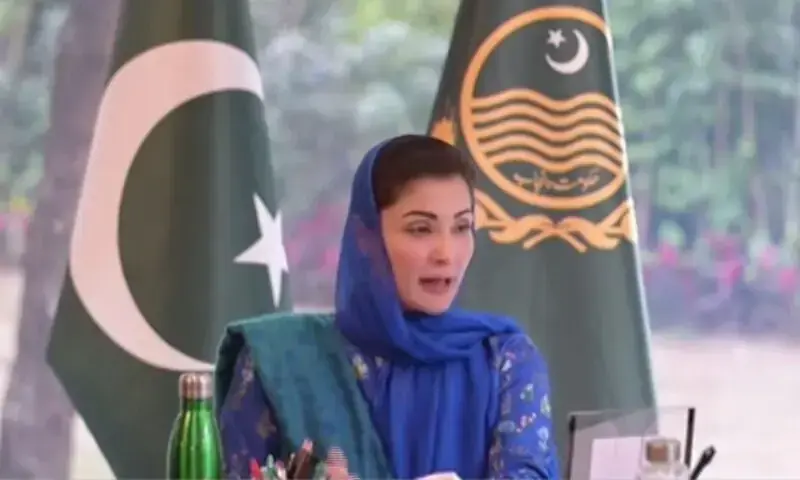
LAHORE: The Punjab chief minister’s office has refused a lawyer’s requests, made under the right to information law, for details of vehicles in incumbent provincial chief executive Maryam Nawaz’s use, her foreign visits and a luxury plane acquired by the Punjab government.
The right to information (RTI) in Pakistan is enshrined as a fundamental right under Article 19-A of the Constitution, designed to empower citizens with access to government-held information.
Lawyer Abdullah Malik had submitted two applications with the Public Information Commission (PIC) in July last year and in February this year.
In his letter in July 2025, he sought the following details:
Expenditure under the heads of fuel, maintenance of vehicles and tours, including international visits
Total number of vehicles and their make, model and cast
Expenditure on helicopter or aircraft used by the CM and its total mileage of travel
Total number of social media team members at the CM House, along with their salaries
Whether the CM got the approval for her foreign tours from the Ministry of Finance and how many officials were with her on her Japan tour, as well as the expenses incurred on that visit
Separately, in a letter in February, the lawyer sought details about a G500 jet.
The Gulfstream 19-seater jet is estimated to be worth between $38 million and $42m, and Maryam has faced severe criticism regarding her government’s purchase of the aircraft.
The Punjab administration had initially remained tight-lipped about the acquisition of the aircraft, but later claimed that it was part of a proposed airline project.
The lawyer received replies to both his letters earlier this month. Both responses are dated April 28.
On his July request, the CM Office’s public information officer (PIO) said: “The desired information is not held by this office.”
It also cited “legitimate exception” as a reason for not sharing the information, stating: “The information sought is excepted under section 13(1)(e) of the Punjab Transparency and Right to Information Act, 2013.”
Section 13(1)(e) of the Act reads: “A public information officer may refuse an application for access to information where disclosure of the information shall or is likely to cause harm to the life, health or safety of any person.”
The record of the proceedings before the PIC, available with Dawn, shows that the PIO consistently sought adjournments regarding the July request until the commission on April 13 gave a strict warning of penal consequences in case of failure to respond.
On Malik’s request for information regarding the luxury jet, the PIO responded: “It is informed that desired information is not held by this office. The same is hereby returned under the relevant provision of Punjab Transparency and Right to Information Act 2013.”
In 2021, the provision of a legitimate exception was also used as a reason to refuse a request for details of official vehicles and related records in the use of then-Punjab CM Usman Buzdar, who was from the PTI. The move had drawn sharp criticism from PML-N leaders, who were in the opposition at the time.
Britain’s anti-immigrant party Reform UK said on Wednesday it was talking to the parliamentary watchdog, following a report that its leader, Nigel Farage, was being investigated over a 5 million pound ($6.75m) gift which he did not declare.
After the BBC reported that Reform was being investigated by the Parliamentary Commissioner for Standards over the donation, Reform, the biggest winner in local elections last week, confirmed it was discussing it but said no rules had been broken.
“He (Farage) has always been clear that this was a personal, unconditional gift and no rules were broken,” a spokesman for the party said. “We look forward to this being put to bed once and for all.”
Farage has said he accepted the donation from the Thailand-based billionaire and crypto investor Christopher Harborne to pay for his personal security before he announced his candidacy in the 2024 national election that brought him into parliament.
He said it was not a political donation, but rival political parties in April accused him of breaking rules, which require members of parliament to declare donations received in the year preceding an election within one month of taking office.
Opponents say the funding from an overseas billionaire demonstrates a gulf between the image Farage cultivates as a man of the people willing to take on the establishment, and his dependence on wealthy donors.
The Parliamentary Standards Commissioner’s Office did not immediately respond to a Reuters request for comment.
Investigation highlights scrutiny of Reform’s donations
If the investigation finds Farage committed a serious breach of parliamentary declaration rules, he could be suspended from the House of Commons for a period of time. A suspension of 10 days or more could trigger a recall petition, potentially forcing him to stand in a special election for his seat.
Reform has topped every national opinion poll since early last year, prompting increased scrutiny of the party’s sources of funding.
About two-thirds of Reform’s funding last year came from Harborne, according to Electoral Commission data.
Anna Turley, the chair of the governing Labour Party, said Farage had refused to answer legitimate questions.
“It’s one rule for them, and another for everyone else,” she said. “They are not on your side.”
Reform’s deputy leader, Richard Tice, said at the weekend that voters already knew about the gift and had still chosen to vote in large numbers for the party, which made sweeping gains in elections for local government in England and devolved parliaments in Scotland and Wales.
Before the 2024 election, Farage had said he did not intend to stand as a candidate. He changed his mind about a month before the vote.
Earlier this year, Farage apologised after he was found by the parliamentary authorities to have inadvertently committed 17 breaches of rules on declaring financial interests including payments from Google and Elon Musk’s X Corp.
Parliament’s Standards Commissioner concluded the failures were unintentional and caused by staffing and other administrative issues.

 Login
Login