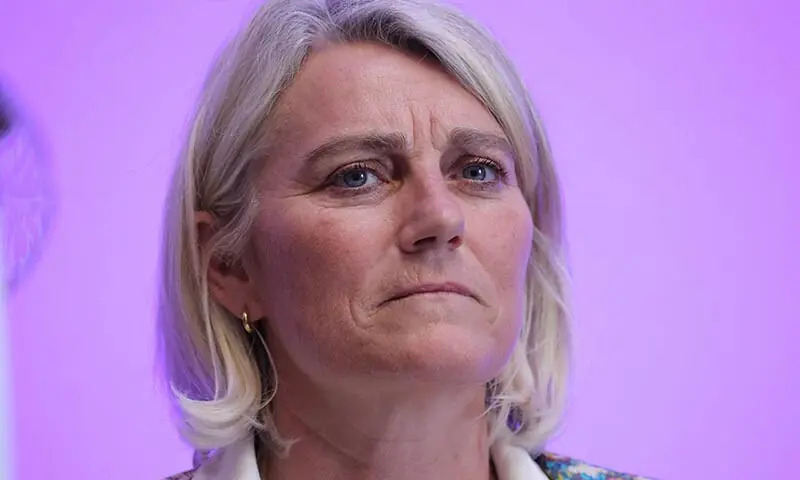
French Health Minister Stephanie Rist said on Tuesday that it was not certain whether the hantavirus strain involved in the outbreak on the MV Hondius cruise ship may have mutated, although officials were “rather reassured”.
“There are things … we do not know about this virus,” Rist told the National Assembly. “We do not yet have the complete sequencing of the virus, which allows us to say with certainty today, even if we are rather reassured to date … that this virus has not yet mutated.”
The French health ministry did not respond to a request for additional comment.
Hantavirus is primarily spread by rodents but can be transmitted between people in rare cases, according to the World Health Organisation. It usually begins with flu-like symptoms, such as fatigue and fever, one to eight weeks after exposure.
A cluster has been linked in recent days to the MV Hondius ship, which docked in Spain’s Canary Islands following a polar expedition that departed from Argentina.
The outbreak has been linked to the Andes strain of hantavirus, with officials consulting Argentina, where an outbreak involving the same strain ended in 2019.
The WHO has said there was no indication that there was anything unusual about the hantavirus strain on the ship beyond its location.
It has confirmed nine cases and urged isolation of suspected cases, adding that more are expected given passenger interactions before the virus was detected. However, it said there was no sign of a wider outbreak.
Italy to examine samples from quarantined man
Meanwhile, Italy’s top infectious diseases hospital said on Tuesday it would examine biological samples from a man in quarantine having come into contact with a woman who died of Hantavirus.
The ANSA news agency had previously reported that the man, a 25-year-old from the southern Calabria region, had been hospitalised.
He was briefly on the same plane as a woman who later died from the virus. The woman was disembarked from the KLM flight before it took off from Johannesburg.
ANSA reported earlier that the man was being transferred to the Spallanzani Hospital in Rome, but the hospital later clarified that it was only awaiting his biological samples in order to analyse them.
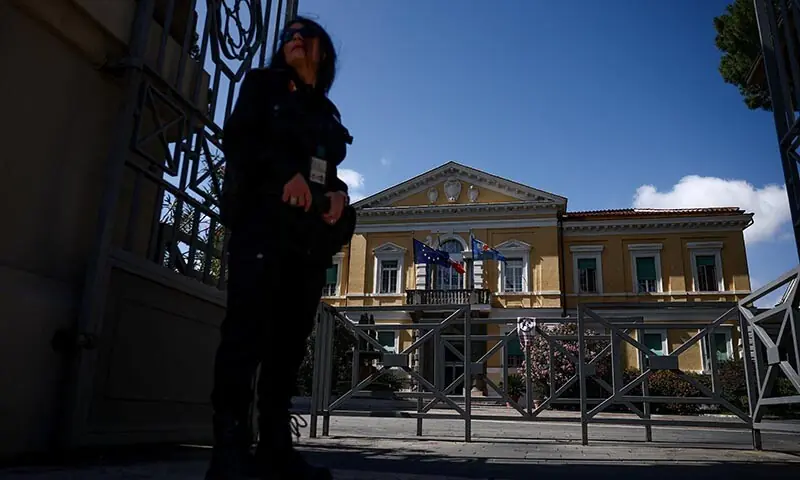
A security guard stands near the entrance to the Spallanzani infectious disease hospital in Rome, Italy on May 12, 2026. — Reuters
The 2026 Asian Animation and Game Production Technology and Equipment Exhibition was held from May 10 to 12 at the China Import and Export Fair Complex in Guangzhou. The exhibition brought together more than 500 high-quality exhibitors from China and abroad, connecting global cultural tourism, IP and digital technology industry resources to help participating companies expand diversified business opportunities.
As an important transit hub along the “Silk Road Tour” route, Lanzhou in Gansu Province, recently introduced a series of “dopamine”-colored bus cultural and creative scenes, transforming public transportation spaces into trendy check-in destinations and injecting new vitality into Silk Road cultural tourism.
The International Organization for Standardization (ISO) has issued five international standards in the natural gas sector led by China, according to media reports.
KARACHI: Police on Tuesday arrested a “most-wanted” woman accused of supplying cocaine and other narcotics across the city, an official statement said.
According to the statement, a joint operation was conducted by a police team from Garden Police Station and a civilian intelligence agency to arrest the accused after midnight.
“A female suspect identified as Anmol alias Pinki, allegedly involved in supplying cocaine and other deadly narcotics across the city, has been arrested,” the statement said.
It added that the accused was “most-wanted” by police and had been absconding in several cases.
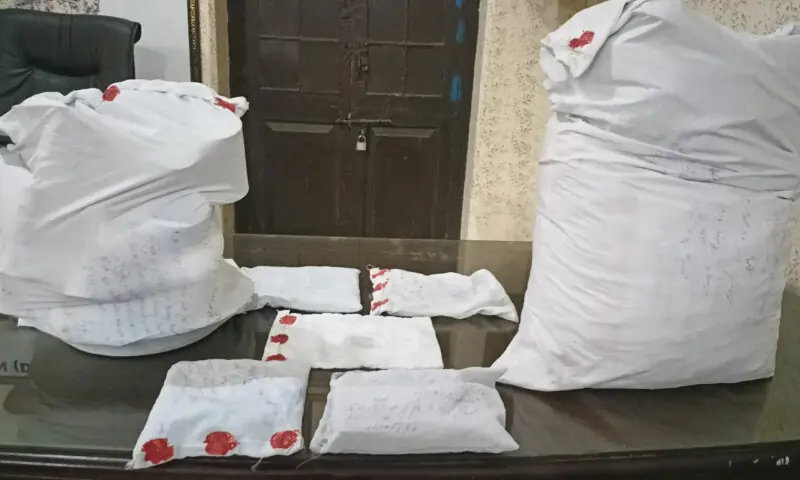
“One pistol, cocaine worth millions of rupees, chemicals, and other narcotics were recovered from the accused,” claimed police.
In its statement, the police further said the accused was operating an “organised and extensive network” for narcotics dealing and supply, adding that she used to supply drugs online in Clifton, DHA, and other areas of Karachi through designated riders.
The accused also used female riders to protect her network from law enforcement agencies.
“The accused’s customers included students as well as prominent personalities,” it said, adding that she sold narcotics worth hundreds of thousands of rupees daily through various methods.
Meanwhile, the police have also registered two First Information Reports (FIRs) against the accused under various clauses of the Sindh Control of Narcotic Substances Act, 2024, and the Sindh Arms Act, 2013.
Talking to Dawn, South Deputy Inspector-General of Police (DIG) Syed Asad Raza said that Anmol alias Pinki has two brothers, Nasir and Shaukat, who are her facilitators.
“Nasir allegedly sends narcotics from Punjab to Karachi through girls; meanwhile, Shaukat has previously been arrested in Karachi by Gizri and Saddar Police Stations,” he said.
DIG Asad stated that her ex-husband, Rana Nasir, was also her facilitator and was involved in introducing her to these activities.
“She had been residing in the Gulistan-i-Jauhar area of Karachi for approximately one and a half years,” he said.
No handcuffs during court appearance
As the accused was presented before the court to record a statement, a video of her walking through the court’s corridor without handcuffs, wearing sunglasses and carrying a water bottle, went viral on social media.
The video shows the accused being guided by the investigating officer, who was walking behind her.
Karachi Additional Inspector-General (AIG) Azad Khan has taken strict notice of a news report aired on a private TV channel claiming that alleged drug dealer, Anmol, was presented in court without handcuffs for physical remand.
“AIG Azad has immediately sought a detailed report from the South DIG regarding the incident and ordered an inquiry to determine the responsibilities of the relevant officers,” said a statement issued by his office.
“He clarified that all police officers and personnel are bound to perform their duties in accordance with the law and standard operating procedures (SOPs), and that any negligence or carelessness will not be tolerated under any circumstances,” it said.
Meanwhile, Sindh Home Minister Ziaul Hassan Lanjar has taken strict notice of the matter related to her appearance in court, according to a statement issued by his office.
“The Sindh home minister has sought an immediate report from Karachi AIG Azad Khan and ordered a transparent inquiry into the incident,” it said.
“How was protocol provided to the accused? All responsible personnel should submit an explanation,” the statement quoted Lanjar as saying, adding that immediate action should be taken against the police personnel who provided protocol to the accused.
“Such conduct is unacceptable under any circumstances. Those found negligent should be punished in accordance with the law. No criminal is above the law, and every individual should be treated in accordance with the law,” he said. “The police uniform is a symbol of public trust.”
He asserted that misuse of authority would not be tolerated, saying, “Strict action will be taken against those damaging the credibility of law enforcement agencies.”
He maintained that providing unnecessary protocol to accused persons in courts is against the requirements of justice. “The Sindh government will make no compromise on the rule of law.”
“Elements undermining citizens’ trust deserve no leniency,” the home minister said.
“The Home Department is closely monitoring the matter, and further strict decisions will be taken after the report is received,” Lanjar said.
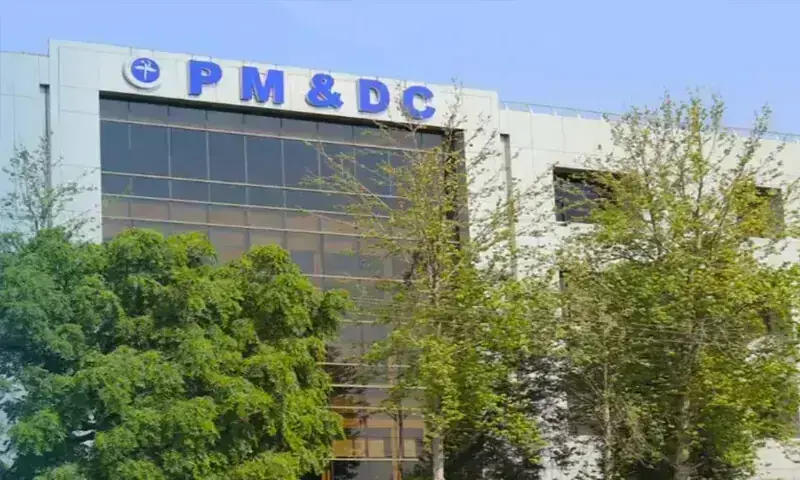
ISLAMABAD: The Pakistan Medical and Dental Council (PMDC) on Tuesday announced that students intending to pursue medical or dental education abroad must qualify for the Medical and Dental College Admission Test (MDCAT) and obtain registration before going abroad.
According to a statement, the PMDC informed that a high-level committee chaired by Deputy Prime Minister Ishaq Dar is currently overseeing the strengthening of the regulatory framework for medical and dental education in Pakistan.
It said that a meeting of the PMDC’s Sub-Committee on Accreditation of Medical and Dental Colleges and Postgraduate Qualifications was held today to “review ongoing reforms and regulatory measures to strengthen medical and dental education in Pakistan”.
“The sub-committee is focused on enhancing transparency, standardising accreditation mechanisms for medical and dental colleges, and streamlining the recognition process inspections for undergraduate and postgraduate qualifications in line with international standards,” it added.
During the meeting, PMDC said that detailed discussions were held regarding the inspection processes of medical and dental colleges’ undergraduate and postgraduate programs.
The sub-committee appreciated the ongoing efforts to ensure smooth, transparent and merit-based inspections of institutions, it said, adding that committee members were briefed on the latest reforms, updated procedures and mechanisms introduced to improve the quality and credibility of inspections conducted so far.
“The sub-committee emphasised that there should be no compromise on inspection standards and procedures, restating a policy of zero tolerance toward any negligence, irregularity, or lack of compliance in the accreditation process.
“The meeting participants stressed the importance of maintaining the highest standards of medical and dental education to safeguard the future of healthcare in Pakistan,” it stated.
The meeting also discussed matters related to foreign graduates, it informed.
“The sub-committee clearly resolved that all students intending to pursue medical or dental education abroad must mandatorily qualify for the MDCAT examination and obtain registration with the PMDC before going abroad to pursue medical or dental education to avoid any future inconvenience regarding recognition, licensing, or registration,” the PMDC said.
“The sub- committee highlighted that students must verify that the foreign medical institution they intend to join is included in the list of foreign recognised institutions available with PMDC before proceeding with admission,” it maintained.
Furthermore, the PMDC stressed that the institution should be accredited by the World Federation for Medical Education (WFME) or listed in the World Directory of Medical Schools.
“The medical qualification must comprise at least 6,200 hours of education with a minimum of 80 per cent attendance over a period of five years.”
The sub-committee also advised that in countries where the medium of instruction is not English, students must spend at least five months learning the local language before beginning their medical studies to ensure effective communication and academic understanding, the PMDC said.
In addition, it said that students will also be required to pass the National Registration Examination conducted by PMDC in order to obtain registration in Pakistan after completion of their foreign qualification.
“The sub-committee directed the students to provide complete details of their residence and contact numbers in the country of study before departure,” it said, adding that the students were also advised to secure a multiple-entry visa valid for the duration of their studies prior to proceeding abroad.
The sub-committee reiterated that these measures had been introduced to safeguard the academic and professional future of Pakistani medical students and to ensure that graduates meet the required national and international standards for medical practice, it concluded.
ISLAMABAD: As international funding to Pakistan’s health sector continues to decline and major foreign donors are set to completely suspend grants by 2030, the country faces serious health risks unless urgent steps are taken by the government, it emerged on Tuesday.
These are the findings of a report published last week, titled “Beyond Dependence: Understanding the Impact of ODA Cuts on Pakistan’s Health System”. The report, prepared by think tank Tabadlab, is authored by Behzad Taimur, Shahab Siddiqi and Syeda Farwa Qamar Jaffri and discusses the impact of declining Official Development Assistance (ODA) on Pakistan.
ODA refers to grants and concessional loans provided by governments and international agencies to support economic development and welfare in low- and middle-income countries.
The report finds that shrinking foreign assistance can threaten disease control programmes, immunisation efforts, and institutional capacity across the country. Once funding stops, it may significantly affect district-level monitoring, community outreach interventions, diagnostic testing capacity, and workforce training programmes.
According to the report, global ODA flows have been declining since 2019, with a sharper decline in recent years. Total global ODA dropped from $215 billion in 2024 to $174.3bn in 2025 — a decrease of 23 per cent — and may further decline in coming years.
The report warns that reductions in global health financing can have devastating consequences worldwide. Estimates suggest aid cuts may contribute to approximately 22.6m additional deaths globally by 2030, including 5.4m children under the age of five.
Country burdened by weak health indicators
The report paints a bleak picture of Pakistan’s health outcomes, describing the country as burdened by both communicable and non-communicable diseases.
Tuberculosis, diabetes, cardiovascular illnesses, malaria, HIV-AIDS and child health complications continue to strain the healthcare system. Despite modest gains in life expectancy, Pakistan still lags behind regional countries on several key indicators, it said.
Life expectancy in Pakistan stands at 68 years, nearly four years below the South Asian average. Infant mortality remains among the highest in the region at 50.1 deaths per 1,000 live births — more than double the rates observed in Bangladesh and Nepal.
Low public health spending
One of the report’s central findings is that Pakistan continues to under-invest in public healthcare despite rising health demands. Total health expenditure amounts to only 2.9pc of GDP, far below international benchmarks and lower than the South Asian average of 4pc. Public sector spending accounts for just 0.9pc of GDP, significantly below the levels recommended for achieving universal health coverage.
Although federal and provincial health budgets increased from Rs530.8bn in FY2019-20 to Rs1.4tr in FY2025-26, the report notes that inflation has sharply reduced the real value of those increases. After adjusting for inflation, health spending increased by only 25pc over six years. It argues that this rise remains insufficient to close longstanding gaps in healthcare infrastructure and service delivery.
The report points out that there are also disparities in per capita investments in different provinces. It notes that in Punjab, Rs2,043 ($12) are spent on each person every year; in Balochistan, Rs2,680 ($16); in Khyber Pakhtunkhwa, Rs3,136 ($18); and the most is spent in Sindh, at Rs3,203 ($19) per capita.
Increasing reliance on loans instead of grants
The report notes that Pakistan has received an average of $4.9bn annually in ODA between FY2016-17 and FY2024-25, equivalent to approximately 1.7pc of the GDP during the period. However, the composition of aid has changed significantly over time. Grant-based assistance has declined by 59pc, falling from $512m to $211m, while concessional loans now make up 96pc of all external assistance to Pakistan.
The report links this shift to broader global trends emphasising “shared responsibility” and “country ownership”, where donor agencies increasingly expect developing countries to finance development projects through debt, co-financing arrangements, and blended finance mechanisms rather than grants.
Global health initiatives face risks
The report also focuses heavily on Global Health Initiatives (GHIs), particularly institutions such as The Global Fund and Gavi, which finance critical public health programmes in Pakistan. Researchers argue that these initiatives play a system-critical role because they support vaccine procurement, supply chains, diagnostic infrastructure, disease surveillance, and service delivery programmes, according to the findings.
It also refers to recent cuts linked to USAID and UN agencies as examples of how donor withdrawal can trigger immediate disruptions. According to the analysis, aid contraction affects Pakistan through three main channels: abrupt bilateral donor withdrawals, reductions in multilateral pooled financing, and indirect spillover effects from weakening regional health systems.
Technical capacity and disease surveillance
Beyond direct financial losses, the report warns that shrinking ODA threatens Pakistan’s technical and institutional capacity.
It said that international partners such as the World Health Organisation, Unicef and the World Food Programme provide “advisory expertise, outbreak response coordination, disease surveillance support, and specialised technical assistance”. Cuts to these programmes could weaken Pakistan’s ability to respond to epidemics and cross-border disease threats, it highlighted.
The report highlights risks associated with trans-boundary transmission of tuberculosis, malaria, typhoid and polio, particularly from Afghanistan.
“Researchers warn that weakening surveillance systems could place enormous strain on local health infrastructure,” it said, adding that health management information systems, laboratory networks, diagnostics, and programme monitoring mechanisms are also expected to suffer if technical assistance contracts further.
Fund cuts already impacting Pakistan
The report identifies recent funding reductions by the Global Fund as an early warning sign of future disruptions.
It noted that in July 2025, Pakistan’s health ministry was informed of a $27.2m reduction under the Global Fund’s grant. Most of the cuts targeted tuberculosis control programmes, although HIV-AIDS programmes managed by the National AIDS Control Programme and UNDP Pakistan also faced reductions exceeding $4m.
The report states that once implemented, these cuts could “significantly affect district-level monitoring, community outreach interventions, diagnostic testing capacity, and workforce training programmes” in Punjab and KP.
Call for structural reforms
The report concludes that Pakistan must urgently reduce its dependence on external health financing and strengthen domestic systems before global aid contractions deepen further. It warns that declining ODA could sharply increase disease burdens, worsen mortality outcomes, and weaken long-term human capital development if measures are not taken quickly.
To address these challenges, the report recommends the establishment of a National Health Financing Forum to coordinate federal and provincial responses.
Other recommendations include creating a national ODA registry, introducing a health financing risk matrix, strengthening forecasting and integrated financial planning systems, improving domestic resource mobilisation, enhancing technical capacity, and reforming governance structures within the healthcare sector.
Last month, Federal Minister for Health Mustafa Kamal lashed out at The Global Fund for allegedly giving over 90pc of its funds to non-government organisations (NGOs) to combat HIV.
He said that NGOs were not answerable to the government and they did not share any data with the ministry under the pretext of confidentiality. Meanwhile, the government had received only $3.9 million from the fund.
Earlier in April, speakers at a national symposium on primary healthcare in Karachi underscored the need for promoting health across sectors, improving access and service quality, enhancing government-private collaboration and reducing reliance on external aid.
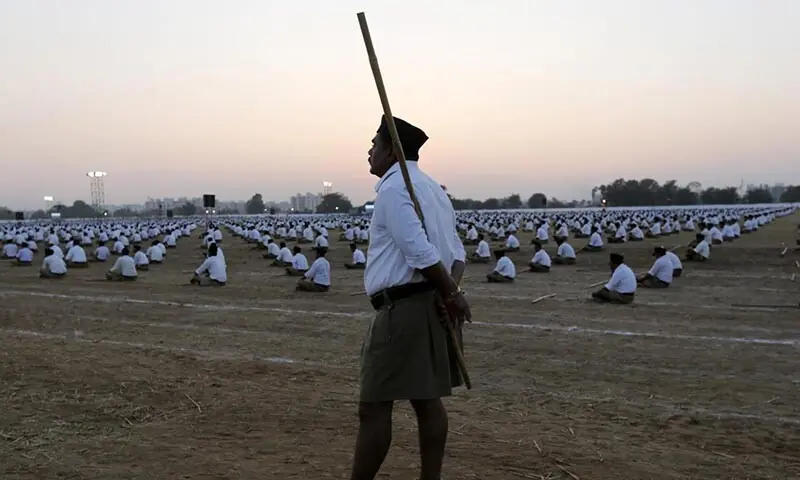
A powerful Hindu group from which Indian Prime Minister Narendra Modi’s party emerged claimed on Tuesday it had organised foreign visits, including to the US, to counter perceptions that it is a paramilitary outfit involved in attacks on minority communities.
The outreach by the Rashtriya Swayamsevak Sangh (RSS), or National Volunteer Organisation, came after the US Commission on International Religious Freedom said in a report in November that it “has been involved in acts of extreme violence and intolerance against members of minority groups for decades”.
The commission is a bipartisan body of the US federal government that monitors religious freedom around the world and makes policy recommendations to the president, the secretary of state and the US Congress.
Modi joined the RSS in his youth, and the rise of his Bharatiya Janata Party (BJP) to near-national dominance is widely attributed to the RSS’ vast network of volunteers, during a period marked by a hardening Hindu-Muslim political divide in the officially secular country where Hindus are a majority.
RSS banned several times
The RSS claims it is a “Hindu-centric civilisational, cultural movement” whose goal is to “carry the nation to the pinnacle of glory”, including by uniting Hindus and protecting the religion.
It has been banned several times since its inception in 1925, including after a former member assassinated independence hero Mahatma Gandhi in 1948.
Indian opposition leaders, particularly Rahul Gandhi of the main opposition Congress party, have repeatedly accused the RSS of promoting a divisive, majoritarian ideology that he says threatens India’s secular fabric and fuels intolerance towards minorities.
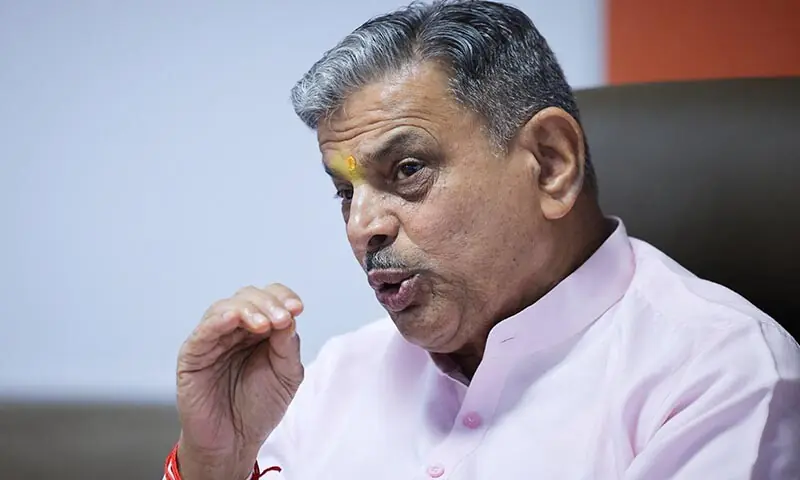
RSS general secretary Dattatreya Hosabale said he has been addressing gatherings in the US, Germany and Britain, with more planned, to “dispel certain misgivings and misconceptions about the RSS”.
Dattatreya Hosabale, general secretary of the Rashtriya Swayamsevak Sangh (RSS), speaks to journalists during a briefing with foreign media at the RSS office in New Delhi, India on May 12, 2026. — Reuters
He said the main accusations against the RSS included that it was “pulling society backwards”, that it was a paramilitary organisation, that it promotes Hindu supremacist things, and that others have become second-class citizens.
“The fact is entirely different,” Hosabale told a rare briefing for foreign media in the group’s newly built 12-floor building in Delhi.
Met policymakers and business leaders
Hosabale met academics, policymakers and business leaders in his visits. He said RSS leaders would visit more countries in Europe, Southeast Asia and other regions to raise awareness about the organisation.
Modi has already delivered on two key agenda items for the RSS: building a temple to the Hindu god Ram on the site of Babri mosque razed in 1992, and revoking the special status of occupied Kashmir, formerly India’s only Muslim-majority state.
The other key goal is to end discrimination based on Hindu caste, Hosabale said.
India’s opposition successfully leveraged concerns among underprivileged castes to hand Modi a rare setback in the 2024 national election, when his party fell short of a majority and was forced to rely on allies.
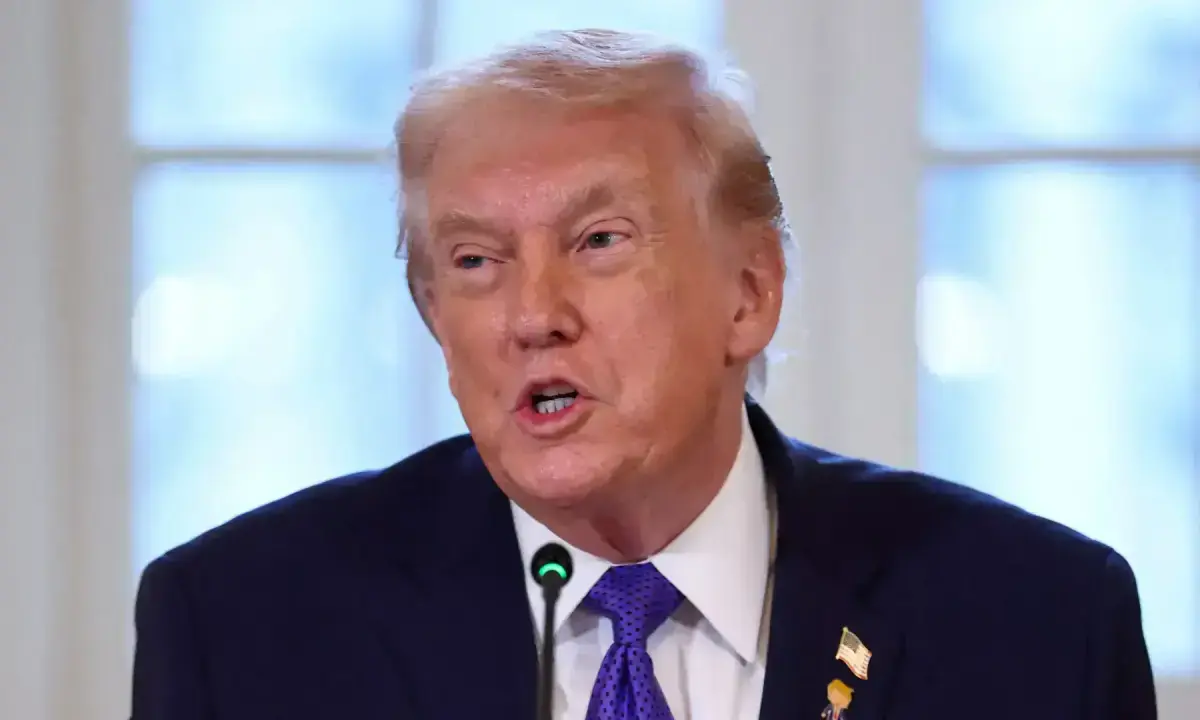
US President Donald Trump on Tuesday announced talks with Cuba, which has been crippled by a fuel blockade in the wake of Washington’s capture of key regional ally Nicolas Maduro, the former president of Venezuela.
In a post on Truth Social, Trump described the communist-ruled island as “a failed country,” adding: “Cuba is asking for help, and we are going to talk!!!” He did not provide details.
There is growing speculation in Washington that Trump is seeking to overturn the Cuban government as part of a drive to increase US dominance in the Caribbean and Latin America.
Earlier this month, Trump said the United States would be “taking over” the Caribbean island off the Florida coast “almost immediately.” He has also said that following the US military operation to depose Venezuela’s longtime leader, Maduro, Cuba will be next.
The communist island has been in a standoff with successive US administrations since the 1960s, and Florida, only around 145 kilometres away, hosts a large, politically influential Cuban exile community.
Venezuela was a diplomatic and economic lifeline for impoverished Cuba, and the fall of Maduro has left the island even more isolated.
Oil producer Venezuela was the main source of fuel for Cuba, and the shutting down of the supply route by the United States is provoking frequent power cuts.
On May 1, Trump announced new economic sanctions targeting key sections of the Cuban economy. Cuban Foreign Minister Bruno Rodriguez called this “collective punishment” and “unilateral coercive measures. “
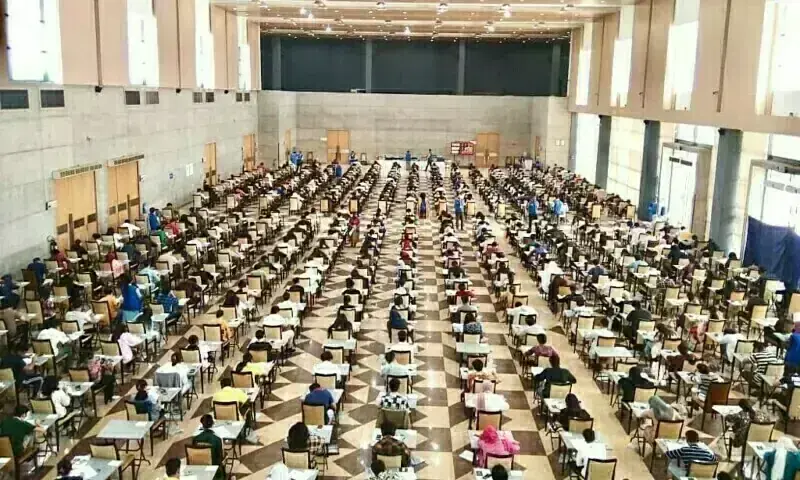
KARACHI: Amid recent reports of Cambridge exam paper leaks, students who appeared for an AS-level Mathematics paper on Tuesday made fresh claims that the paper they received was identical to a solved paper they had come across on social media just a day earlier.
Cambridge International Education (CIE), part of Cambridge University Press and Assessment, offers internationally recognised exams to schools in over 160 countries. In Pakistan, O Levels (grades 10–11) cover a broad range of subjects, while A and AS Levels (grades 12–13) are more specialised and advanced, providing pathways to higher education in Pakistan and abroad.
When Dawn reached out to Cambridge about the matter, a spokesperson said that Cambridge investigates all allegations of paper leaks.
“We do not comment on individual reports of paper leaks. In the rare case where there is a genuine issue, we update schools at the right time and provide the recommended next steps,” the spokesperson said.
“We ask people only to trust official statements from Cambridge and not add to misinformation, which is very unhelpful for students,” they added.
Last month, the AS Level Mathematics exam (9709/12), conducted on April 29, was also subject to similar claims. After conducting a thorough investigation into the matter, CIE said it had reason to believe the claims were not unfounded. A replacement examination for the paper has therefore been scheduled for June 9.
Only a day ago, it was also alleged that an A-Level Business paper had also been leaked.
In June last year, question papers of three AS and A Level examinations were partially leaked across Pakistan in 2025.
“We have written to our schools in Pakistan to tell them that, against our regulations, some content from three question papers was available before the timetabled exam dates in Pakistan,” the CIE said in a statement at the time.
The leaked papers were AS/A Level Mathematics Paper 12, AS/A Level Mathematics Paper 42 and AS/A Level Computer Science Paper 22.
The CIE had offered free November 2025 resits for candidates who took the three impacted June 2025 exam papers.
CIE exams are typically held twice a year, in June and November, with results released in August and January, respectively.
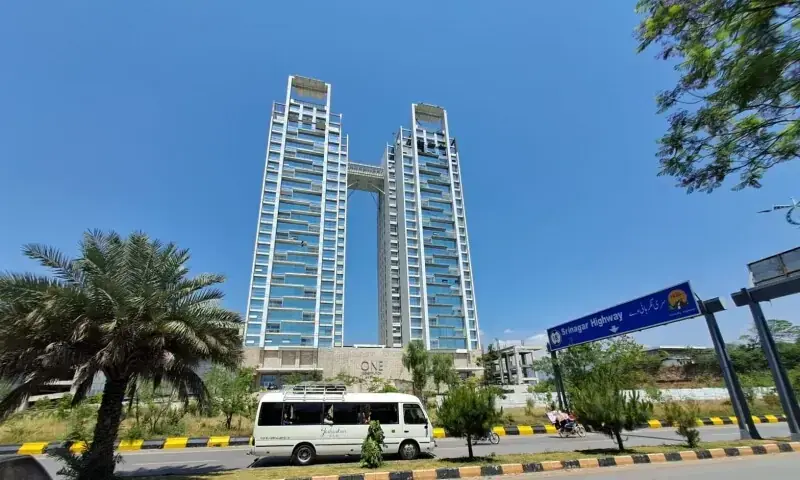
ISLAMABAD: A division bench of the Islamabad High Court (IHC) on Tuesday issued notices to the Capital Development Authority (CDA) on intra-court appeals filed by apartment owners of One Constitution Avenue and Bank of Punjab (BoP) and sought a response in the matter concerning lease cancellation and third-party rights.
The bench, comprising Justice Muhammad Azam Khan and Justice Raja Inaam Amin Minhas, heard arguments from appellants’ counsel, Advocate Taimur Aslam, who requested the court to restrain disciplinary or coercive action until the recommendations of a committee recently formed by Prime Minister Shehbaz Sharif are finalised and approved by the cabinet.
On May 1, the premier constituted a high-level committee to review the issue involving One Constitution Avenue and halted authorities from taking any action.
The court adjourned further hearing on the intra-court appeals, observing that the decision on the stay application would be issued later.
The case stems from an April 30, 2026, judgment of a single-member bench of the IHC, headed by the Chief Justice Mohammad Sarfraz Dogar, which dismissed a petition filed by builder M/s BNP (Private) Limited and upheld the CDA’s decision to cancel the lease of the 13.5-acre commercial-residential project over alleged multi-billion-rupee payment defaults.
The single bench had also ruled that third-party sub-lessees and purchasers would “sink or sail” with BNP, effectively linking their rights with those of the original lessee. The ruling has now been challenged before the divisional bench by several apartment owners as well as the BoP.
According to the appeals, the BoP has a direct stake in the matter as BNP had obtained financing from the bank and subsequently paid amounts to the CDA.
Court documents state that the bank had acquired around 25,420 square feet on sub-lease, including space on the lower ground, upper ground and first floors, for the establishment of a branch at One Constitution Avenue.
The Registrar’s Office, however, has raised objections regarding the maintainability of the bank’s intra-court appeal.
The proceedings
During Tuesday’s proceedings, counsel for the appellants stated that there was no objection to the court decision to the extent it declared the lease cancellation valid; however, the intra-court appeals challenged observations relating to third-party rights.
He argued that the earlier judgment itself had expressed the expectation that the CDA and affected third parties would arrive at an acceptable solution, but the CDA was now avoiding that course.
The lawyer informed the bench that before a certified copy of the judgment could even be received, CDA officials entered the building and allegedly broke locks. A press release issued by the CDA after the cancellation of the lease was also submitted before the court.
The counsel informed the bench that since 2023, a committee comprising residents had been managing the building’s daily affairs in coordination with the CDA. He said the project consisted of two towers with around 240 apartments and that the CDA had raised no objections during construction.
Counsel further submitted that many overseas Pakistanis had invested their life savings in the project and maintained that apartment owners had no connection with BNP. He added that diplomats and their families were also residing in the building.
The appellants requested the court to declare that the impugned judgment did not authorise the CDA to dispossess, evict or take coercive action against bona fide purchasers without due process.
They also relied heavily on orders passed by the Supreme Court of Pakistan on January 9 and November 6, 2019, directing the CDA to devise a “viable, fair, transparent, secure and enforceable arrangement” for settlement of third-party claims.
Justice Minhas observed during the hearing that there had been a clear violation of the SC’s 2019 order and questioned what the consequences of that violation would be.
The appellant’s lawyer responded that the CDA had previously been asked to devise a plan of action while safeguarding the rights of third parties. He argued that CDA officials were reluctant to intervene further due to potential accountability proceedings involving NAB and FIA.
Counsel also referred to a May 1, 2026, notification barring coercive action pending the prime minister’s final decision on the matter.
The hearing was later adjourned, with the bench reserving its decision on the stay application.
US consumer prices climbed sharply again last month as the 10-week war with Iran pushed energy prices higher.
The Labor Department’s consumer price index rose 3.8 per cent from April 2025, according to data released on Tuesday. On a month-to-month basis, April prices rose 0.6 per cent from March as petrol prices rose 5.4 per cent during the month; the month-over-month gain was down from 0.9 per cent increase from February to March.
Labor Department figures showed that petrol prices are up more...

 Login
Login