Reading view

Sharjeel Memon says BRT Red Line 'very tough' project, asserts no delay from Sindh govt

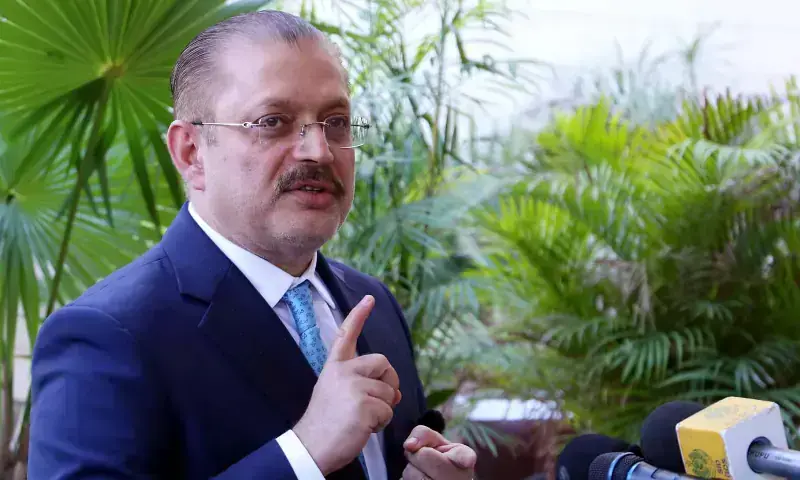
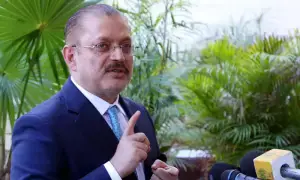
Sindh Senior Minister Sharjeel Inam Memon on Sunday acknowledged that the Bus Rapid Transit (BRT) Red Line had proven to be a “very tough” project for the provincial government, but asserted that there had been no delay on its end.

Speaking to reporters in Karachi, Memon said the Sindh government had to make some difficult decisions on the BRT Red Line after “all other options were exhausted”.

The senior minister asserted that there had been “no mistake, mal-intent or delay” from the Sindh government on the BRT Red Line.

He noted that work on the project’s Lot-1 was “underway with great speed”, while work on Lot-2 had been restarted.

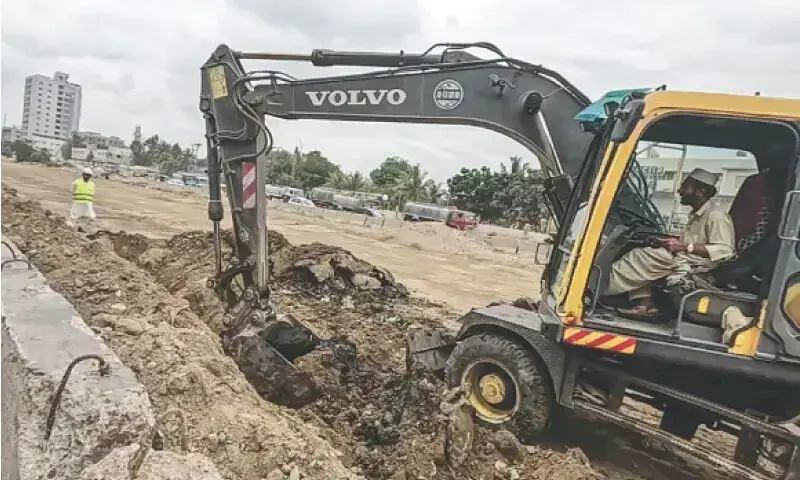
The Sindh government recently cancelled the construction contract for the BRT Red Line project. Subsequently, it chose the Frontier Works Organisation (FWO) to resume construction on a section of the BRT Red Line along University Road, where commuters have been facing inconvenience.

Designed to cover around 27 kilometres from Malir Halt to Numaish via University Road, work on BRT Red Line commenced in early 2022. While initially scheduled for completion by 2024, the project has faced persistent delays, with its finishing timeline most recently pushed to 2028.

A week ago, CM Murad, while “apologising” to the people of Karachi, announced that the deteriorated University Road will be reconstructed within 90 days.

In today’s media talk, Memon reiterated: “We will try that by the end of July, this road is opened for mixed traffic by working day and night, so that there is no nuisance for the public.”

“We realise the difficulty being faced by the public, but as they say, you have to swallow a bitter pill to achieve something big,” he remarked.

The minister recalled that the Sindh government approached the FWO for the reconstruction of University Road after “issuing warnings and clearing claims” of the contractors of the BRT Red Line project.

He noted that the government also took the Asian Development Bank (ADB) into confidence about the FWO’s involvement in the road reconstruction. While the BRT Red Line is an ADB-funded scheme, the reconstruction of the University Road will be undertaken as a separate project funded through the Sindh government’s own resources.

For the bus project itself, Memon said the government would follow up with the necessary legal actions, such as re-contracting or re-tendering.

The minister said it would have been “very easy” for the government to simply launch buses, such as the People’s Bus Service, but it decided to construct the BRT project for future generations, considering Karachi’s growing population.

Criticising certain political elements for “politicising” the BRT project, Memon said the government’s aim was to finish the project.

Meanwhile, Sindh Chief Minister Murad Ali Shah carried out an early morning inspection of BRT Red Line from Jail Chowrangi to Nipa, reviewing progress on mixed traffic lanes, drainage, asphalt work and traffic management.

“People’s hardship is unacceptable. Roads must be restored tonight, quality cannot be compromised and traffic flow must improve immediately,” he was quoted as saying by CM House, warning that he would continue surprise visits to monitor progress.

CM Murad directed all departments and contractors to accelerate work, restore roads on an emergency basis and ensure minimum inconvenience to citizens.

He also ordered the immediate commencement of the remaining work on the Red Line Mosamiyat Flyover so it could be opened for mixed traffic at the earliest.

The chief minister was accompanied by provincial ministers, Karachi Mayor Murtaza Wahab and project officials.

The Sindh CM also reviewed progress on Shahrah-i-Bhutto after inspecting the BRT Red Line project.

He was told that 38-kilometre Shahrah-i-Bhutto corridor, stretching from Jam Sadiq Interchange to M-9 Kathore Interchange, has reached 93 per cent completion.

The project is now targeted for completion by June 30, 2026, with efforts underway to open it to the public before Eidul Azha.

Murad termed Shahrah-i-Bhutto a “gift for people of Karachi”, asserting that it would play a key role in easing traffic congestion, shifting heavy traffic outside the city, and improving connectivity between M-9 and N-5 highways.

He also termed the project a “lifeline for Karachi’s economy”.
  •  

2 dead after boat runs aground in France in failed crossing to UK

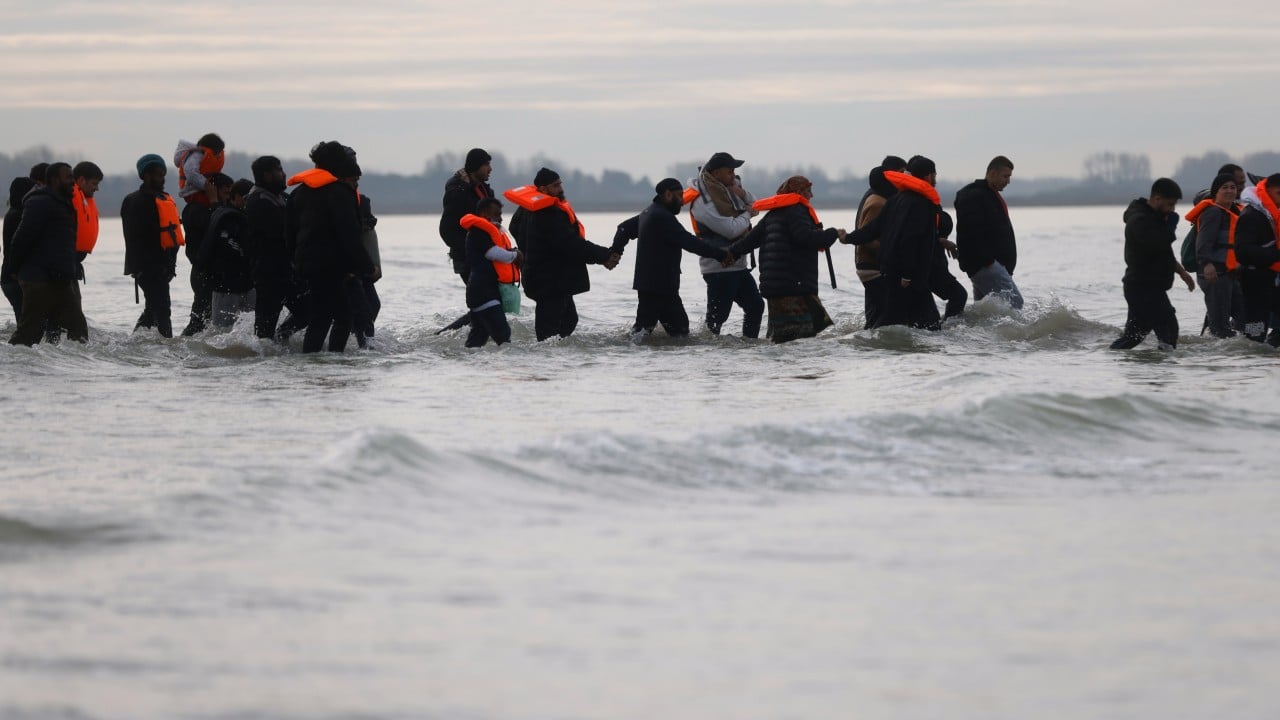
A small boat carrying migrants trying to cross the English Channel ran aground on a beach in northern France, leaving two dead and 16 people injured, including three with serious burns, authorities said on Sunday. The vessel, carrying 82 people, set out overnight from Hardelot beach, a few kilometres south of the port of Boulogne-sur-Mer, but the engine failed and it began to drift, Christophe Marx, Secretary General of the Pas-de-Calais prefecture, told reporters. A French maritime gendarmerie...

  •  

Sajid Sadpara summits world’s 5th highest mountain Makalu without supplemental oxygen

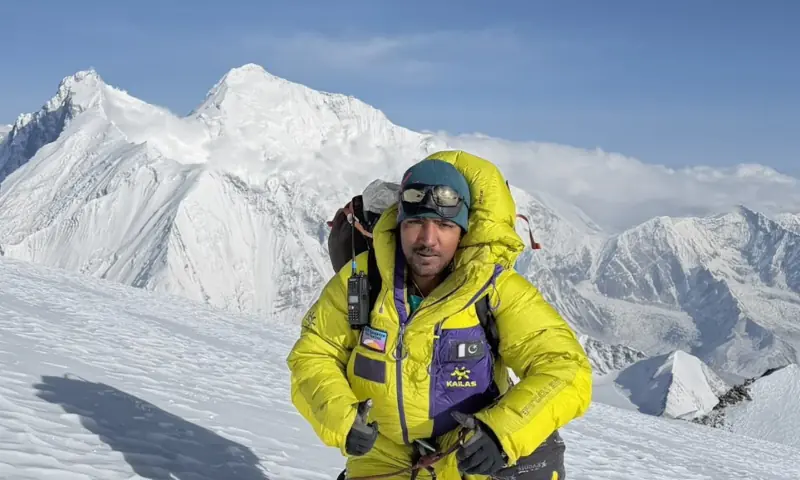
Renowned mountaineer Sajid Ali Sadpara summi­ted the world’s fifth-highest peak, Mount Makalu (8,485m) in Nepal, without supplementary oxygen, the exp­e­­dition’s organisers said on Sunday.

Sadpara is on a mission to summit all 14 “eight-thousanders” in the world without supplemental oxygen, and this marks his 10th summit of that mission.

According to a statement issued by Seven Summit Treks, the expedition team Sadpara was part of, an excellent summit push at 5am on May 2 successfully reached the summit of Makalu.

The statement added a team of three members, including Sadpara from Pakistan and Johannss Lau, with seven sherpas, stood on the summit, marking a remarkable achievement on the technically demanding peak.

“We wish them a safe and smooth descent back to base camp,” Seven Summit Treks added.

Sadpara had arrived in Nepal on April 4 for the mission and reached Makalu base camp on April 16. The expedition team completed their summit rotation at Makalu on April 25.

Sadpara is the proud son of the legendary Muhammad Ali Sadpara, who tragically lost his life during a winter ascent of K2 in 2021. Carrying his father’s legacy with honour, Sajid has emerged as a powerful symbol of Pakistani mountaineering strength and global excellence.

Alpine Club of Pakistan (ACP) President Irfan Arshad, renowned climbers, and civil society members congratulated Sadpara on his remarkable and successful summit of Makalu.

In a statement, Arshad extended heartfelt felicitations to Sadpara on achieving the feat, terming it a moment of great pride for the nation.

The statement noted that summiting one of the world’s most technically challenging peaks reflected Sadpara’s courage, determination, and exceptional mountaineering skills.

“This outstanding achievement is not only a personal milestone but also a proud moment for the entire Pakistani mountaineering community,” it added.

The ACP president lauded Sadpara’s perseverance and dedication, saying his accomplishment would inspire young climbers across the country and further strengthen Pakistan’s presence on the global mountaineering stage.

ACP Vice President Karrar Haidri also congratulated Sadpara, noting, “At just 29 years old, Sajid has displayed remarkable endurance, resilience, and dedication to high-altitude mountaineering.”

Speaking to Dawn before beginning his summit, Sadpara had said he would attempt to climb the peak without supplemental oxygen.

Sadpara has made a name for himself in the alpine community with his summits of the most daunting peaks at a young age.

He has already summited nine of the world’s peaks above 8,000m, including Everest, K2, Nanga Parbat, Broad Peak, Gasherbrum-I, Gasherbrum-II, and Dhaulagiri. He has also taken part in rescue operations at several peaks, including K2.

He has climbed K2 twice; once without supplemental oxygen. He also set records when he summited both Gasherbrum-I and Gasherbrum-II peaks in three days and 18 hours without supplementary oxygen.

In February 2021, his father Muhammad Ali Sadpara, Iceland’s John Snorri and Chile’s Juan Pablo Mohr went missing while attempting to summit the K2 during the winter season. Their bodies were found in July, nearly five months after they went missing.

  •  

Policeman gunned down near his home in KP's Lakki Marwat

LAKKI MARWAT: A police official was martyred in a gun attack in the Kaichi Kamar area of Khyber Pakhtunkhwa’s Lakki Marwat district on Sunday.

Lakki Marwat district police officer’s (DPO) spokesman Qudratullah Khan confirmed that terrorists targeted Constable Irfanullah near his house in the trans-river belt known as Kurrum Par area.

The incident occurred within the limits of Dadiwala police station. Qudratullah said that the policeman received critical bullet injuries and died on the way to the Tehsil Headquarters Hospital in the Serai Naurang town.

The police official said that the martyred cop was posted in Peshawar and had come to his native village on leave.

“After the attack, a large police contingent reached the area and launched a search for the assailants,” he added.

Today’s incident comes just a day after unknown terrorists attacked the house of a police official with explosives in the district’s Shadikhel area, causing significant damage.

Also in the Shadikhel area, a policeman embraced martyrdom in a fierce gunfight with terrorists on Thursday following an attack on a police post.

Over the last few months, several areas of KP, including Bannu, Peshawar, Karak, Lakki Marwat and Bajaur, have witnessed a series of terrorist attacks on police personnel.

On April 7, at least five policemen, including an officer, were injured in an explosion in the Shahbazkhel town in Lakki Marwat.

On April 20, two terrorists were killed while a police constable was martyred in a gun battle in Lakki Marwat when police conducted a targeted operation.

  •  

Heat by design: Can cities be cooled without air conditioning?

Cities heat up faster than surrounding areas because of how they’re built.

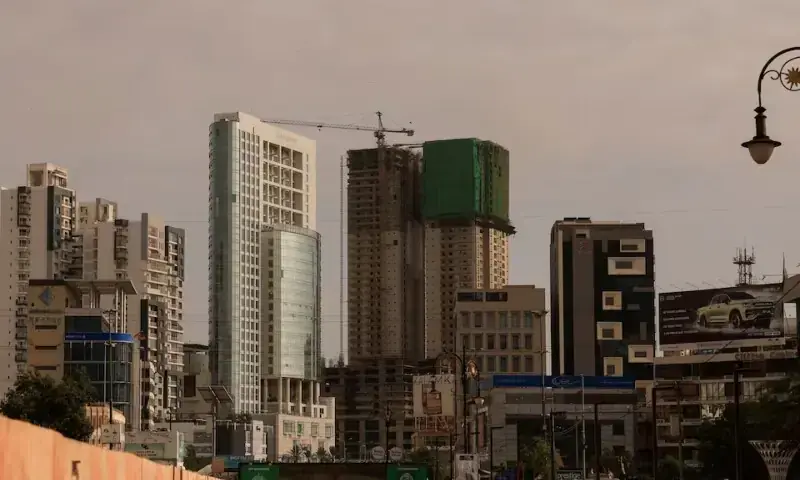
Urban areas can be up to 5.6 degrees Celsius warmer than nearby regions because of roads, concrete surfaces and dense construction that absorb heat during the day and release it slowly at night, preventing cities from cooling down. This is known as the urban heat island effect.

This means that when heatwaves hit, cities are already at an elevated baseline temperature and more prone to overheating.

In most places, conventional planning prioritises plot sizes, road widths, and construction speed without mapping heat pockets or protecting natural cooling systems. However, climate sensitive urban planning incorporates nature as a fundamental element of urban living.

How can climate smart urban design be integrated into our cities practically, and how does it differ from conventional urban planning?

DawnNews discusses all this and much more with urban planner Sana R Gondal.


As Pakistan confronts the accelerating realities of climate change, the urgency to move from awareness to action has never been greater.

Despite contributing minimally to global emissions, Pakistan remains among the most climate-vulnerable nations, underscoring the critical need for coordinated, locally grounded, and globally informed responses.

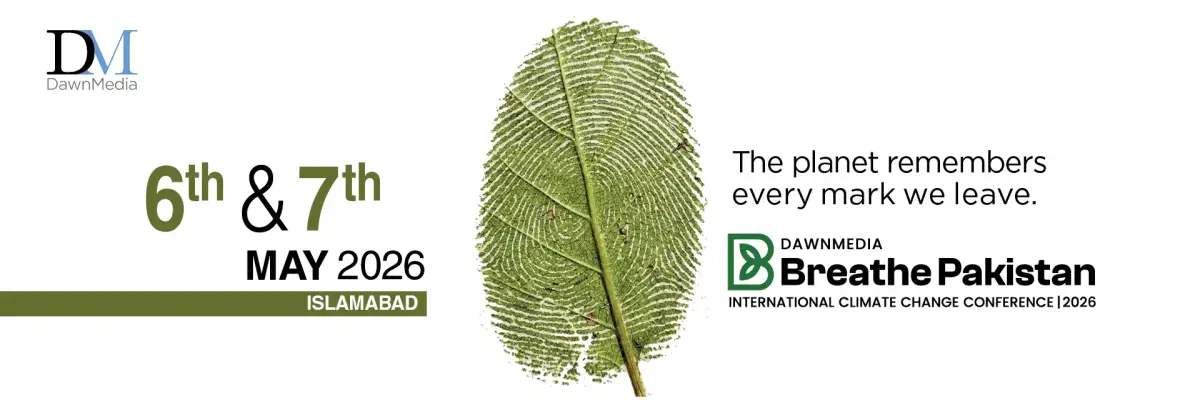
The Breathe Pakistan International Climate Change Conference 2026 on May 6 and 7 brings together policymakers, experts, and stakeholders from across sectors to examine these intersecting challenges and chart a path forward.

See the agenda here.

  •  

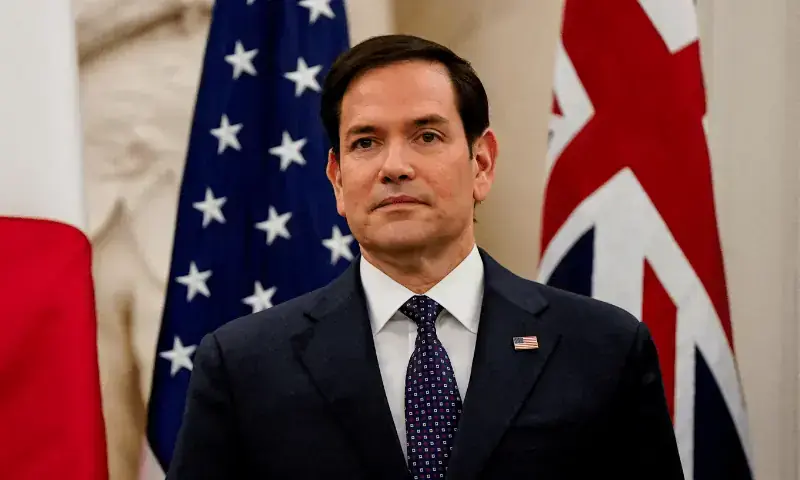
US Secretary of State Rubio to visit Vatican, Rome after Trump's row with Pope

US Secretary of State Marco Rubio will visit Rome and the Vatican this week, an Italian government source said on Sunday, just weeks after a clash between Donald Trump and Pope Leo.

Rubio, who is a Catholic, is expected to meet Vatican Secretary of State Pietro Parolin and Italian Foreign Minister Antonio Tajani, the source told AFP.

Italian media reported that he would also meet Defence Minister Guido Crosetto during the Thursday-Friday visit.

The meetings come several weeks after US President Trump’s extraordinary criticism of Pope Leo XIV over the Catholic leader’s anti-war rhetoric.

Trump also dismissed Italian Prime Minister Giorgia Meloni — one of his closest European allies — as lacking courage after she defended the US pontiff.

Italian media on Sunday presented Rubio’s visit as a meeting to “thaw” relations.

Since taking over as leader of the world’s 1.4 billion Catholics on May 8, 2025, following the death of Pope Francis, Leo has criticised the Trump administration’s crackdown on immigration.

But it was his increasing anti-war rhetoric, particularly following the US-Israeli attack on Iran, that triggered Trump’s ire.

Leo, on April 7, declared Trump’s threat to destroy Iran “unacceptable” and urged Americans to demand that US lawmakers “work for peace”.

The US president subsequently slammed the pontiff in a social media post as “WEAK on Crime, and terrible for Foreign Policy”.

Trump also said he was “not a big fan of Pope Leo” and that he does not “want a pope who thinks it’s OK for Iran to have a nuclear weapon”.

Meloni condemned as “unacceptable” Trump’s criticism — prompting the president to turn his fire on her.

“I’m shocked at her. I thought she had courage, but I was wrong,” the US president said in an interview with Italian daily Corriere della Sera.

He also accused Meloni — a far-right leader who has sought to act as a bridge between diverging US and European views — of failing to help the United States with Nato.

Trump has threatened to pull US troops from Italy, saying Rome “has not been of any help to us” in the Iran war. He has made a similar threat towards Spain, while the Pentagon has announced it is withdrawing 5,000 US troops from Germany.

  •  

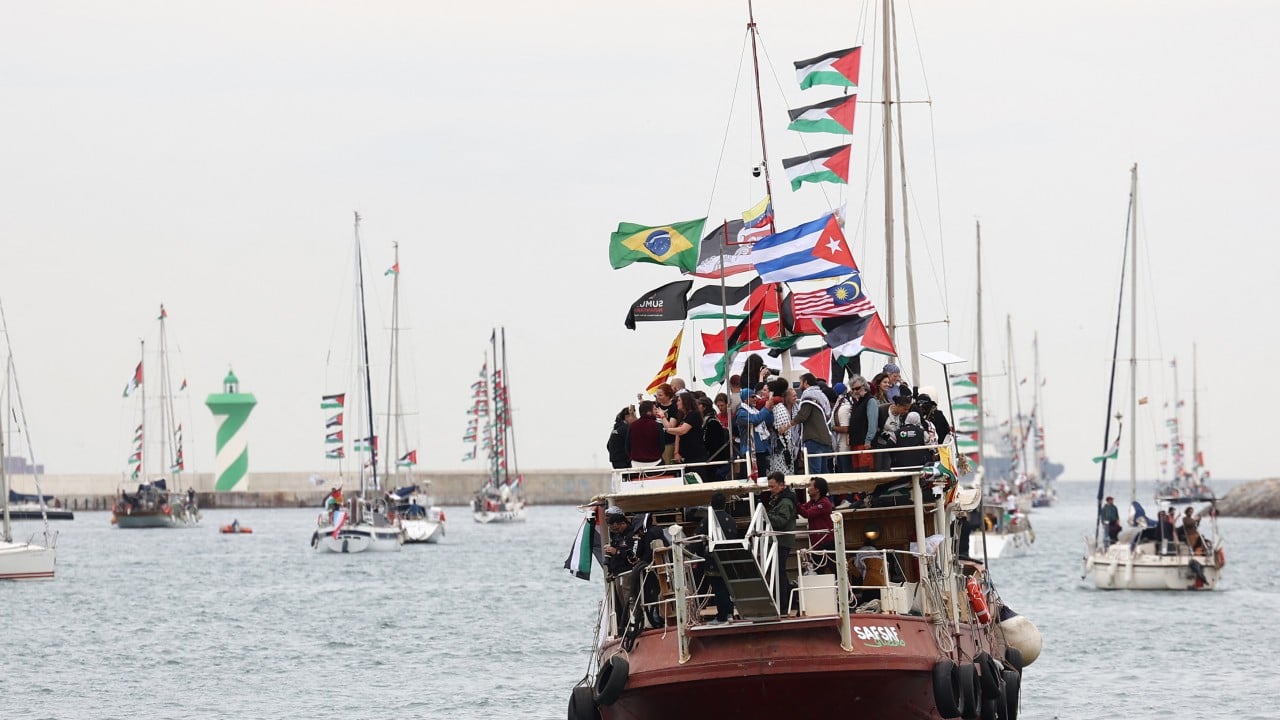
Gaza flotilla activists detained by Israel face ‘extreme brutality’

Two foreign activists from a Gaza-bound flotilla who were brought to Israel for interrogation appeared before an Israeli court on Sunday, according to the rights group defending them. The flotilla of more than 50 vessels had set sail from France, Spain and Italy with the aim of breaking an Israeli blockade of Gaza and bringing supplies to the devastated Palestinian territory. They were intercepted by Israeli forces in international waters off Greece early on Thursday, with Israel saying it had...

  •  

A world of cultures comes alive at embassy fair in Washington

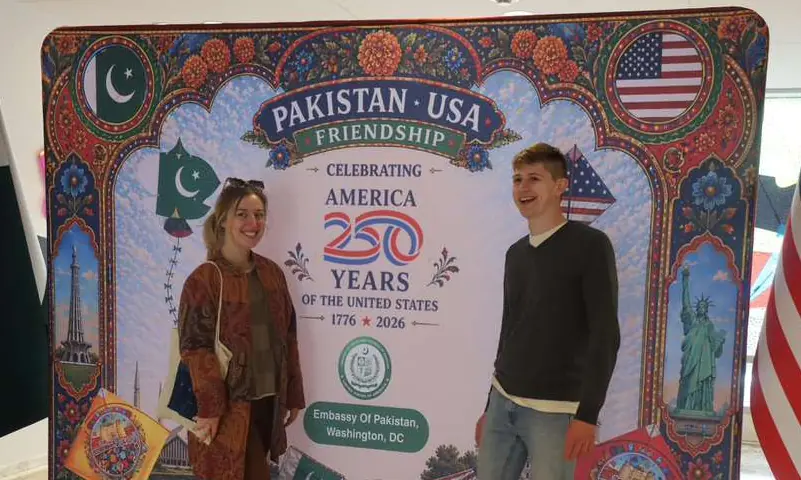
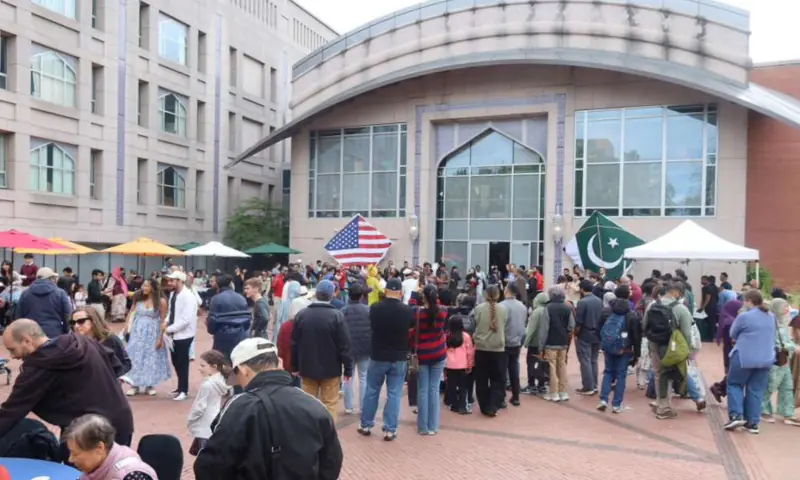
The sound of drums from the Pakistan Embassy could be heard distinctly as soon as visitors turned into International Drive, where the usually quiet diplomatic corridor had been transformed into a global fairground for the annual Passport DC “Around the World Embassy Tour”.

From early morning, crowds moved steadily along the tree-lined street, following a trail of music, aromas and colour that flowed from one embassy to the next. The dhol at the Pakistan Embassy set the tone — deep, insistent, and celebratory — cutting through the spring air and pulling visitors toward gates already filling with activity.

Inside the Embassy of Pakistan in Washington DC, the sensory experience was immediate. The aroma of kebabs and samosas drifted far beyond the entrance, while food trays disappeared almost as quickly as they were placed on counters.

Visitors lingered under displays of truck art, embroidered textiles, gemstones and handicrafts, while mehndi artists worked patiently on outstretched hands and calligraphers wrote names in flowing Urdu script for curious guests who watched each stroke form a language unfamiliar yet visually captivating.

A steady stream of rickshaw rides added a playful rhythm to the embassy grounds, with visitors laughing, posing for photographs, and treating the brightly decorated vehicles as moving pieces of South Asian street culture temporarily transplanted into Washington.

In the background, tabla, flute and harmonium blended into a continuous cultural score that followed visitors from hall to courtyard.

Elsewhere in Washington’s diplomatic enclave, the world unfolded in equally vivid chapters.

At the Ethiopian Embassy, the slow, ceremonial preparation of coffee drew quiet circles of observers. Beans were roasted, ground and brewed in a ritual that held visitors in place, as the rich aroma became one of the most distinctive scents of the day.

Across another courtyard, several South American embassies turned into a burst of music and dance, where salsa rhythms and live bands pulled crowds into spontaneous movement, blending performance and street celebration.

The Bangladesh Embassy offered a different but equally compelling atmosphere. Cultural performances brought the space alive with traditional music and dance, while stalls showcased handwoven textiles, jamdani fabrics, crafts and traditional Bangladeshi products.

Visitors moved between displays of heritage crafts and tables offering familiar dishes — rice-based delicacies, sweets and snacks — introducing many to flavours less known but warmly received. The mix of cultural pride and hospitality drew steady interest throughout the day.

Further along the route, the Mexican Embassy was alive with mariachi music, folkloric dance and bright costumes that swirled through courtyards in bursts of colour. The Brazilian Embassy pulsed with samba and carnival energy, while the Nigerian Embassy showcased bold fashion, Afrobeats and contemporary cultural expression.

At the UAE and Brunei embassies, a quieter elegance defined the space, with fragrances, dates, chocolates and carefully arranged displays reflecting tradition through restraint.

Together, these embassies formed a living map of global cultures, each offering a distinct rhythm yet sharing the same spirit of openness. Diplomacy, often confined to formal rooms and official language, took on a more human expression—spoken through food, music, craft and conversation.

For visitors —Washington residents, Pakistani-Americans, students and tourists from across the United States — the experience was less about observation and more about immersion.

Children tried unfamiliar foods, families paused to listen to unfamiliar music, and strangers asked questions that crossed borders without hesitation.

As afternoon light softened over the capital, the crowds thinned only slightly, with many still moving from embassy to embassy, carrying with them bags of crafts, lingering flavours, painted hands and phone galleries filled with sound and colour.

By the time the gates began to close, the diplomatic enclave returned to its usual quiet.

But for a few hours, it had been something else entirely: a place where Pakistan’s drums, Ethiopia’s coffee ritual, Cuba’s music, Bangladesh’s textiles and dozens of other cultural expressions coexisted in a single, continuous celebration of the world within Washington.

  •  
❌