Reading view

We proved these ‘forever chemicals’ can last longer than three decades

The fresh air, picturesque vistas and pristine bush of the Blue Mountains west of Sydney draw millions of visitors a year.

Unfortunately, the Blue Mountains are also the site of a controversial investigation into water contamination with “forever chemicals”, also called PFAS.

Our recent study investigated long-term PFAS contamination from two incidents, both involving petrol tanker crashes and fires. Both accidents occurred in drinking water catchments, and our study found contamination was present but undetected for 24 and 33 years, respectively. We have searched the international literature and could not find similar examples.

PFAS (Perfluoroalkyl and polyfluoroalkyl substances) are a broad category of thousands of synthetic chemicals used in numerous consumer and industry products. Exposure to PFAS is associated with a greater risk of several illnesses.

Our research shows how vulnerable drinking water supplies are to long-term PFAS contamination. It also shows how contamination can remain hidden due to an absence of PFAS monitoring.

Two historical accidents

The 1992 petrol tanker accident in the Blue Mountains at Medlow Bath caused PFAS contamination of the local drinking water supply. And 32 years later it forced the closure of two storage reservoirs.

Despite limited data, we identified the source of contamination as a type of foaming material used globally by firefighters to help extinguish burning fuel fires. This foaming substance was mixed with water using perfluorooctane sulfonate, a type of PFAS.

Firefighters used this substance to form a foam “blanket” and coat burning materials and extinguish liquid fires. The PFAS foams were used for decades before their harmful human health and environmental impacts were understood.

Nine years after the first petrol tanker accident, another fuel tanker crash and fire linked to PFAS contamination occurred in 2000, near Ourimbah on the NSW Central Coast. The fuel tanker was carrying 40,000 litres of fuel, and the crash and fire were triggered by a collision with a car. This resulted in the tragic death of two people.

Similar to the Medlow Bath accident, news footage showed water and foam were used to control the blaze. It also showed a foamy runoff draining from the accident.

Why are PFAS a problem?

PFAS, often called “forever chemicals”, are a broad category of thousands of synthetic chemicals. They are used in numerous products, such as non-stick cookware, stain-resistant fabrics, takeaway food packaging and even cosmetics.

PFAS molecules don’t easily break down, and readily accumulate in tissue of wildlife across the globe. Exposure to small amounts of PFAS sees the chemicals build up in the vital organs of animals and people. Analysis of human autopsy tissue revealed accumulation of PFAS in the brain, lungs, liver, kidney and bones.

In 2025, an Australian Bureau of Statistics report revealed nearly all Australians have PFAS chemicals accumulating in our bodies.

Should we be worried?

Exposure to PFAS is associated with a greater risk of several illnesses. These include decreased fertility, higher blood pressure, increased risk of cancer (particularly prostate, kidney and testicular cancers), liver disease, higher cholesterol and obesity.

One of the humans are likely to consume PFAS is through eating foods containing PFAS and in drinking water.

The Upper Blue Mountains water supply serves about 40,000 people, and operated by Sydney Water Corporation. It reported that one of the most hazardous forms of PFAS, PFOS, reached 16.4 nanograms per litre in the local drinking water on June 25 2024. This is double the safe amount, according to the recently revised Australian drinking water guidelines.

Discovery of PFAS triggered the closure of two drinking water reservoirs downstream of the Medlow Bath petrol tanker crash and fire. Although a lack of testing data creates uncertainty, it is likely PFAS contamination was undetected in the Blue Mountains drinking water supply for more than 30 years.

What our study showed

Our study showed contaminated creek water contained 2,000–2,400ng/L of PFOS in October 2025. This is 250–300 times the maximum safe concentration (less than 8ng/L) recommended by the Australian Drinking Water Guidelines.

The Blue Mountains contamination plume extended downstream into Greaves Creek, in the upper Blue Mountains. This creek is part of the UNESCO Blue Mountains World Heritage Area, where PFOS levels exceeded aquatic ecosystem guidelines by 100 times. The safe level of PFOS concentration for protection of freshwater species is 0.23ng/L.

As far as we know, the PFAS contamination identified in this study has not received any remediation to remove contaminated soil or water. Most PFAS contamination across Australia has occurred at sites where PFAS foam was used in repeated fire fighting training activities. Our work shows even single incidents involving PFAS can have long-lasting environmental impacts.

The Conversation

Ian A. Wright has received research funding from industry, local, NSW and Commonwealth Government. He has previously worked for the water industry (Sydney Water) as a scientist and catchment officer.

Amy-Marie Gilpin receives funding from the research and development corporation Hort Innovation.

Katherine Warwick receives funding from the water industry (Sydney Water), WIRES, local and state government bodies.

  •  

What you need to know about the Ebola outbreak that has the WHO concerned

The World Health Organization has declared the Ebola outbreak in Africa a public health emergency of international concern.

So far, 336 people have been infected in the central African and East African countries of Uganda and the Democratic Republic of Congo. At least 88 people have died.

Ebola is caused by a group of viruses called Orthoebolaviruses. The strain of the virus responsible for the outbreak, Bundibugyo, is rare. There is no vaccine to protect the public from its spread, making it particularly dangerous.

The WHO declares a public health emergency of international concern when there is a serious, sudden, unusual or unexpected outbreak that requires an international response to reduce its spread.

It has previously declared public health emergencies during outbreaks of mpox, COVID, Ebola, Zika, polio and swine flu.

When did this outbreak start?

The virus was first detected on May 5 in the Democratic Republic of the Congo (DRC) and was confirmed as the Bundibugyo strain on May 15.

The disease had spread to Uganda, with two cases detected in the nation’s capital, Kampala.

A recent suspected case in the DRC’s most populous city, Kinshasa, did not test positive but it seems likely that the outbreak could arrive in this city.

The WHO has warned the true scale of the outbreak is likely larger than current figures suggest.

How does it spread?

African fruit bats appear to be the natural hosts of the virus. Monkeys, apes and antelope can catch the infection from bats.

The first human case was identified in the DRC in 1976. This is the 17th outbreak. The worst outbreak was the 2014–16 West Africa epidemic, which was caused by the Zaire strain and killed more than 11,000 people.

The virus spreads from human to human through direct contact with the bodily fluids of an infected person, such as blood, faeces or vomit, including after they’ve died.

Health-care workers and caregivers face the highest risk of infection.

What are the symptoms?

The symptoms of Ebola disease can be sudden and include a fever, fatigue, malaise, muscle pain, headache and sore throat.

These are followed by vomiting, diarrhoea, abdominal pain rash, and symptoms of impaired kidney and liver functions, leading to organ failure. In some cases, there is bleeding and haemorrhaging.

Overall, around 50% of people who contract Ebola die from it. The mortality rate of previous outbreaks ranges from 25–90%, depending on the strain and access to health care.

The current strain has a lower death rate of around 40%. However it’s considered more dangerous as there is no vaccine.

Why isn’t there a vaccine?

There are two approved vaccines for Ebola.

One, Ervebo, was released in 2015 and was provided to 345,000 people during the 2018–2020 outbreaks in the DRC. This works by using a protein from the Ebola virus to train our immune system to recognise and respond to the virus, without using a live strain.

The other vaccine, Zabdeno, has undergone clinical trials. It is mainly provided to primary contacts and health-care workers. This is because it requires two doses, several weeks apart, making it less suited to an emergency response.

Vaccines for the current Bundibugyo strain are sill in the research stage, having undergone pre-clinical trials in animal models.

How is it treated and managed?

There are no specific treatments for the Bundibugyo strain. Treatment focuses on managing the symptoms such as maintaining blood pressure, reducing vomiting and diarrhoea, maintaining hydration, and managing fever and pain.

Public health responses are overseen by the WHO’s Ebola surveillance strategy. The response combines community communication, rapid diagnosis, isolation, contact tracing and safe burials to stop transmission.

Contact tracing involves identifying everyone who had direct physical contact with a symptomatic case, monitoring them daily for 21 days, and isolating and testing anyone who develops symptoms.

Testing uses real-time PCR and rapid antigen tests (RATs) to detect viral particles in a similar way to COVID.

However, local conflict, poverty and difficult terrain combine to make field management challenging.

Should we be concerned?

The epicentre of the outbreak, Ituri province, is a conflict-affected, high-traffic mining region. Workers regularly move across health zones and borders, increasing the risk of spread.

At least four health-care workers have died, suggesting gaps in infection prevention at health-care facilities.

There is no current need for border closures but authorities have recommended the DRC and Uganda enhance contact tracing and scale-up laboratory testing.

Australia’s direct risk remains low, and the WHO has advised against travel restrictions. Australian border authorities require those returning from Ebola-affected regions to report this.

As this is a rapidly evolving situation, it’s important to remain up-to-date with current restrictions and quarantine guidelines.

The Conversation

Thomas Jeffries does not work for, consult, own shares in or receive funding from any company or organisation that would benefit from this article, and has disclosed no relevant affiliations beyond their academic appointment.

  •  

The Backrooms: how a teenager’s creepy YouTube series became the year’s most anticipated horror

A24

Before Kane Parsons had a Hollywood deal, he had a cheap laptop in his bedroom, a consumer-grade camera, and a grainy image from a 4chan forum.

Now 20, the filmmaker known online as Kane Pixels has gone from posting lo-fi horror videos on YouTube as a teenager to directing a film with the popular studio A24.

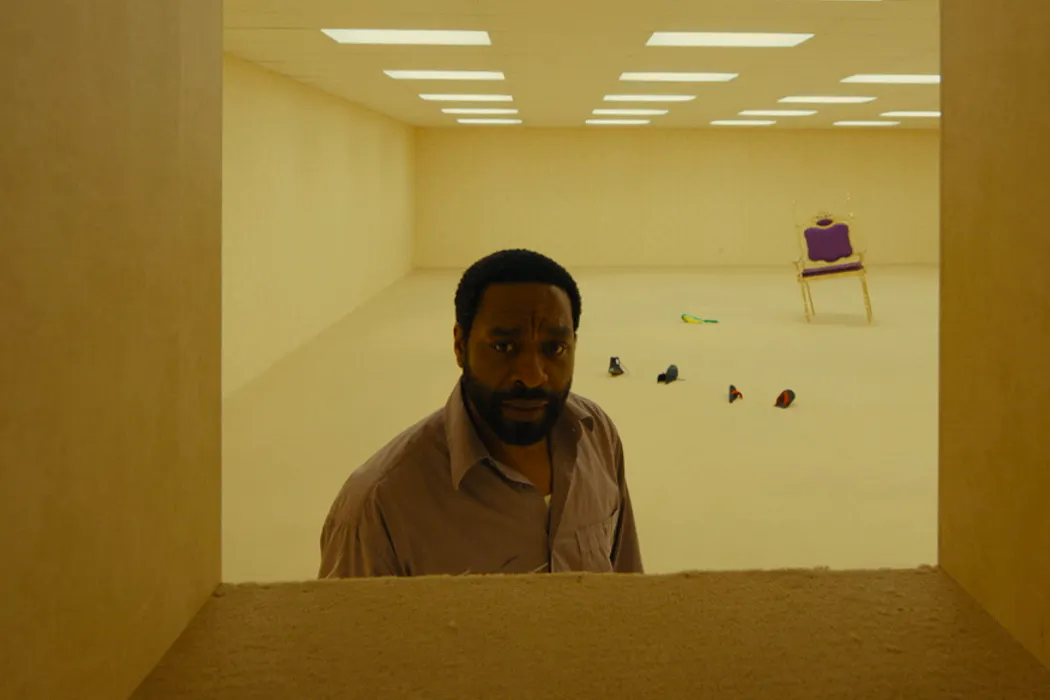
Backrooms will open in cinemas on May 29. Its producer credits include filmmaker Shawn Levy and horror maven James Wan, and stars Oscar nominees Chiwetel Ejiofor and Renate Reinsve.

Far from a lucky break, Parsons’ trajectory demonstrates a significant shift in where the screen industry is looking for its future big ideas – particularly in the realm of horror.

From creepypasta to creepy cinema

The story of The Backrooms began on a 4Chan message board. In May 2019, an anonymous user on the site’s paranormal board posted a photograph of a yellow-walled hallway in response to a thread inviting people to share images that felt disquieting.

The original Backrooms photo posted by an anonymous user on 4chan in 2019. 4chan (screenshot)

Another anonymous user replied with a short piece of lore:

If you’re not careful and you noclip out of reality in the wrong areas, you’ll end up in The Backrooms, where it’s nothing but the stink of old moist carpet, the madness of mono-yellow, the endless background noise of fluorescent lights at maximum hum-buzz, and approximately six hundred million square miles of randomly segmented empty rooms to be trapped in. God save you if you hear something wandering around nearby, because it sure as hell has heard you.

“Noclipping”, a term borrowed from video games, refers to when players pass through normally impenetrable objects such as walls, ceilings and floors. In the Backrooms context, noclipping leads to being trapped inside a seemingly infinite pale-yellow maze of empty rooms.

This anonymous reply became the seed of a broader mythology. It is a classic example of what internet culture calls a “creepypasta”: a piece of short horror fiction or folklore, usually anonymous, that spreads across online platforms and invites others to expand on it.

What made the Backrooms unusually potent was the origin image. It became one of the most well-known examples of the “liminal spaces” internet aesthetic. This trend is built on photographs of transitional or in-between places that evoke a strange, unsettling sense of both familiarity and unease.

Parsons’ overnight YouTube hit

Kane Parsons grew up Petaluma, Northern California. He was 14 when he first encountered the original Backrooms image. He recalled the experience in a recent interview with Esquire:

I started seeing it constantly for a couple of weeks. I think it carried, and still does carry, this archetype of doom.

Parsons was already making films by then; he started uploading YouTube videos from age 10, and entering his work into local festivals.

His love for video led him to learning how to animate and create visual effects using free online tools.

With the Backrooms lore and imagery driving his creative impulse, Parsons used the Blender and Adobe After Effects software to create his first Backrooms video. It took a month to complete.

Parsons uploaded the video in January 2022, intending it as a standalone work and not expecting much reaction. But the 9-minute video went from one million to seven million views within 48 hours.

The wider web series has accumulated almost 200 million views across its episodes.

A never-ending nightmare

What separated Parsons’ version from other approaches to the mythology was a rigorous internal logic.

He describes Backrooms as preying on our instinctive desire to map and understand spaces. Part of the horror lies in the way it foregrounds the disorientation and dread produced by an environment that seemingly never ends.

After his first video went viral, studios came calling. The film was officially greenlit by A24 in 2025 – making Parsons the youngest director in the studio’s history.

His film is faithful to the established logic of his existing web series, while building a traditional narrative around it.

Set in 1990, Backrooms stars Ejiofor as Clark, a furniture store owner who discovers an otherworldly portal in his basement and recruits employees to explore it with him. When Clark disappears during one of these visits, his therapist (Reinsve) goes in to rescue him.

Parsons, now just 20 years old, is of the same generation that invented the Backrooms mythology. A24

The internet-to-Hollywood pipeline

The Backrooms is not the first internet-native content to reach a cinema screen.

However, it may be the clearest example yet of a direct pipeline, wherein the creator of the property is retained and the concept remains intact. The established mythology is treated as the asset, rather than merely a marketing hook, which maintains the elements that attracted the original audience.

The horror genre has become one of the most significant areas of overlap between internet creator culture and Hollywood, in part because YouTube is a space where horror filmmakers can develop their technical skills, voice and audience.

The Phillipou brothers, who had tremendous success with Talk To Me (2022) and Bring Her Back (2025), built their audience on YouTube. Comedian and filmmaker Curry Barker, whose film Obsession (2026) was recently released to strong critical reviews and box office, followed a similar trajectory.

We don’t yet know if or how this growing trend will influence the traditional filmmaker pathway. But it appears that, at least for the horror genre, YouTube can be seen as an open-access development slate that studios monitor to find new voices.

Parsons, for his part, appears to have discovered his own version of “noclipping”. He has slipped past the traditional gatekeepers who may have balked at the notion of 20-year-old director helming a Hollywood film.

The success of Backrooms at the box office will be a fascinating test of this pipeline.


Read more: ‘Analog uncanny’: how this weird and experimental side of TikTok is forging the future of horror


The Conversation

Adam Daniel does not work for, consult, own shares in or receive funding from any company or organisation that would benefit from this article, and has disclosed no relevant affiliations beyond their academic appointment.

  •  

Game changers: how soccer’s mega-money era was sparked by a little-known Belgian athlete

When famous soccer players come to mind, it is usually revered pioneers such as Pelé, Bobby Charlton and Diego Maradona.

Later came Cristiano Ronaldo, Lionel Messi and Samantha Kerr.

But who has heard of Jean-Marc Bosman?

A man who changed soccer forever

Anyone interested in association football (soccer) or sport in general should know about Bosman.

He is responsible for the European Court of Justice’s landmark December 1995 Bosman Ruling (often just called Bosman) that enabled players in Europe to move freely between clubs.

Jean-Marc Bosman, flanked by two of his lawyers, smiles after the European Court of Justice ruled in his favour on December 15, 1995.
Jean-Marc Bosman, flanked by two of his lawyers, smiles after the European Court of Justice ruled in his favour on December 15, 1995. STF/AFP via Getty Images

This rather obscure Belgian soccer player, who never represented his country at senior level, is arguably as or more important to the world game and some other sports such as basketball than much more gifted athletes.

Elements of the Bosman story echo the late-19th-century feudalism of the Netflix series The English Game. Akin to peasants unable to switch lords and ladies of the manor, professional soccer players in the late 20th century were still forcibly attached to clubs.

Soccer goes to court

In 1990, Bosman was at the end of his contract with Belgian club RFC Liège and wanted to move to French club Dunkerque.


Sports can change dramatically in the blink of an eye. Sometimes, these moments create immediate shockwaves. Other times, it’s not until much later that their impact become obvious. This is the second story in a rolling series that explores key (and sometimes long forgotten) moments in sports history.


Read more: Game changers: how one team’s dominance transformed rugby league forever


But the clubs could not agree on the mandatory transfer fee and he remained at Liège, outside the first team on reduced wages.

He appealed to the European Court of Justice, which ruled in his favour. It determined preventing athletes from moving freely within the European Union was an unreasonable restraint of trade.

This decision dramatically shifted the balance of power between players, their agents and the associations and clubs.

Within the powerhouse Union of European Football Associations confederation (UEFA), recruiting, retaining and remunerating players became much more complicated.

Bosman did not create today’s overheated transfer market and hyper-commercialised football, but he certainly fuelled it.

One effect was to exacerbate the enormous financial losses of clubs chasing the best players for inflated sums.

This bubble expanded as US private equity firms and Middle Eastern investment funds infused vast amounts of capital into soccer, creating multi-millionaire athletes and loss-making clubs.

UEFA was forced to intervene with financial fair play regulations and, later, financial sustainability rules in an effort to stop clubs haemorrhaging cash.

Mobile players, static fans

Players soon had to pay a physical and psychological price for their newfound riches as leagues and clubs sought to generate more revenue in a globalised sport market.

To the consternation of their “union” – Fédération Internationale des Associations de Footballeurs Professionnels (FIFPRO) – they were soon required to play more games in more competitions and travel on intercontinental promotional tours.

Although centred on Europe, Bosman had a ripple effect across the globe, including in Australia.

While Australian players such as Craig Johnston had long made their fortunes in Europe, the post-Bosman honeypot was especially attractive to the likes of Harry Kewell, Mark Viduka, Mark Schwarzer and others.

Finding long-lost relatives in the European Union sometimes helped with immigration authorities.

One of Bosman’s greatest beneficiaries was the English Premier League (EPL), which was formed in the early 1990s with money from Rupert Murdoch’s media empire.

The EPL became by far the richest league in Europe after luring the world’s best (and most mobile) athletes. The combined transfer value (the estimated cost of buying their entire squads) of Chelsea’s and Manchester City’s 101 players is around A$5.5 billion.

Ironically, the UK’s Brexit threatened to curtail the sport’s labour supply. But the Bosman mobility template has largely survived.

Bosman also had deeper social and cultural ramifications for the relationships between players and fans. The former transitioned from proto-employee to small businessperson selling athletic services to the highest bidder.

This was good for the bank balances of professionals with short, precarious careers.

But hometown fans, unlike most athletes, are static rather than mobile in their loyalties. They tend to regard some players as money-grubbing mercenaries, while perhaps hypocritically welcoming big-money recruits from other clubs.

Bosman helped widen the gap between the celebrity player and everyday fan, exposing professional soccer’s corporate-capitalist underbelly and disenchanting many romantics.

Soccer culture has changed substantially as a result, dramatically exacerbating the inequalities between apex predator and tiddler clubs.

Those same inequalities are reproduced among players. The still-developing women’s game has seen professionalisation and Bosman-inspired mobility enable some players to prosper in relative terms, while many more still need to supplement their incomes outside the game.

What happened to Bosman?

What became of the man whose legal victory was so important to these developments?

Now in his 60s, Bosman benefited little from the ruling, ending up bankrupt and divorced, an alcoholic with a conviction for assaulting his partner.

His life is a far cry from those of the many fabulously rich footballers for whom he paved the way.

But his impact on soccer is still being felt today. Thirty years after the Bosman Ruling, the Justice for Players foundation served notice of a class action against FIFA, football’s governing body, and several European football associations.

Involving more than 100,000 players, the action seeks compensation for lost income since 2002 attributed to FIFA’s restrictions on player transfers.

The similarity does not end there.

French player Lassana Diarra sparked the dispute after he was obstructed from moving between Russian and Belgian clubs in 2016. His lawyer, Jean-Louis Dupont, represented Bosman in his case and is advising the new class action.

This latest development demonstrates the 2020 documentary Bosman: The Player Who Changed Football was not exaggerating – the shock of the Bosman Ruling continues to reverberate around the world game and beyond.

The Conversation

David Rowe has received several Australian Research Council grants underpinned by sociology and related interdisciplinary domains, with the place of the sport-media nexus in contemporary cultural citizenship a consistent area of analytical concern.

  •  

Australian teens impacted by the social media ban are getting less news: new research

Stefania Pelfini la Waziya/Getty

In the months leading up to the implementation of Australia’s social media ban in December 2025, there was much discussion about the possible negative consequences.

Among these were concerns that teenagers would consume less news. As most young adults use social media for news and many rely on it, this was a real risk.

So months on, has this come to pass? In our newly-published research, we found the more young people are impacted by the ban, the more likely they are to report they are getting less news and having less opportunity to discuss news and the issues that matter to them.

Our research

In February we surveyed 1,027 young people aged 10 to 17, just two months after the legislation took effect.

As part of a longitudinal survey that has examined young Australians’ news engagement since 2017, we asked young people questions about the ban’s impact on their social media use and their news engagement.

First, we investigated if the ban had affected young people’s social media use by asking them if their engagement with each banned platform had changed at all, and if so, whether the change was a complete stop or if they just used it less.

We found 61% of under-16s who had previously been using banned platforms reported little or no change in their social media use. For the majority of young people surveyed, the ban was ineffectual.

In fact, only one in four (26%) reported their social media use had been affected.

Next, we asked young people if the ban had affected their engagement with news.

For those whose social media use was significantly disrupted, the result was stark: 51% reported getting less news as a direct result of the ban.

This finding is a significant concern because it suggests that as the ban becomes more “successful”, with a greater number of young people being removed from platforms, their news engagement will fall in parallel.


Read more: ‘Make the platforms safer’: what young people really think about the social media ban


The impact on civic involvement

A 2025 report from the Australian Curriculum, Assessment and Reporting Authority, based on testing of year 6 and year 10 students, finds school students’ civics knowledge is the lowest it has been since testing began 20 years ago. This is despite most young people believing it’s important to take action in the community on issues that matter to them.

Our findings show that when young people are impacted by the social media ban they lose access to news about issues they care about. They are also talking less about news and finding fewer opportunities to share their views or take other forms of action.

Our previous research shows news engagement makes young people feel knowledgeable and more capable of responding to issues.

A large body of research also shows news interest and engagement is closely associated with civic engagement. The more engaged people are with news, the more likely they are to become involved in community and social issues.

Social news or no news

It’s unlikely that being cut off from news on social media will lead young people back to traditional news sources.

Most young Australians say they don’t feel represented or heard by traditional news organisations. They also feel the news mainstream outlets create isn’t accessible to young people and doesn’t focus on the issues that matter most to them.

In our survey, 75% said news organisations have no idea what their lives are actually like, and 71% said they find it difficult to find news relevant to people their age.

Our earlier research also shows Australian news organisations rarely include young people in news stories. When they are included, they are seen but not heard.


Read more: On an average day, only 1% of Australian news stories quoted a young person. No wonder so few trust the media


For instance, young people are shown in news stories in photographs and video footage ten times more than their voices are heard or they are quoted in stories.

In addition, another study of news has shown that when young people are included in breaking news events, they are often stereotyped as being lazy, dangerous and entitled.

These findings demonstrate some of the reasons young people have likely turned to social media for news in recent years.

So what should we do?

It’s likely that over time, more young people will be cut off from social media as loopholes in the ban are ironed out. This emphasises the need to find ways to encourage young people to engage with other news sources in productive and meaningful ways.

A key concern is trust. We need to educate young people about the importance of news to democratic process, providing them with insights into how high quality journalism is produced and supporting them to make informed decisions about who and what to trust online.

This can happen as part of media literacy education but this requires investments in high quality curriculum resources and teacher training.

In Australia, we are in the fortunate position that we already recognise the need for media literacy in the Australian curriculum. High quality news literacy resources are being produced by the ABC through programs such as BTN (Behind The News), and other organisations such as Squiz Kids.

At the same time, to develop trust, mainstream news organisations need to do a much better job of representing young people in fair and inclusive ways so they feel seen and heard.

Finally, it’s important to recognise that amid all of these changes to young people’s technology access, our research shows family is the first and most trusted source of news for young people. We need to help parents understand the important role they play in helping their kids navigate the news.

The Conversation

Michael Dezuanni receives funding from the Australian Research Council and ABC Education. He is the current Chair of the Australian Media Literacy Alliance.

Tanya Notley currently receives funding from the Australian Research Council and ABC Education. She is a board member of the Australian Media Literacy Alliance.

Simon Chambers does not work for, consult, own shares in or receive funding from any company or organisation that would benefit from this article, and has disclosed no relevant affiliations beyond their academic appointment.

  •  

If AI can translate instantly, why learn another language?

From live speech translation in video calls to auto-dubbing on TikTok, the technology to dissolve language barriers has arrived. Real-time translation powered by artificial intelligence (AI) is now embedded in everyday life.

Tools from OpenAI, Meta, Google and many others now offer near-instant translation across dozens of languages, and they keep improving.

All this raises a vital question. If machines can do this faster and more accurately than humans, is investing years in learning another language still worth it?

The logic is appealing. Humans have always offloaded cognitive work onto tools. Writing reduced demands on our memory. Calculators removed the burden of mental arithmetic. AI sits within this long tradition. Used well, it can support learning and expand access in ways that matter enormously.

But there’s a difference between using a tool to extend your capabilities and using it to avoid doing something altogether. That distinction becomes important when you are not just replacing a skill, but a form of cognitive and cultural engagement.

The effort is the point

Effort plays a central role in how we acquire knowledge.

Psychologists use the phrase “desirable difficulties” to describe challenges that may feel inefficient, but produce stronger long-term retention and understanding.

Struggling with grammar, searching for the right word, or constructing meaning across multiple languages engages brain networks that support memory, attention and cognitive flexibility. Over time, they consolidate knowledge far more deeply than passive exposure.

Sustained mental engagement contributes to what researchers call cognitive resilience – the brain’s capacity to maintain function as we age. Managing multiple languages is one form of this engagement. It requires the brain to resolve competition, monitor context and adapt dynamically.

These are not trivial demands. And they’re difficult to achieve if you just use translation tools passively, such as resolving the meaning of a foreign phrase with the click of a button.

What multilingualism research actually shows

The evidence on multilingualism is often presented as a simple “bilingual advantage”, a shorthand that obscures a more complicated picture. Some studies report benefits for attention or working memory, while others find no differences. The truth appears to be more selective.

Our recent study examined cognitive performance in 94 adults aged 18 to 83, using both visuospatial and auditory tasks across working memory, attention and inhibition. Put simply, we looked at how people process and respond to information they see or mentally map out in space (visuospatial) and information they hear (auditory). Examples include remembering sounds, focusing on visual patterns, or ignoring distractions.

Our study measured multilingualism as a spectrum, not a category. This allowed us to capture diverse language backgrounds and experiences. Multilingual participants spoke a range of languages with varying levels of proficiency and daily use, reflecting the linguistic diversity common within multicultural communities.

Across most tasks, multilinguals and monolinguals performed similarly. However, one pattern was striking. Individuals with richer, more diverse multilingual experience showed markedly better performance in visuospatial working memory. These effects were most pronounced in older people.

This suggests that multilingual experience doesn’t broadly enhance cognition, like some headlines claim. Instead, it may help preserve specific functions over time.

Separate population-level research has also linked multilingualism to later onset of Alzheimer’s disease and better overall ageing outcomes, though the mechanisms continue to be debated.

Overall, however, it appears that sustained use of multiple languages represents a form of mental activity with effects that accumulate across a lifetime.

What AI translation can’t replicate

AI translation excels at speed and accessibility. For many practical purposes, it works remarkably well. But it operates through pattern recognition, not lived understanding. It can struggle with cultural context, humour, register and emotionally embedded meaning, especially for languages with less representation in training data.

At best, AI captures literal dimensions of language while missing social ones. Consider the scene in the 2003 film Love Actually where Jamie, played by Colin Firth, delivers an awkward but sincere proposal to Aurelia in broken Portuguese.

It is moving because of the effort, vulnerability and intent his imperfect words carry. Resort to real-time translation software and what remains is information, not expression.

This is the deeper distinction: translation is not the same as participation. Learning a language involves understanding how people think, their values, and how meaning is shaped by context and history. This cultural literacy develops through interaction and experience. We can’t fully outsource that to systems that translate on demand.

The multilingual participants in our research spoke to this directly:

I definitely think in Telugu, but I remember numbers and count using English.

Afrikaans is the language of my heart and best used to express intense emotion. English is the language of business and used mostly in everyday life.

These are not descriptions of switching between translation modes. They are descriptions of inhabiting different selves.

AI will continue to change how we engage with language learning. It can personalise instruction, minimise barriers and provide feedback at scale. What it can’t do is replace the cognitive and cultural work that comes from learning a language. This work leads to a deeper relationship with how other people see the world, and with how you express yourself. And that difference still matters.

The Conversation

Olivia Maurice completed her PhD at the MARCS Institute, Western Sydney University.

Mark Antoniou receives funding from the Australian Research Council.

  •  

Why has the US indicted former Cuban President Raúl Castro?

After a week of speculation, the US Department of Justice has officially indicted Raúl Castro, the 94-year-old ex-president of Cuba.

The charges relate to a 1996 incident in which the Cuban military allegedly shot down two unarmed civilian planes operated by Brothers to the Rescue.

The news comes amid mounting US pressure on the ailing Cuban Republic to change its system of government after 67 years of revolutionary rule.

So why did the United States act now, and what will happen next?

Who is Raúl Castro?

Raúl Castro is the younger brother of Cuban revolutionary leader, Fidel Castro. He joined Fidel’s movement to overthrow the authoritarian US ally, Fulgencio Batista, starting in 1952. He participated in the assault on the Moncada Barracks on July 26 1953, becoming a founding member of the M-26-7 guerrilla movement, the leading organisation in the Cuban revolution.

In 1958, he rose to the rank of comandante of the Second Eastern Front. He came to Washington’s attention in June when he kidnapped a group of 50 US Marines to prevent the continued aerial bombardment of his troops and local villagers.

This was a pivotal moment when Raúl become more than Fidel’s brother – he was now a key leader of the revolution.

By late 1958, Raúl Castro’s army had liberated much of eastern Cuba from the Batista regime and began marching on Havana to conclude the revolution.

From January 1959, Castro became the defence minister at a time when fighting was ongoing. For decades, he was the face of Cuba’s military and the island’s defence.

When, in April 1961, a group of 1,400 Cuban exiles, supported by the US Central Intelligence Agency (CIA), attacked Cuba at the Bay of Pigs, Castro’s military secured a famous victory against the exiles, and the US.

He would also rise through the civilian and party ranks in Cuba. From 1976, he served as vice president and then succeeded his ageing brother as president from 2008, a position he would hold until 2019.

Raúl Castro remained atop the Communist Party until 2021 and is still viewed as influential in Cuba’s politics. Castro is a soldier, a politician and, above all, a revolutionary who toppled a pivotal US ally and resisted US pressure for decades.

However, Cuba is an authoritarian state that does not tolerate dissent. In 2003, Fidel Castro’s government, of which Raúl Castro was apart, detained dozens of pro-democracy advocates in an event dubbed the “black spring”. One of those detained, José Daniel Ferrer, founder of the Patriotic Union of Cuba, called on the US to stand with the opposition forces in 2025.

What is he accused of doing?

Cuba has been subject to a blockade by the US since 1960. It was also subject to an embargo by the members of the Organisation of American States (OAS), which includes almost all the countries in the Western Hemisphere, between 1964 and 2009.

The economic survival of Cuba has always been dependent on the support of a large nation willing to supply it with fuel.

During the Cold War, that was the Soviet Union, whose 1991 collapse was devastating for Cuba and its government. The “Special Period” following 1991 saw fuel shortages, declining food production, social unrest and large-scale emigration from Cuba.

Cuban exiles boarded unstable flotillas in their tens of thousands, hoping to join other exiles in Florida. The Clinton administration in the US eventually allowed for mass migration and the US Coast Guard was regularly helping to save stranded Cubans. Despite this, dozens of people drowned at sea.

A group of Cuban exiles, led by self-declared “Bay of Pigs veteran”, José Basulto, flew reconnaissance flights and reported the location of stranded Cubans to the Coast Guard.

But the flights had other motives. On several occasions, the planes flew into Cuban airspace, ignored warnings and dropped propaganda designed to trigger anti-government activity.

Records made public by William LeoGrande and Peter Kornbluh, authors of a book on the topic, reveal the US knew of these operations and feared Cuba would eventually shoot down the planes, creating an international incident.

On February 24 1996, the Cuban military indeed shot down two planes, killing all four people on board.

Now, 30 years later, the US Department of Justice alleges that Castro, the then-defence minister, and six others are criminally responsible for the murders of the four men, three of whom were US citizens.

The US attorney for the Southern District of Florida, Jason A Reding Quiñones, said “this passage of time does not erase murder”.

Why is the US acting now?

Cuba is again suffering under a US blockade, this time initiated following the removal of its fuel guarantor, Venezuelan President Nicolas Maduro in January.

New Venezuelan President Delcy Rodriguez was pressured into ending oil shipments to the island, as were Mexico and other regional partners under the threat of crippling tariffs.

Cuba declared last Thursday it had no fuel or diesel remaining at all. Meanwhile, the humanitarian conditions worsen. Amnesty International reported in 2025 that most Cubans were struggling to find sufficient food and medicine.

In a historic visit in recent days, CIA Director John Ratcliffe spoke with members of the Cuban government in a sign of potential regime change.

President Donald Trump has also highlighted his motives on Cuba this week, saying “to a lot of people it’s going to be one of the most important things, they’ve been looking for this moment for 65 years”.

Cuban-Americans have indeed been pushing for the removal of the Castros since the 1960s.

Secretary of State Marco Rubio, himself a Cuban-American, commemorated Cuba’s 1902 Independence Day by delivering the following message to the Cuban people, in Spanish:

and I want to tell you that we, in the US, are offering to help you not only to alleviate the current crisis but also to build a better future.

The message condemned the Cuban government, and Raúl Castro, as corrupt. He called for regime change, referring to the current Cuban president, Miguel Díaz-Canel.

The indictment of Castro is about more than justice for one man. It’s about Cuban-American politics in Florida, and it’s about the looming potential of regime change in Cuba, America’s primary regional foe for the past 67 years.

The Conversation

James Trapani does not work for, consult, own shares in or receive funding from any company or organisation that would benefit from this article, and has disclosed no relevant affiliations beyond their academic appointment.

  •  
❌