Reading view

Israeli forces capture Lebanon’s Beaufort Castle, a Crusade-era site once held by the Knights Templar
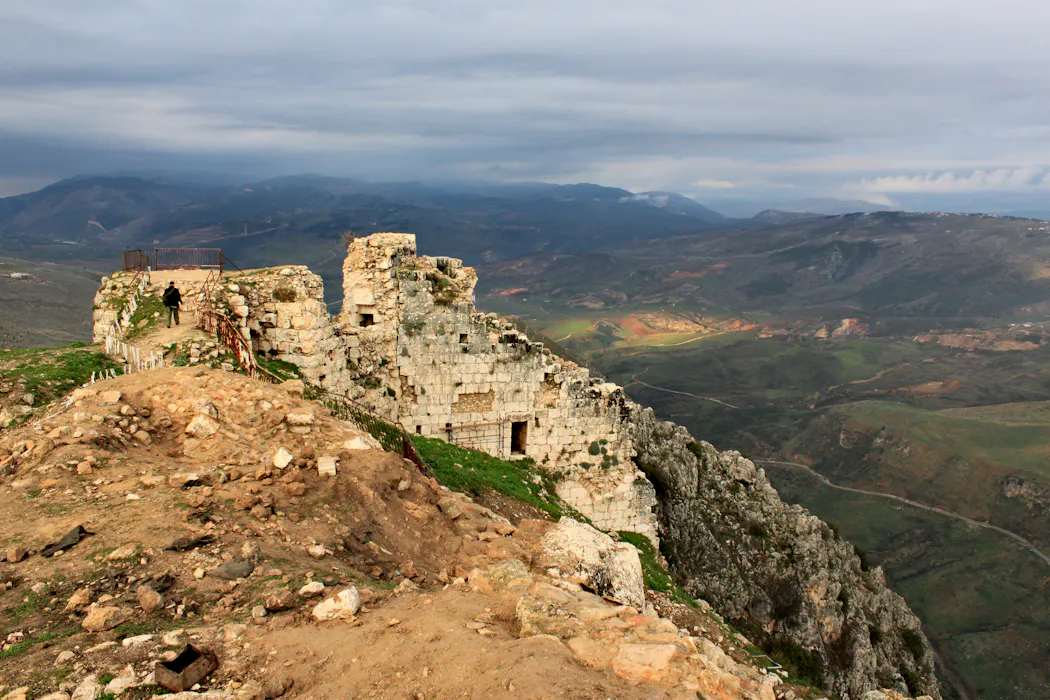
Getty Images/Monik-a

A 12th-century castle built during the Crusades in Lebanon has been seized by Israeli forces in what’s been described as the deepest incursion into Lebanon for more than 25 years.

The historic site, known as Beaufort Castle or Qalʿat al-Shaqīf, sits atop a striking rocky outcrop in a commanding position on the edge of the Litani gorge, boasting spectacular views across southern Lebanon. It has historically been a very strategic site, especially during the Crusades.

What were the Crusades?

The Crusades is the name given to a series of military expeditions, beginning in the late 11th century, of Latin Christians from across Europe to a range of destinations, most famously the Holy Land.

The Crusades were armed pilgrimages, representing a fusion of ideas about warfare and spirituality.

Crusades would be called for by a pope, who would promise participants spiritual rewards if they took the Crusade vow and undertook these campaigns.

The aims and goals of Crusades changed over time as the geopolitical landscape changed. The First Crusade – called in 1095 CE – had a broad goal of “liberating” the holy sites of Jerusalem from the Seljuk Turks, a Sunni Muslim group in power in Asia Minor at the time.

The Crusaders also wanted to render military aid to Eastern Christians in the region.

But what distinguishes the Crusades from other military campaigns was that this was seen as a spiritually meritorious form of warfare.

The First Crusade established the Crusader States, with what came to be known as the Kingdom of Jerusalem at its heart.

Who built Beaufort Castle and why?

This site’s time as a Crusader castle began in 1139 CE with the Franks – the label used at the time to denote western European settlers in the east.

When the Franks arrived at the site, it was probably already being used in some significant way because of its strategic position.

The king of Jerusalem at this time was Fulk, who was a Frank (the Kingdom of Jerusalem had already existed for 40 years before he captured the Beaufort Castle site).

He began construction of Beaufort Castle (Old French for “beautiful fortress”) in about 1139 CE. Ultimately, it became a large castle over two levels, roughly triangular in shape. As is often the case for buildings from this era, it has had parts added on and destroyed over time.

What we are left with is a mix of Frankish building work and augmentations from various Muslim rulers over the centuries.

Latin Christians saw it as part of a network of fortified castles they hoped would help shore up Frankish settlement in the area.

Enter Saladin

The next key character in the history of Beaufort Castle is Saladin. He is among the most famous figures in Crusades history, in the region and in Islamic history more broadly.

King (Saladin from Egypt), from 'Court Game of Geography'
Saladin was a key figure in military Muslim efforts against the Latin Christians. The Metropolitan Museum of Art

He was of Kurdish origin, and by the time Beaufort Castle was controlled by Latin Christians, he was sultan of Egypt and Syria.

By all accounts, Saladin appears to have been a charismatic, canny leader and military practitioner. He was a key figure in Muslim military efforts against the Latin Christians.

Saladin captured Beaufort Castle in 1190 CE. This was part of a longer story of success for Saladin in what has been called the “counter-Crusade”. A few years earlier, he had won some significant victories, including at the famous Battle of Hattin (depicted in Ridley Scott’s 2005 film, Kingdom of Heaven).

Saladin also captured the city of Jerusalem in 1187, which was an enormous loss for the Crusaders.

So the Beaufort capture was part of the bigger picture of Saladin’s spectacular journey of conquest in this region around this time. He died not long after in 1193 CE, and the castle remained in Muslim hands until 1240 CE.

After that, the castle went back to Latin Christian ownership as part of a treaty with Theobald I of Navarre in the Barons’ Crusade. Ultimately, the castle passed to the Knights Templar in 1260 CE.

Who were the Knights Templar?

The Knights Templar was a military religious order made up of hybrid warrior-monks, founded in 1118 in the Kingdom of Jerusalem. Their initial remit was to defend Christian pilgrims visiting holy sites, but their role changed over time.

They lived according to a religious rule, known as the Templar Rule, and they took vows of chastity, poverty and obedience to live in communities according to their vows.

A medieval king consults with the Templars.
A medieval king consults with the Templars. Unknown author - Chronique d’Outremer, vers 1280. Manuscrit Français 770, fol. 313, Gallica/BNF/Wikimedia Commons

What was unusual about these monks was they were also highly trained warriors, especially skilled as mounted knights, as both heavy and light cavalry.

The kings of Jerusalem soon came to rely on them for military advice and as a highly trained standing army.

They were viewed as having the power to fight on both a spiritual and earthly battlefield, a kind of holy super soldiers. According to their patron, Bernard of Clairvaux, the Templar’s

soul is protected by the armour of faith just as his body is protected by armour of steel.

Kings and nobles increasingly began to donate land and riches to the Templars. They eventually became an international organisation with significant wealth across Europe and the Eastern Mediterranean (although they would eventually be tried for heresy).

The Knights Templar held Beaufort Castle for only eight years, before the site was returned to Muslim rule for centuries. In modern history, it has been controlled by Lebanon – until its capture by Israeli forces this week.

This is a region with an incredibly nuanced and complex history, and it remains that way today.

The Conversation

Beth Spacey received funding from the Arts and Humanities Research Council (UK) for her PhD research on medieval history.

  •  

Online ads are becoming harder to spot – but we’re not powerless to stop it

Gabrielle Henderson/Unsplash

Profound changes are ahead for online advertising. At the recent Google Marketing Live event, the tech giant outlined expanded artificial intelligence (AI) systems for digital ads.

What will that look like? Picture ads integrated directly into your conversation with an AI chatbot. Or a discounted price that only you see because an AI system served it based on your browsing behaviour, intent to buy the product, and what’s available locally. And, of course, generative AI tool suites for producing online ads start to finish.

Meta and ByteDance (parent company of TikTok) have similarly accelerated the rollout of their own AI-driven advertising systems. Meta is expanding tools that automatically generate and personalise ad images, video backgrounds, captions and targeting across Facebook and Instagram feeds.

Facebook is offering tools to create personalised ads based on users’ interests and behaviours. Meta

Bytedance’s TikTok Symphony suite can generate promotional videos, scripts, AI avatars, dubbed voiceovers, and creator-style content from simple text prompts or product links.

At the same time, ads on these social media platforms are becoming harder to recognise. As one example, Instagram and Facebook recently eliminated their familiar “sponsored” labels in favour of smaller “ad” markers.

It may look like a minor interface tweak, but it signals something larger: the steady erosion of clear boundaries between advertising, entertainment, recommendation, and ordinary social interaction.

Dissolving into the flow

Social media platforms have engineered ads to mimic organic content. Just think of influencer and creator partnerships, AI-personalised search results, or brands using memes.

Increasingly, online ads are less of an interruption to the content you consume. Instead, they’re designed to dissolve into the flow itself.

When companies buy advertising space on social media, ads are automatically disclosed as a commercial message. With partnerships and AI-personalised results, the platforms currently offer limited forms of disclosure.

The result is a blurring of the lines. Products, ideas and political messages are spread through ads that look a lot like all other, non-sponsored content. And the less an ad feels like an ad, the more effective it often becomes. This is precisely where public accountability starts to break down.

For several years, researchers like us, working through projects such as the Australian Ad Observatory and the Australian Internet Observatory, have documented how difficult it already is to observe and analyse online advertising systems.

Our work has examined everything from political advertising and astroturfing campaigns, the marketing of alcohol and unhealthy foods, and the veracity of “green” claims made by advertisers.

In many cases, this work depends on relatively simple but crucial forms of signalling. Researchers need to know what counts as an advertisement, who paid for it, where it appeared, and why it was shown to particular audiences.

But those signals are weakening.

Blurry and harder to audit

A blurred system is harder to audit. Audiences should be able to recognise when they’re targeted with ads. Without clear ad disclosures, we can’t easily detect or question commercial influence in our feeds and search results.

New AI tools intensify this challenge. Instead of seeing discrete ads in your feed, you might be getting a stream of product suggestions and discounts nobody else sees. This means regulators and researchers can’t even audit them.

These personalised, disguised ads could also make product recommendations that are biased and potentially harmful. For instance, you might be telling an AI assistant that you’re stressed, and suddenly be offered a discount on a case of wine.

AI-driven dynamic advertising is highly concerning for products that are unhealthy, harmful or regulated – such as alcohol and gambling. If ads appear one moment and are gone the next, it’s almost impossible to make sure they comply with relevant regulations.

The danger is not simply that users may encounter more advertising. It’s that the underlying commercial and promotional logic and messaging become even harder to see.


Read more: OpenAI will put ads in ChatGPT. This opens a new door for dangerous influence


We’re not powerless

Australia’s emerging digital duty of care framework offers an opportunity to confront this problem directly. Much of the current discussion has focused, understandably, on harms such as misinformation, scams, abuse, or risks to children.

But opaque advertising systems are also a public interest issue. They shape political communication, consumer behaviour, health information, financial decision-making, and civic trust.

If platforms increasingly profit from blurring advertising and ordinary communication, then stronger positive obligations around disclosure and transparency become essential.

Minimum disclosures for digital advertising on social media should include:

  • consistent and clear human and machine-readable advertising labels across formats and services
  • accessible ad archives for public-interest scrutiny, including AI variations
  • inclusion of meaningful and accurate information about targeting and delivery, and
  • clear identification of AI-generated or AI-mediated advertising, including specifics on how AI was used.

This is not about banning advertising. Nor is it about returning to some imagined “clean” internet untouched by commerce. Advertising has always adapted to new media and will continue to do so.

But there’s a fundamental difference between visible persuasion and persuasion that disappears into the infrastructure.

Without clear signals on what is and isn’t an ad, we lose one of the few remaining ways to understand who is shaping the information environments we increasingly depend on every day.

The Conversation

Daniel Angus receives funding from the Australian Research Council through Linkage Project LP190101051 'Young Australians and the Promotion of Alcohol on Social Media'. He is a Chief Investigator with the ARC Centre of Excellence for Automated Decision Making & Society, and QUT Node Lead for the Australian Internet Observatory.

Nicholas Carah receives funding from the Australian Research Council through Linkage Project LP190101051 'Young Australians and the Promotion of Alcohol on Social Media' and Discovery Project DP250102499 'The Australian experience of automated advertising on digital platforms'. He is an Associate Investigator with the ARC Centre of Excellence for Automated Decision Making & Society. He is Deputy Director of the Australian Internet Observatory and Deputy Chair of the Foundation for Alcohol Research and Education.

Lauren Hayden does not work for, consult, own shares in or receive funding from any company or organisation that would benefit from this article, and has disclosed no relevant affiliations beyond their academic appointment.

  •  

Hantavirus is very different to COVID. Here’s why the ‘Andes virus’ won’t cause the next pandemic

For many people, news of a virus outbreak on a cruise ship immediately brings back memories of COVID spreading when the Ruby Princess docked in Sydney in March 2020. Of the passengers and crew who disembarked, 575 had COVID. The virus then spread to the community.

So it’s understandable people are concerned that passengers from the MV Hondius need to be quarantined after potential exposure to Andes virus, a rodent-borne hantavirus.

However, the comparison with COVID only goes so far. Andes virus is serious and authorities are right to respond cautiously. But experts, including from the World Health Organization, note it doesn’t have the characteristics needed to become “the next COVID”.

As of May 11, European health authorities have reported nine cases linked to the cruise ship, including seven confirmed and two probable cases. Three deaths have been reported.

Five Australians and one New Zealander are being repatriated to Australia for quarantine and monitoring. The passengers will initially quarantine at the Centre for National Resilience near RAAF Base Pearce in Western Australia.

Here’s what you need to know about Andes virus, the risk of transmission, and how it’s different to the virus that caused COVID.

How do hantaviruses spread?

Hantaviruses are a group of viruses usually carried by mice, rats and other rodents. People are most commonly infected after inhaling tiny particles of contaminated rodent urine, droppings or saliva.

Most hantaviruses are not known to spread between people. Andes virus is the exception. After the initial spillover from infected rodents, it is the only hantavirus with well-documented person-to-person transmission.

But that doesn’t mean it spreads easily between people. Further human-to-human spread is uncommon, but it can occur in close-contact settings such as households, among caregivers, during intimate contact, or after prolonged exposure in crowded or poorly ventilated indoor areas.

That is very different from SARS-CoV-2, the virus that causes COVID. SARS-CoV-2 spreads very efficiently through the air. People could infect others before they even realised they were sick.

Early estimates suggested each person infected with SARS-CoV-2 passed the virus to roughly two or more others, on average, in populations who had never encountered it before.

Andes virus can cause onward human-to-human transmission, but requires a perfect storm of conditions: symptomatic people in crowded, poorly ventilated spaces with close contact over time. This was the case on the MV Hondius.

This difference in transmission potential is why SARS-CoV-2 caused a pandemic and Andes virus has only produced contained outbreaks.

What are the symptoms of Andes virus?

Early symptoms of Andes virus infection can look like many other illnesses, including fever, headache, muscle aches, nausea and fatigue.

In some people, infection can progress to hantavirus pulmonary syndrome, a life-threatening condition in which breathing becomes difficult.

How long after contact can you get symptoms?

The WHO recommends people exposed to Andes virus monitor for symptoms for 42 days after their last potential exposure.

This reflects the outer limit of the time between infection and symptom onset. It doesn’t mean people are infectious for 42 days.

Australian authorities have announced the returning passengers will initially spend three weeks in quarantine, with further monitoring arrangements to follow.

Melbourne’s Doherty Institute will undertake the testing using polymerase chain reaction (PCR), which detects the virus’s genetic material and blood-based antibody testing, known as serology.

A negative test early after exposure is useful, but not always definitive. If the virus is still incubating, there may not yet be enough viral genetic material or antibody response to detect.

How does the virus progress?

The long incubation period reflects how Andes virus progresses, compared to SARS-CoV-2.

COVID symptoms typically appear within days because the virus replicates rapidly in the respiratory system.

Andes virus progresses differently. Severe disease is linked to blood-vessel dysfunction and inflammatory responses. The breathing problems associated with the complication hantavirus pulmonary syndrome aren’t caused by the virus directly destroying lung tissue, but by the immune system’s delayed response. This causes fluid to leak into the lungs and makes breathing difficult.

How deadly is it?

Fatality rates vary significantly between hantavirus species.

European and Asian hantaviruses typically cause death in less than 1–15% of cases, while hantavirus pulmonary syndrome from American strains, including Andes virus, can reach up to 50%.

For context, in 2025, eight countries across the Americas reported 229 hantavirus cases and 59 deaths. These are severe infections, but they remain rare events.

A virus doesn’t become a pandemic simply because it’s deadly.


Read more: Hantavirus: here’s what you need to know about the infection that killed Gene Hackman’s wife, Betsy Arakawa


Can Andes virus be treated?

There is no specific antiviral drug for Andes virus. Health care for infected people focuses on close monitoring, supporting their breathing and managing complications to the heart and kidneys.

There is no licensed vaccine to prevent Andes virus.

However, there is also good news in how quickly the scientific response has come together after this outbreak started. Swiss laboratories collaborated quickly to sequence the complete genetic code of the virus from one patient and made it publicly available within days.

This gave researchers around the world a reference to compare other cases against. This can support faster confirmation of suspected cases, while helping public health teams identify which cases are linked to the outbreak and who needs monitoring or isolation.

Bottom line

The instinct to see another COVID in every viral outbreak is understandable but, in this case, misleading.

The Andes virus is dangerous to those infected, but it isn’t a good candidate for pandemic spread. It incubates slowly, typically spreads through close contact, and transmission appears most efficient when people are symptomatic.

It’s important to get the Andes virus under control but it’s not a pandemic threat like COVID.

The Conversation

Rhys Parry receives funding from the Australian Research Council (ARC) and the National Health and Medical Research Council (NHMRC).

  •  

129,000 years of crocodiles: what we know about Australasia’s ancient apex predators

Jorgo Ristevski, CC BY

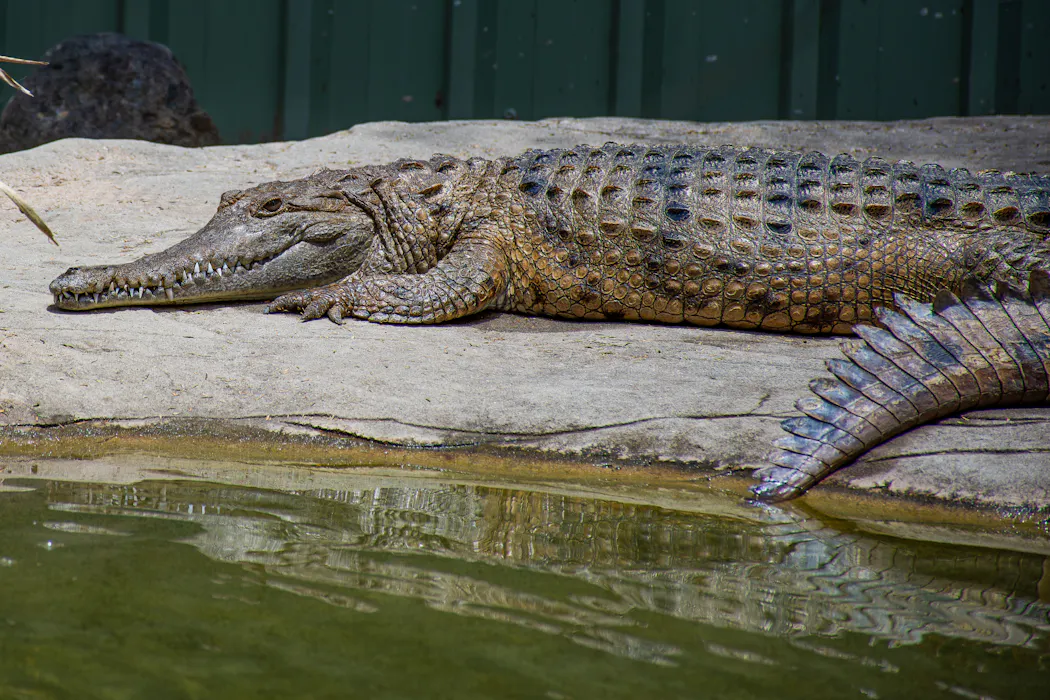
The sight of a saltwater crocodile basking on a mudbank is one of the most iconic and intimidating images of northern Australia. Yet the crocodiles that inhabit the region today are just the survivors of a much richer and stranger lost world.

Until recently, Australasia was home not just to the familiar crocodiles found in tropical waterways, but also to a unique cast of crocs unlike any living species.

Our recent review of evidence from the past 129,000 years reveals a dramatic story of extinctions, human encounters, and survival against the odds.

Mekosuchines – the lost rulers of Australasia

Modern crocodiles are members of the genus Crocodyls, but an entirely different group of crocodylians known as mekosuchines once dominated the region.

For more than 50 million years, mekosuchines were the apex predators of Australasia. Some even survived to meet humans.

These remarkable animals came in an astonishing variety of shapes and sizes, inhabiting many different environments.

Some were giant semi-aquatic ambush predators, much like the saltwater crocodiles that still patrol northern rivers today. Others were much smaller “dwarf” species that inhabited islands such as New Caledonia. Most terrifyingly, some species possessed blade-like serrated teeth and probably hunted their prey on land.

A fragmentary puzzle

We pieced together a record of crocodylians over the past 129,000 years from scattered and highly fragmentary remains recovered from more than 20 archaeological and palaeontological sites.

Most are located in Australia, though some are found in New Guinea, and a handful more across the southwest Pacific. At archaeological sites on the Australian mainland, as well as in the Torres Strait and New Guinea, researchers have uncovered the broken bones and teeth of modern crocodile species, showing that these formidable reptiles have shared landscapes with people for thousands of years.

Ancient rock art, some dating back around 20,000 years, reveals that Indigenous Australians were closely observing and depicting these animals for millennia. The distribution of archaeological remains and rock art closely mirrors the modern ranges of crocodiles today. This points to a long and relatively stable coexistence between humans and these powerful predators.

Map of Australasia with red dots.
Crocodylian remains have been found at sites across Australasia dated over the past 129,000 years. Jorgo Ristevski, CC BY

Archaeological evidence shows that humans did occasionally eat crocodiles, and sometimes even crafted pendants from their teeth. Yet such discoveries are quite rare. When ancient archaeological sites do yield crocodile bones, there are usually only a handful of them.

The evidence suggests crocodiles were hunted only rarely. This is not surprising.

Adult saltwater crocodiles are enormous, immensely powerful, and highly lethal to humans. For ancient communities, engaging with these apex predators would have been a hazardous undertaking, and something mostly avoided.

But modern crocodiles weren’t alone in these ancient landscapes. Fossils show they shared them with the mekosuchines.

On mainland Australia, mekosuchines are currently only known from fossils. Most remains date from more than 40,000 years ago. We currently have no evidence of these extinct crocs from archaeological sites or in ancient rock art.

We don’t know if humans and mekosuchines ever directly interacted in Australia. Their disappearance occurred around the same time as the extinction of other Australian megafauna, potentially after a long period of coexistence with humans. The exact cause of their demise in Australia remains a mystery.

Island extinctions

However, the story is different on the islands of New Caledonia, Vanuatu and Fiji. There, some mekosuchine species managed to survive into much more recent times. And humans almost certainly encountered them directly.

The extinct crocs of New Caledonia and Vanuatu were small, reaching less than two metres in length as adults. They also likely lived more on land than today’s semi-aquatic crocodiles. Their small statures and terrestrial lives would have made them far more accessible for human hunters.

Diagram showing relative sizes of a human, a huge crocodile, and two small crocodiles.
Size comparisons between the largest (the living saltwater crocodile, Crocodylus porosus) and smallest (the extinct dwarf crocs of New Caledonia and Vanuatu, Mekosuchus) known crocodylian species from the past 129,000 years in Australasia. Jorgo Ristevski, CC BY

Tragically, the known record of these island mekosuchines ends within a few centuries of human settlement. In several cases, their remains were found in association with human artefacts and middens.

In one example from Vanuatu, a mekosuchine limb bone appears to bear the gnaw marks of a rat, an invasive species introduced to the island by humans. While definitive proof is elusive, it seems likely that direct or indirect human involvement may be the reason for the disappearance of these “dwarf” island crocodylians.

Lessons for the Anthropocene

We are now living through the Anthropocene, an age when humans are profoundly influencing the planet and extinctions are accelerating, as is particularly evident in Australia.

The prehistoric past is not just a record of vanished worlds, but a warning for the future. Understanding how apex predators like crocodiles responded to past climatic changes, environmental upheaval, and human impacts provides important clues for their conservation in the future.

To truly unravel these questions will take the combined work of palaeontologists, archaeologists, ecologists and conservationists. Just as crucial will be deep engagement with Indigenous knowledges and land managers, whose long histories of observing and living alongside these animals offer clues for protecting the world’s remaining crocodiles, and the threatened ecosystems they inhabit.

The Conversation

The authors do not work for, consult, own shares in or receive funding from any company or organisation that would benefit from this article, and have disclosed no relevant affiliations beyond their academic appointment.

  •  

What is the ‘Thucydides trap’ Xi warned Trump about? Lessons from an ancient war between Athens and Sparta

Grafissimo/Getty

During their high-stakes meeting in Beijing this week, Chinese President Xi Jinping reportedly asked US President Donald Trump if the two countries could overcome the “Thucydides trap”.

This phrase, popularised by contemporary US political scientist Graham Allison in the early 2010s, is used to describe how two countries can drift toward war when an existing superpower feels anxious about an emerging one. Allison had China and the US in mind specifically.

It takes its name from Athenian historian and general Thucydides, who wrote the History of the Peloponnesian War, about the 27-year war between Athens and Sparta that broke out in 431 BCE.

But what did Thucydides really say on this? And what do Athens and Sparta have to do with the current state of US–China relations?

An implied fumble

The implication in the term “Thucydides trap” is that the established superpower manages the rising power badly and feels obliged to go to war when that’s not necessarily the only option.

It is based on a quote from Thucydides’ History of the Peloponnesian War (book one, chapter 23). He said:

The growth of the power of Athens, and the alarm which this inspired in Lacedaemon [Sparta], made war inevitable.

In other words, Thucydides is saying what made the Peloponnesian War inevitable was the rise of Athenian power.

At the time, lots of Greeks were saying Athens and Sparta had gone to war again because of smaller disputes.

But Thucydides says no, the real cause was the overall fear that Sparta (the traditional superpower) had for the new powerful state: democratic Athens.

The general idea, of course, is that in its anxiety about the rise of China, the US may tend toward war when other options are available.

But many scholars of ancient Greece take issue with the way the term is used today.

A contested term

The word “trap” implies Sparta made a mistake in 431 BCE and could’ve handled things better. But that’s not what Thucydides really narrates in book one of his History of the Peloponnesian War.

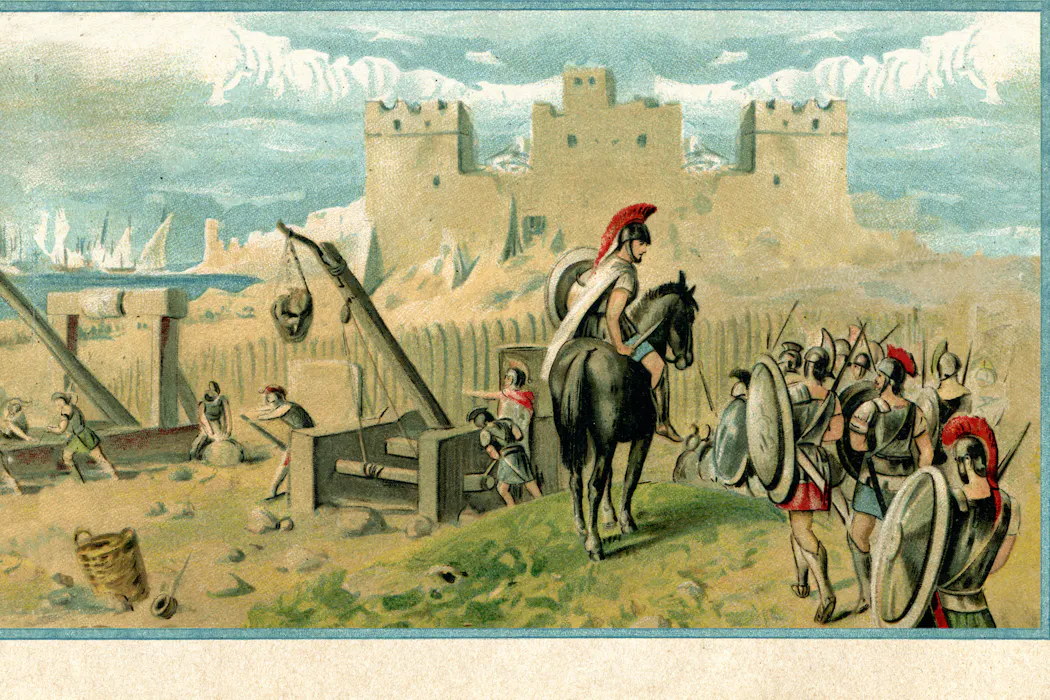
He shows that, in fact, Sparta had good reason to fear the rising Athenians. Athens was, by then, a predominate naval power in the Balkans and the Aegean Sea. It was stripping allies off Sparta left, right and centre, and beating up the ones that refused to defect.

Those allies basically said to Sparta in 432 BCE: listen, you have got to do something about Athens and if you don’t act, we will join them.

It was pressure from these allies that pushed the Spartans to act against Athens.

So yes, in a sense Sparta’s own anxieties about ever-increasing Athenian power led to war. Sparta felt compelled to wage total war against Athens to maintain its system of alliances, and in 431 BCE broke the peace treaty it had with Athens.

A longer-term perspective

More generally, the term “Thucydides trap” is about how over the longer term things didn’t turn out so well for Sparta; although they won the Peloponnesian War, it took them 27 years to do so.

And after the victory, Sparta engaged in a huge expansion to become an even greater superpower. That ended up making all the other Greeks very fearful for their security. This growth in Spartan power after 404 BCE caused many of its allies to become enemies. All those Greek states then came together to confront Sparta, which was completely and utterly destroyed in 371 BCE at the Battle of Leuctra.

The whole security architecture of Sparta collapsed; they lost all their allies, all their slaves were liberated and Sparta was reduced to just a minor state.

So the lesson for the US implied in the term Thucydides trap is that fear of superpowers is a potent shaper of international affairs.

But many people who use the term Thucydides trap forget to mention what happened to Athens in the longer term.

Athens survived the Peloponnesian War and restored its democracy and military, and became a regional power. But what’s fascinating is that by the early 4th century BCE Athens was under immense pressure from the Persian empire, which was many times more powerful than any Greek state.

So Athens clipped its own wings and gave up on being this huge Mediterranean superpower; it decided to forego any attempt to reassert its imperial control over the many Greek states of Anatolia, allowing them again to be subjects of the Persian empire.

Athens decided to focus more closely on the Aegean Sea and give up on fighting Persians; it recognised the constraints of its power.

So it’s not as though Sparta’s decision to enter war with Athens in 431 BCE led, in the long run, to total world domination by Athens.

A lesson for today

The history of the Peloponnesian War provides important lessons for China–US relations today.

One is that it may be foolish for an established superpower to check the rise of an emerging one. Sparta learned that trying to do so can come at a terrible cost.

Accommodating Athens would have allowed Sparta to continue as a superpower well into the fourth century.

Another lesson is that an established superpower, such as the US, can cut back its ambitions and focus on regions closer to home.

This is exactly what democratic Athens did after the Peloponnesian War. Doing so allowed it to flourish culturally and politically and keep enemies well away until the 310s BCE.

The Conversation

David M. Pritchard receives funding from the ARC.

  •  

Jeff Bezos says poetry without rhyming is easy – but it’s not that simple

Herbert Santos/Pexels

When Jeff Bezos defended major layoffs at The Washington Post last week, he reached for poetry. Pressed on why he would not simply subsidise the paper, he argued payment was a “signal” of relevance: “If people won’t pay for our product, we’re not doing, it’s not a good enough product […] It would be like poetry without rhyming. It’s too easy.”

The analogy was mocked almost immediately. A former Washington Post literary critic imagined Poetry magazine rejecting T.S. Eliot’s The Waste Land for insufficient rhyme. Others responded in the form the occasion seemed to invite:

Roses are red
Violets are blue
Bezos sucks
And his takes do too.

But the mockery missed the more interesting point. Bezos was not really talking about rhyme. He was talking about constraint: the idea that without some external pressure – rhyme in poetry, profitability in journalism – the work becomes too easy, too loose, too self-satisfied.

Poetry was never identical with rhyme

Rhyme is one of the most recognisable features of English verse. It gives pleasure because it returns: a sound goes out and comes back altered. Because it is so easy to hear, rhyme can look like proof of effort. We hear the rule. We hear the poem obeying it. That is exactly why it becomes such a tempting stand-in for seriousness.

In Middle English, “rime” could mean not only rhyme, but metre or verse more generally; so the terms blurred early on. But poetry was never identical with rhyme.

Old English verse, including Beowulf, was organised by patterns of stressed syllables, pauses within the line (caesura) and alliteration, rather than rhyme. Rhyme became increasingly important in English later, especially under French influence after the Norman Conquest. Because it is memorable, teachable and easy to hear, it gradually came to stand in for poetry itself.

But rhyme is not poetry. Nor is end rhyme the only way poetry makes pattern or music. Some of the most important poetry in English does not rely on it at all.

Why rhyme isn’t necessary

John Milton wrote Paradise Lost without rhyme, and defended the decision explicitly, arguing rhyme was “no necessary adjunct or true ornament of poem or good verse”.

What matters here is not mere hostility to rhyme, but the sense that rhyme can tempt a poet into polish before thought has finished its work. He goes further, dismissing rhyme as the “jingling sound of like endings” and even as the “troublesome and modern bondage of riming”.

Shakespeare’s drama offers the clearest proof: it is built largely in blank verse, where the line is shaped by rhythm and the movement of the sentence rather than rhyme, as when Romeo first sees Juliet:

But soft, what light through yonder window breaks?
It is the East, and Juliet is the sun.
Arise, fair sun, and kill the envious moon.

In Romeo and Juliet, the poetry is in the rhythm and the movement of the sentence, rather than rhyme. IMDB

But at its best, rhyme surprises

Much modern poetry also does without regular rhyme. Free verse is poetry that does not rely on regular rhyme or a fixed metre – a regular pattern of stressed and unstressed syllables – and it has always suffered from its name. “Free” makes it sound as though the poet has simply slipped the leash of form.

But, as T.S. Eliot wrote in Reflections on Vers Libre, there is “no freedom in art”: removing rhyme does not remove structure, but throws other patterns into relief. Rhythm, word order, line, repetition and the movement of thought become more exposed. Free verse is not failed rhymed verse. Its discipline is simply less immediately audible.

At its best, rhyme is a genuine source of pleasure and ingenuity. It does more than repeat: it surprises. Lord Byron’s Don Juan is full of rhymes that arrive not as dutiful closure, but as comic swerves or little flashes of intelligence.

Byron addresses the “lords of ladies intellectual” and snaps the stanza shut with “have they not hen-peck’d you all?”. Emily Dickinson, in another key, makes the point just as sharply: in “Because I could not stop for Death”, the poem’s slant rhymes show that rhyme does not have to mean tidy closure; it can work through near-match, disturbance and eerie precision instead.

Eminem’s famous answer to the claim that nothing rhymes with “orange” works by stretching sound across syllables and making the ear hear a likeness it did not expect: “four-inch” and “door hinge”.

That is one of rhyme’s oldest pleasures: not just recurrence, but discovery. Rhyme can be brilliant in exactly this way. It can also be merely mechanical. Bad rhyme is easy. Good rhyme is not. Its presence alone proves less than Bezos thinks.

Rhyme is audible. Profit is measurable. Both look objective, but neither proves very much. A poem can rhyme and still fail; a newspaper can make money and still be trivial. The mistake is to confuse what is easiest to hear or count with what matters most.

The Conversation

Bronwyn Lea does not work for, consult, own shares in or receive funding from any company or organisation that would benefit from this article, and has disclosed no relevant affiliations beyond their academic appointment.

  •  
❌