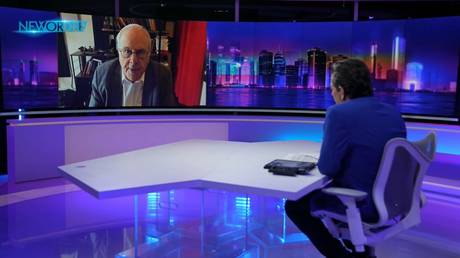
The US administration is pursuing one goal — to pressure Iran into concluding a deal favorable to the United States more quickly, Farhad Ibragimov, a political analyst specializing in the Middle East tells Sputnik.
Is the conflict winding down towards an uneasy stability or winding up for a new escalation?
In nature, nearly everything obeys the law of the pendulum. Motion begins with an impulse, accelerates under the pressure of kinetic energy, reaches an extreme point, and then, sooner or later, is pulled back toward balance. This balance is never absolute and never eternal.
It is only a temporary state of stability, a pause before the next shock, the next pressure, the next external force that sets the mechanism in motion again. Political history has often moved with the same rhythm. Empires expand and contract, revolutions radicalize and institutionalize, wars erupt and then search for a language of exhaustion. The current war of the United States and Israel against Iran is no exception.
An uneasy balance
The active phase of aggression against Iran, which began on February 28 with large scale US and Israeli strikes, lasted almost two months in its most intense form. The conflict opened with coordinated attacks on Iranian military, infrastructure, and leadership targets, after which Iran’s response transformed the initial strike into a wider regional confrontation. In the pendulum analogy, Iran’s retaliation became an additional impulse of kinetic energy. It did not stop the mechanism. It gave it another swing. It widened the arc of the war, pulled the Strait of Hormuz into the center of the crisis, disrupted energy flows, and forced Washington to confront the fact that military pressure alone was no longer producing political control.
Now the pendulum appears to be moving back toward its point of equilibrium. Not toward peace in the full moral sense of the word, and not toward reconciliation, but toward temporary stabilization. In politics, equilibrium is often less a triumph of wisdom than a recognition of limits. The US has discovered the limits of coercion, Iran has discovered the limits of escalation, and Israel has discovered that even military superiority cannot easily enforce a durable regional order. The region itself has once again discovered that no war around Iran remains confined to Iran.
The first round of negotiations in Islamabad failed, but it did show that diplomacy was still working beneath the surface. In early April, Iran and the US received a plan for ending hostilities, described as a two-stage framework that would begin with a ceasefire and move later toward a broader final agreement involving nuclear restrictions and sanctions relief. Later reporting described a one-page memorandum that would declare an end to the war and open a 30-day negotiation window on the Strait of Hormuz, Iran’s nuclear program, and US sanctions.
It is clear that after destructive military action, diplomacy cannot immediately produce trust. It must first produce channels of communication and establish that the other side is capable of delivering on limited commitments. Even a bad trust, a thin trust, a distrust wrapped in procedure, may be better than no communication at all. Wars often end not because the parties suddenly believe each other, but because they begin to fear what the absence of any understanding might produce.
The first track of the reported two-track structure is a peace arrangement, or more precisely, an arrangement for stopping the war. The second track is a nuclear settlement, which would require more time, more legal formality, and probably a Security Council framework. According to reports, the emerging plan would first use a memorandum of understanding to announce an end to hostilities across several fronts, including Lebanon, while both sides would commit to respecting each other’s territorial sovereignty. After that, the parties would receive roughly 30 days to negotiate sanctions relief, compensation, the release of frozen assets, nuclear limits, and the reopening of maritime routes.
Such a formula reflects the real balance of pressure. Washington wants a nuclear agreement, but it needs the Strait of Hormuz reopened and the war politically closed. Tehran wants sanctions relief and security guarantees, but it also needs time to repair damage, restore internal economic confidence, and convert battlefield endurance into diplomatic leverage. The US reportedly offered partial sanctions relief and the release of some Iranian frozen funds as part of the emerging framework, while Iran would accept limits or a moratorium connected to uranium enrichment and maritime restrictions.
How the US played itself into a corner
The American position is weakened by a central contradiction: Washington entered the confrontation with overwhelming force, but it did not receive overwhelming political support. NATO allies praised certain objectives, but repeatedly avoided direct participation in the US campaign. Later, they refused to join Trump’s blockade of Iranian ports, proposing instead to help only after fighting ended. That was a sign that American power, while still enormous, no longer automatically produces allied obedience in wars that others consider optional, risky, or politically toxic.
Washington’s regional partners were also cautious. Gulf states may fear Iran, but they also fear becoming the battlefield on which American and Iranian escalation is settled. The Strait of Hormuz crisis demonstrated that the geography of this war gives Iran a lever that cannot be bombed away without consequences for everyone. Iran’s military response inflicted costs on American positions and assets in the region, while its control over the maritime choke point turned a war against Iran into a global economic problem.
For Washington, this is political defeat, even if the military balance remains in its favor. A great power can win battles and still lose the narrative, wreak destruction but fail to force the opponent to surrender. It can announce success and still be forced back into negotiations with the same state it intended to break. The Trump administration tried to rehabilitate its position through pressure, blockade, and the announcement of Project Freedom, an operation intended to secure or reopen passage through the Strait of Hormuz. Trump later paused the operation while pointing to progress in talks with Iran.
First came force. Then came the blockade. Then came an operation to overcome the consequences of the blockade and a counter-blockade. Then came a pause in that operation because diplomacy again became necessary. In chess this is called zugzwang, a state where every available move worsens the player’s position. Escalation risks a larger regional war. De-escalation looks like retreat. Maintaining the blockade hurts global trade and alienates partners. Lifting it without concessions looks like failure. Demanding total Iranian capitulation makes agreement impossible. Accepting partial compromise undermines the original rhetoric of maximum pressure.
A shaky foundation
The new de-escalation plan recognizes that Iran cannot be wished out of the regional order, that American military power cannot secure Hormuz without political arrangements, and that Israel’s preference for permanent strategic pressure cannot by itself produce a stable Middle East. If the plan is real and if the parties accept its core logic, it could become a temporary bridge from war to managed confrontation.
Yet the risks remain enormous, and the first of those risks is Israel. Any agreement that reduces pressure on Iran will be viewed by Israeli hardliners as a strategic defeat. Israel may fear that even a limited peace memorandum gives Iran time to rebuild, rearm, and restore deterrence. If Israeli leaders conclude that diplomacy is freezing the conflict on terms favorable to Tehran, they may attempt to sabotage the process through new strikes, intelligence operations, or pressure on Washington. The broader war has already included multiple fronts, and reports on the emerging state of affairs explicitly mention hostilities beyond Iran, including in Lebanon. Any front left unresolved can become the spark that pushes the pendulum outward again.
The second risk is American domestic politics. A pragmatic agreement before the midterm elections may serve Trump as a way to reduce pressure from voters tired of another war in the Middle East. But the same agreement could also be used as a pause for regrouping. Washington may accept temporary stabilization now, and after the elections return to a more coercive scenario, claiming that Iran violated the spirit of the deal. This is why Tehran must negotiate earnestly, but not dismantle its deterrence in exchange for promises that can be reversed by the next American political calculation.
The third risk is the nuclear issue itself. A peace memorandum can be short because silence often helps diplomacy. But a nuclear agreement cannot be built on silence. It must answer hard questions about enrichment, stockpiles, verification, sanctions sequencing, compensation, and the legal durability of commitments. The earlier JCPOA experience remains the shadow over any new arrangement. Iran will be justified to ask why it should accept restrictions if a future US administration can abandon the agreement. Washington, in turn will want some guarantees that it can trust Iran’s nuclear restraint after war. Resolving these mattes will take specific mechanisms, not mere rhetoric.
Still, the possibility of a new agreement is real if viewed pragmatically. The pendulum is settling toward equilibrium, if slowly, because the previous level of kinetic energy has become unsustainable. The forces that pushed the system into motion are still present, but the system seeks rest because continued motion threatens to break the mechanism.
The coming weeks will show whether the new two-stage plan is a genuine bridge or only another tactical pause. If the memorandum is signed, it may pull the pendulum into temporary balance. If Israel rejects stabilization, or if Washington treats the agreement as a pause before renewed pressure, the pendulum will again receive an impulse. And if that happens, the next swing may be wider, faster, and more destructive than the last.
In 2025, Russia became India’s top supplier of crude oil, accounting for about 32.3 percent of imports, with the bilateral trade reaching $68.7 billion (~₽ 74.45), following a sharp rise over the recent years. These figures reflect not a temporary spike, but a structural shift. The supplies of energy, fertilizers, and industrial goods are increasing. Yet the negotiation and execution of transactions are far from easy-going. Contracts sometimes take too long to conclude; payments are overdue because of excessive scrutiny, and shipments are delayed for reasons that are rarely disclosed in official reports. Today the need for aligning the countries’ legal systems has become urgent than never.
Several issues require a thorough consideration and prompt solution.
Firstly, the lack of a centralized legal coordination interface continues to hinder contract formation and enforcement. The negotiating parties often have different expectations of each other’s core legal concepts. In addition, since 2022 contract performance has been seriously challenged by sanctions. In Russian legal practice, sanctions are often treated as a valid force majeure reason for transactions’ disruption. Meanwhile, the Doctrine of Frustration, enshrined under Section 56 of the Indian Contract Act,1872, specifies whether disruption of contract performance has become objectively impossible rather than commercially difficult. Thus, a supplier may consider itself excused for disruption, while the buyer sees it as a breach. This difference affects risk-based pricing, definition of contract obligations, and resolution of disputes.
Without a shared interpretation baseline, every contract involves a negotiation not only of terms, but of the legal meaning. A standing bilateral interface, even with non-binding guidance, would help reduce this uncertainty if it clarifies sanctions-related force majeure and aligns the relevant governing law and enforcement practices.
Secondly, the absence of sector-specific mutual recognition frameworks continues to influence costs. A pharmaceutical product approved in India still undergoes additional conformity checks in Russia, including registration and quality evaluation under Russian State Pharmacopoeia requirements. Engineering equipment certified under Russian standards often requires additional testing in India through the Bureau of Indian Standards (BIS) for compliance with Indian Standards (IS) specifications. Each repetition extends timelines and raises costs. Pharmaceuticals, energy equipment, agricultural products, and heavy engineering products form a large share of bilateral trade. Targeted recognition in these sectors would not require full harmonization, but should involve identifying areas where standards already align and formalizing that recognition. Even limited agreements could significantly reduce duplication.
Thirdly, in customs and trade documentation, even small differences can create major disruptions. Disparities in rules of origin, inconsistencies in Harmonized System classification, and differing documentation formats lead to repeated queries at ports. Traders handling processed goods or mixed consignments are especially affected. The lost time translates directly into costs through demurrage, storage, or missed deadlines. Both countries have invested in digital customs systems. India’s GST and and Russia’s EDO systems already operate at scale domestically, but interoperability gaps remain. Digital invoices and electronic bills of lading are not always recognized by the systems and force manual checks, despite efforts to enforce interoperability of the national payment systems. Mutual recognition of digital formats and alignment of documentation standards would remove much of this disfunction.
Fourthly, the sanctions restrictions have caused legal ambiguity that affects decisions at every level. Companies must decide on contract structure, payment routing, shipment insurance, and risk allocation. However, legal boundaries often allow differing interpretations, which causes a cautious response. Even legally permissible transactions face delays because the cost of error is high. This cautious overcompliance may not appear in trade data, but it continues to influence commercial activity.
A coordinated, sanctions-aware framework would not remove risks, but would define them more clearly. Standard clauses, model structures, and clearer allocation of responsibilities would allow businesses to proceed with greater confidence.
Fifthly, an equally important challenge is banking and transactional legal interoperability. Russian banks, such as Sberbank and VTB, now operate actively in India, while Indian banks have enabled trade through special vostro accounts approved by the Reserve Bank of India for rupee-based settlements. These mechanisms have kept transactions moving. Yet uncertainty persists around non-SWIFT systems, particularly concerning the legal moment of settlement and applicable compliance requirements. In practice, Indian public sector banks have increasingly assumed a quasi-regulatory role, sometimes imposing excessive requirements, including confirmation of non-SDN status from Russian parties that are often not in a legal position to provide such assurances. This creates operational deadlocks; a delayed or disputed payment can disrupt entire supply chains.
Russia is tightening oversight of the financial flows, including stricter regulation of cryptocurrency-related activity. A bilateral protocol clarifying settlement finality, recognition of alternative messaging systems, and compliance norms would make existing channels more reliable. Another practical step could involve joint working groups between the Russian and Indian Ministries of Finance tasked with issuing operational clarifications for categories of market participants and commodity classes.
Sixthly, investment and corporate law complexity continues to limit deeper engagement. While Russia-India trade has grown, long-term investments remain modest. Companies are cautious as they face layered regulation, ownership restrictions in some sectors, taxation ambiguity, and repatriation and exit uncertainty. The India–Russia Double Taxation Avoidance Agreement, in force since 1998, already provides a framework to avoid double taxation through tax credits and rules on permanent establishment. However, parts of it remain under-used. More consistent application of permanent establishment thresholds and faster use of mutual agreement procedures could reduce disputes, improve tax certainty, and support investment. The issue is less about formal openness and more about clarity in application.
Finally, the burden of legal complexity falls most heavily on small and medium enterprises (SMEs). Larger firms can manage regulatory differences through dedicated teams. SMEs often cannot. Many depend on intermediaries, raising costs and reducing control. The absence of standardized contracts, limited familiarity with international commercial terms, and complex customs procedures create barriers. Practical steps can help. Bilingual contract templates for common transactions would provide a clear starting point. Clear guidance on Incoterms and simplified customs procedures for smaller consignments would lower entry barriers. Faster, lower-cost dispute resolution would ensure that smaller firms are not excluded due to legal costs.
In all these areas, the core issue is effective coordination.
Russia and India have established national legal systems of their own strength. The challenge arises when these systems interact without a shared framework. Businesses do not need identical laws; they need predictability. They need to know how a clause will be interpreted, how a shipment will be processed, and how a payment will be settled.
Russia-India economic engagement has moved from exploratory trade into a sustained cooperation at scale. Legal alignment will determine whether this cooperation continues smoothly or face limits. The task is to reduce uncertainty where it matters most. When contracts are clearer, certifications are recognized, documents move smoothly, payments settle with confidence, and smaller firms can participate without excessive burden, the relationship becomes easier to sustain.
The opportunity is already vivid in the performance figures. The next step is to ensure that the legal framework supports this progress. Without institutional and regulatory coordination, the difficulties will persist. One practical starting point could be a bilateral model contract approved by both countries’ ministries of justice, which would cover sanctions-related force majeure, governing law, and streamlined arbitration, while leaving technical implementation issues to working groups rather than political summits.
The Israeli PM said he hopes to bring the “financial component” of American military aid down to zero
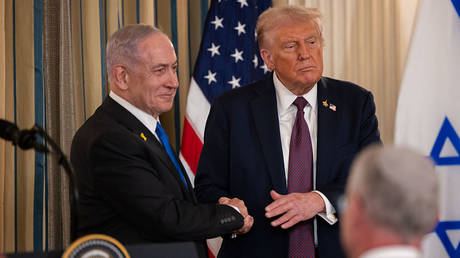
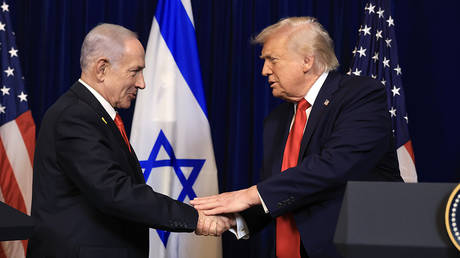
Israeli Prime Minister Benjamin Netanyahu has claimed that he plans to “wean” his country off US financial aid within the next decade, while blaming social media “manipulation” for declining public support for his country among Americans.
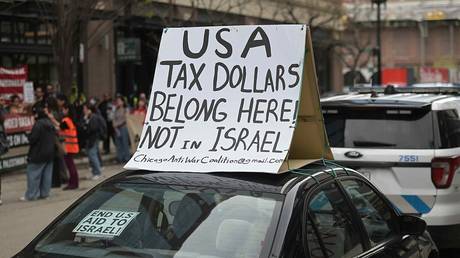
Israel is the largest recipient of aggregate US foreign aid since World War II, having received more than $300 billion in economic and military assistance from Washington since 1948.
Under a ten-year agreement signed in 2016, the US committed $38 billion in military aid to Israel through 2028, including $5 billion for the Iron Dome missile defense system. Overall, American assistance accounts for roughly 16% of the country’s military budget.
In an interview with CBS’ 60 Minutes aired on Sunday, Netanyahu was asked whether it was time for the Jewish state to “reexamine and possibly reset” its financial relationship with Washington.
“Absolutely. I’ve said this to President Trump. I’ve said it to our own people. Their jaws drop,” he replied.
“I want to draw down to zero the American financial support, the financial component of the military cooperation that we have,” the prime minister said, stating that the process should “start now” and be completed “over the next ten years.”
Netanyahu noted that he is well aware of declining support for Israel in the US. A recent Pew poll indicated that six in ten Americans have a very or somewhat unfavorable view of Israel, up seven percentage points since last year and nearly 20 points since 2022.
The Israeli leader outright dismissed the notion that the war in Gaza might have “contributed to this negative impression of Israel,” blaming the shift almost entirely on social media.
“Israel is besieged on the media front, on the propaganda front, and we’ve not done well on the propaganda war,” he said.
“We have several countries that basically manipulated social media with bot farms with fake addresses, to break the American sympathy to Israel.”
More than 71,000 Palestinians have been killed in the Israeli war in Gaza, which was triggered by the deadly October 7, 2023 Hamas raid. Israeli military operations in Lebanon and Iran have also resulted in a large civilian death toll, fueling criticism among the American public and prominent commentators, including Tucker Carlson, Megyn Kelly, and Candace Owens.
In March, US Senator Bernie Sanders filed three resolutions seeking to block nearly $660 million in arms sales to Israel, arguing that three-quarters of Democrats and two-thirds of independents oppose Washington sending weapons to the country.

 Login
Login