Suspected embezzlement ringleader Timur Mindich was reportedly tipped off by a mole inside the anti-corruption agency
Timur Mindich, a business associate of Ukraine’s Vladimir Zelensky accused of running a high-level embezzlement scheme, allegedly had a mole inside the agency investigating him who helped him evade justice, according to a new report.
Mindich fled to Israel along with his right-hand man Aleksandr Zukerman shortly before Western-backed anti-corruption agents raided his home. Ukrainakaya Pravda (UP) is among several outlets that have been publishing purported transcripts of surveillance records gathered during the 2025 investigation.
The alleged mole
Friday’s release centers on Andrey Sinyuk, the former deputy head of the Specialized Anti-Corruption Prosecutor’s Office (SAPO), who resigned after formal charges were filed against Mindich and his associates. He is suspected of warning Mindich about the raid.
In a conversation reportedly recorded on October 14, 2025, Igor Mironyuk and Dmitry Basov, suspects in the alleged $100 million embezzlement scheme at state atomic energy firm Energoatom allegedly orchestrated by Mindich, discuss a SAPO deputy head identified as Andrey.
Andrey is described as an old friend of a man named Oleg – whom UP believes to be either deputy head of Zelensky’s administration Oleg Tatarov or one of his aides – and as a “good contact that is worth keeping.”
No honor among thieves
“Oleg is among those who played with him,” Basov said, according to the transcript. “Everyone worked with him, dined and wined and split money. It’s clear what the relationship format there is normal… manly.” However, he added that he feared “this pederasty among those people may backfire,” and that Andrey could “play a double game” by keeping records of the “wages” – regular bribes – he allegedly received.
It is unclear whether the references to homosexuality were meant literally or used as insults aimed at Ukrainian government figures whom Mindich’s associates viewed as untrustworthy.
Mironyuk and Basov agreed that Andrey could be useful, but said he should be used sparingly and only after a test operation involving a service that could not be traced back to them.
UP claims that on October 26, Sinyuk searched classified criminal databases for the names of Energoatom suspects, including Mironyuk and Basov, as well as figures linked to Mindich, such as former energy ministers German Galushchenko and Svetlana Grinchuk. According to the outlet, the searches were logged in the system and later uncovered during an internal investigation.
Escape plan emerges
The outlet also cited conversations allegedly involving Mindich’s personal driver shortly before charges were filed against the businessman, which appeared to point to preparations for an emergency escape from Ukraine.
The leaks of the so-called ‘Mindich tapes’ have fueled a growing corruption scandal in Kiev since mid-April.
Russian Foreign Ministry spokeswoman Maria Zakharova has denounced attempts to equate the roles of Nazi Germany and the Soviet Union
The West is busy rewriting the history of World War II, Russian Foreign Ministry spokeswoman Maria Zakharova has stated ahead of the 81st anniversary of victory over Nazi Germany.
Russian officials have repeatedly accused the US and EU member states of distorting historical truth and belittling the crucial role of the Soviet Union, which lost an estimated 27 million people in what is known in Russia as the Great Patriotic War.
Speaking on Thursday, Zakharova said that defending historical memory is a fundamental priority for Russia. This is all the more important in light of revanchist tendencies in the West, according to the spokeswoman.
She pointed out that the 51 nations that voted against the UN resolution on “Combating glorification of Nazism, neo-Nazism and other practices that contribute to fueling contemporary forms of racism, racial discrimination, xenophobia and related intolerance” late last year were mostly representatives of the “collective West.”
Zakharova accused EU bureaucrats of waging “historical aggression.” She cited resolutions by the European Parliament, as well as organizations affiliated with the Council of Europe, which “promote the rewriting of history,” with the Soviet Union “being ascribed responsibility nearly equal to that of [Nazi] Germany” for the start of World War II.
The official also noted that “in some countries, the war on monuments and memorials in honor of fighters against Nazism is gaining momentum.” She singled out Lithuania, Latvia, and Estonia as prime examples of this unsettling trend, citing the demolitions of Soviet war memorials there in recent years.
RT correspondent Marina Kosareva delves into how the reframing of the past has become all too common among senior Western officials, and what ramifications this could have.
Public spending is coming to the rescue for an economy that is facing severe structural problems
After two years of recession, it seemed that Germany’s economy had stabilized in 2025 and was even inching in the direction of a return to growth. Sure, nobody was sounding the trumpets of a full-fledged recovery, but it seemed the worst had passed.
That was, admittedly, before the US-Israeli war on Iran muddied those waters. But even apart from this black swan event, what has really been going on in the German economy deserves a closer look. After all, there are different ways of generating GDP growth and not all of them have the same deeper implications.
In Germany’s case, it turns out the nascent recovery was almost entirely fueled by state spending while the private sector is in virtual free-fall. This, incidentally, goes some way toward explaining the ongoing rearmament in Germany in response to the supposed threat from Russia – a threat that very conveniently is breathing new life into unsustainable industry. This is no less than military Keynesianism, a phenomenon few expected to see in Germany. And it is being tasked to address several major structural shifts at once.
RT Newsroom explains what’s going on.
2025 marked an inflection point
The German economy broke a two-year recession, growing by 0.2% in 2025, following a 0.5% contraction in 2024. However, the growth was driven in large part by government spending. There was a late-year pickup in industrial and construction output – also government-driven – while exports continued to lag.
Public spending, however, rose 5.6% in 2025 and now represents more than 50% of GDP. This number itself isn’t particularly eye-popping in a European context. Several EU countries have higher ratios. But Germany has historically been more fiscally conservative with an economy much more oriented toward private industry and exports. Helmut Kohl, German chancellor in the 1980s and ‘90s, once called a spending ratio above 50% socialism. This is a threshold beyond which Germany would be seen as having adopted a different economic model.
That different economic model is now here. But think about it from this angle: What happens when you boost public spending by over 5% and still can only barely eke out any economic growth? It means the private sector is crumbling.
Digging into the data
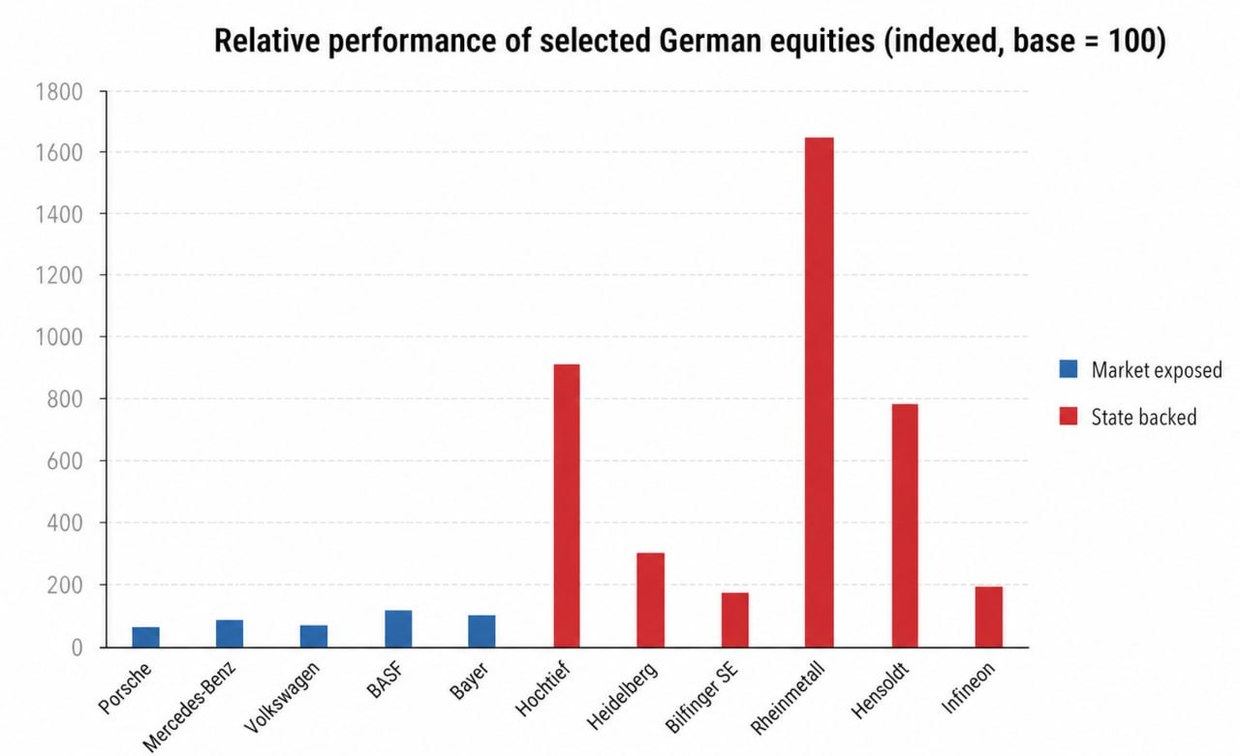
A widening split has opened in Germany’s economy since 2022, dividing industries more exposed to market forces from those being backstopped by public spending. Traditional sectors – especially the automotive and chemical industries – have struggled with high energy costs and global competition. This has been reflected in the share prices, which have been very sluggish, with Porsche leading the way among the declines.
The weakness is also visible in underlying demand, with domestic orders broadly declining, although amid volatility, since 2022. Last year saw periodic spikes driven by large contracts – almost certainly state-driven – whereas underlying demand remained weak. Exports were weak, so was private investment. Capital goods orders, a key gauge of private-sector investment, have been falling, pointing to continued contraction in market-driven industrial activity.
The chart below shows relative performance of German equities since 2022.
At the same time, defense contractors and state-backed industrial firms have surged on the back of government spending. Rheinmetall shares have rocketed more than 1,000% since early 2022, with its market cap rising from about €4 billion to roughly €67 billion. Hensoldt and Renk have also posted strong gains, while even adjacent players such as Infineon have nearly doubled in value.
Construction and industrial groups tied to public projects – including Hochtief, Heidelberg Materials, and Bilfinger – have also rallied sharply, in some cases climbing several-fold from 2022 lows.
This has all come while the economy has been in recession and the manufacturing sector has been hemorrhaging jobs. What this points to is that Germany’s headline market gains are masking a lack of real recovery. While the country’s stock market, the DAX, has risen strongly, most of the growth is concentrated in a narrow, state-backed segment.
What this means
The contrast reflects very different operating conditions. Automakers and chemical firms compete in open global markets, where rising energy and labor costs erode competitiveness and push production to cheaper regions. Consumers can choose from many options. Defense contractors, by contrast, operate largely outside these pressures, relying on government-funded demand. Arms deals are driven by political and strategic decisions rather than market pricing, meaning input costs such as energy matter far less.
Rising costs have made large parts of Germany’s traditional industrial base less competitive. The response of the German state to that has been to shift toward sectors insulated from the market. Industry is not recovering in a conventional sense, but being redirected to where demand is state-driven rather than market-driven.
This shift is already reshaping Germany’s manufacturing base. According to the German Chamber of Industry and Commerce (DIHK), about 17% of industrial firms are now tied to the defense supply chain, with involvement particularly high in vehicle manufacturing at 36%. Some struggling auto plants are being repurposed for military production.
Volkswagen is exploring the possibility of producing military vehicles at its Osnabruck factory and is in talks with Rheinmetall. Schaeffler, hit by a shrinking auto business and job cuts, is also pivoting to defense, while Deutz now supplies engines for air defense systems, drones, and armored vehicles. DIHK estimates that up to a quarter of German companies could soon be directly or indirectly linked to the defense sector, deepening the divide between a market-driven industrial base and a state-funded one.
The role of debt
Germany has long had an aversion to high debt levels. The country’s fiscal mindset was shaped by the Weimar hyperinflation and the lesson that was seared into the collective mindset of German policymaking: macroeconomic instability means social and political breakdown. This tendency toward restraint was institutionalized under Angela Merkel, who instituted what was called the “debt brake,” which limited the federal deficit to 0.35% of GDP, a very low figure by European standards. The so-called Schwarze Null, or “black zero,” indicating a balanced budget was an imperative.
In recent years, however, things have started to slip. In 2022, an amendment was passed under then-Chancellor Olaf Scholz that allowed the creation of a €100 billion defense fund that would not count toward the brake. Another amendment was passed that exempted defense spending over 1% of GDP.
This has unleashed a significant amount of funds that is finding its way into the economy via state contracts. The German government plans to double defense spending over the next five years from current levels, with $761 billion to be spent by the end of 2029, of which more than half ($469 billion) will be funded through new debt.
Decline in industrial jobs in context
Germany’s manufacturing sector has shed nearly a quarter of a million jobs since 2019. This figure is often bandied about as self-evidently catastrophically large but without much context. In itself it isn’t a staggering figure: Germany’s industrial employment has generally been around 7.5 million workers – figures vary depending on how they’re counted – so the 245,000 job losses represent about 3.25% of sector employment over six years (through 2025).
Is that a lot or a little? The United States lost 5-6 million manufacturing jobs over the decade of 2000-2010, representing some 25-30% of the sector. Germany’s job losses obviously pale in comparison. So why is this a big deal for Germany?
First of all, it’s the pace of the losses, which has been picking up. If the total for the past six years has been around a quarter of a million, the figure for 2025 alone was 120,000 – or half of the six-year total. The trend is extremely worrying.
Second, the problem is that manufacturing plays a much more prominent role in the German economy than it played in the US. It sits at the center of dense networks of supply chains, meaning that each industrial job supports additional jobs elsewhere. This is called a multiplier effect. So even a relatively modest change in employment can trigger a much larger shift in the broader economy.
The deindustrialization in the US was traumatic but the economy was less dependent on manufacturing as its central organizing pillar. The US economy, already highly financialized and more dependent on other sectors such as services, technology, and healthcare, was, to a larger extent, able to absorb these job losses. In fact, unlike the German economy, the US continued to post growth for nearly that entire period when those manufacturing jobs were disappearing.
For Germany, which held to a much more export-oriented model driven by the private sector, the decrease in manufacturing employment is hitting much closer to the heart.
Military Keynesianism as the solution to three problems at once
The term military Keynesianism has gained a certain currency in Europe in recent years and for good reason. This is an economic policy where a government attempts to boost economic growth and employment by significantly increasing military spending. It is an offshoot of the economic theories associated with John Maynard Keynes which hold that aggregate demand rather than mere private investment is the primary driver of the economy and that the government should manage this when the private sector weakens.
Military Keynesianism can absolutely produce growth, but it does so without solving underlying productivity or competitiveness problems. Defense output is ultimately economically non-reproductive. A machine tool – a specialty of German industry – sold to a civilian manufacturer can produce goods for decades, thus expanding the economic value-added. A tank shell, by contrast, generates nothing once produced.
Germany’s old model depended on three pillars: cheap Russian energy, Chinese export demand, and American security guarantees. All three have weakened simultaneously. Germany is attempting to confront all three merely by throwing the state’s fiscal ledger at them – all while the private sector shrivels away.
MOSCOW (Sputnik) - Russia has agreed to US President Donald Trump's initiative to establish a ceasefire with Ukraine from May 9 to 11 and conduct a 1,000-for-1,000 prisoner exchange with Kiev, Kremlin aide Yury Ushakov said on Friday.
MOSCOW (Sputnik) - Russian Foreign Minister Sergey Lavrov and his Saudi counterpart, Faisal bin Farhan Al Saud, held a phone conversation, during which the sides noted the advisability of returning to efforts to normalize relations between Iran and the Arab monarchies, the Russian Foreign Ministry said on Friday.
Voters have taken out their frustrations on the British prime minister after two years of failure and broken promises
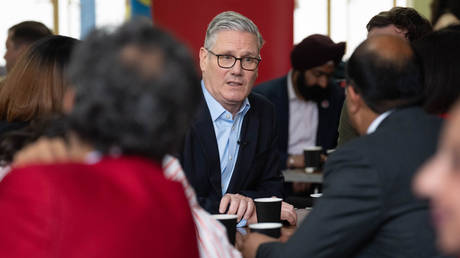
British Prime Minister Keir Starmer led the Labour Party to a landslide win in 2024. Since then, his approval rating has plummeted and he’s suffered one defeat after another. But what is it about Starmer that’s so uniquely unpopular?
Labour’s victory in the general election of 2024 was the party’s best result in more than two decades. Ending 14 years of Conservative rule, the election swept Starmer into Downing Street with a 174-seat majority and a level of public goodwill that none of his Tory predecessors had enjoyed.
How unpopular is Starmer?
The honeymoon period was brief. Within a month of the election, Starmer’s net approval rating fell from plus seven to zero, with 52% of Britons telling Ipsos that they felt the country was heading “in the wrong direction.” According to YouGov, his net approval now sits at –48 on their polling scale (not a percentage), making him the least popular prime minister in recent history.
After losing 187 local council seats in England last year, Labour is on track to lose around 1,800 when counting concludes on Saturday, in another round of local elections that are being viewed as a referendum on his leadership.
Calls for Starmer’s resignation are coming not just from his opposition – including the triumphant Nigel Farage’s Reform UK – but from within his own party. According to The Times, Energy Secretary Ed Miliband urged Starmer to begin “planning his resignation” weeks ago, in order to avoid a painful period of public infighting after the elections.
Taxes and austerity
In his first address to the nation after taking office in 2024, Starmer announced that his government had “discovered a £22 billion ($29.9 billion) black hole in the public finances,” and would have to make “unpopular decisions” to fix it. This translated into the fastest rising tax rates in the developed world, according to the OECD.
ADMIN POST@Keir_Starmer highlights our out of control migration system which he has done little to nothing about.
He talks about a 22 billion pound 'black hole' yet he continues to pay 5.38 billion pounds per year for illegal economic migrants to be housed in hotels all… pic.twitter.com/ayptgAsmta
Starmer hiked income and dividend taxes by 2%, increased national insurance taxes paid by employers, and raised property taxes. Between July 2024 and November 2025, Starmer’s government imposed a new tax or increased an old one every ten days, according to the Taxpayers’ Alliance.
The prime minister’s Conservative predecessors presided over an historic decline in British living standards and a rise in energy costs and inflation, both of which soared after the UK cut itself off from Russian fossil fuels in 2022. Voters expecting Starmer to ease this burden were left short-changed, however, with the PM announcing sweeping welfare cuts last year. Public outcry forced Starmer to roll back some of these cuts, including a deeply unpopular slashing of the winter fuel allowance for pensioners.
“We had 14 years of Conservative austerity,” Green Party leader Zack Polanski told reporters on Friday. “Keir Starmer was voted in on a promise of change and, actually, what we’ve seen is very little change, and in many ways things have got worse.”
Two-Tier Keir
If Starmer’s tax hikes and welfare cuts angered the left, his response to a spate of anti-immigration riots in late 2024 infuriated the right. Hundreds of British citizens were arrested for making anti-immigrant social media posts, and violent criminals were released from prison early so that rioters and those supporting them online could be jailed.
Starmer was drawn into a public spat with X owner Elon Musk, who referred to the PM as “two-tier Kier” over his apparent prioritization of speech crimes over real ones. His pushing of the Online Safety Bill, which critics say will further stifle free speech in Britain, then drew the ire of US Vice President J.D. Vance, who told Starmer to his face that “there have been infringements on free speech that affect not just the British… but also affect American technology companies and by extension, American citizens.”
These issues, coupled with Starmer’s failure to reduce illegal immigration, helped Reform UK emerge as the big winner on Friday, picking up at least 1,200 seats.
Palestine on the ballot
After ousting Jeremy Corbyn as Labour leader in 2020, Starmer dropped all of Corbyn’s pro-Palestine policies. Whereas Corbyn was a member of the Palestine Solidarity Campaign and supported a boycott on goods from occupied Palestinian territories, Starmer refused demands from within his party to call for a ceasefire in Gaza in late 2023, and publicly affirmed Israel’s right to cut off power and water to the strip’s two million residents.
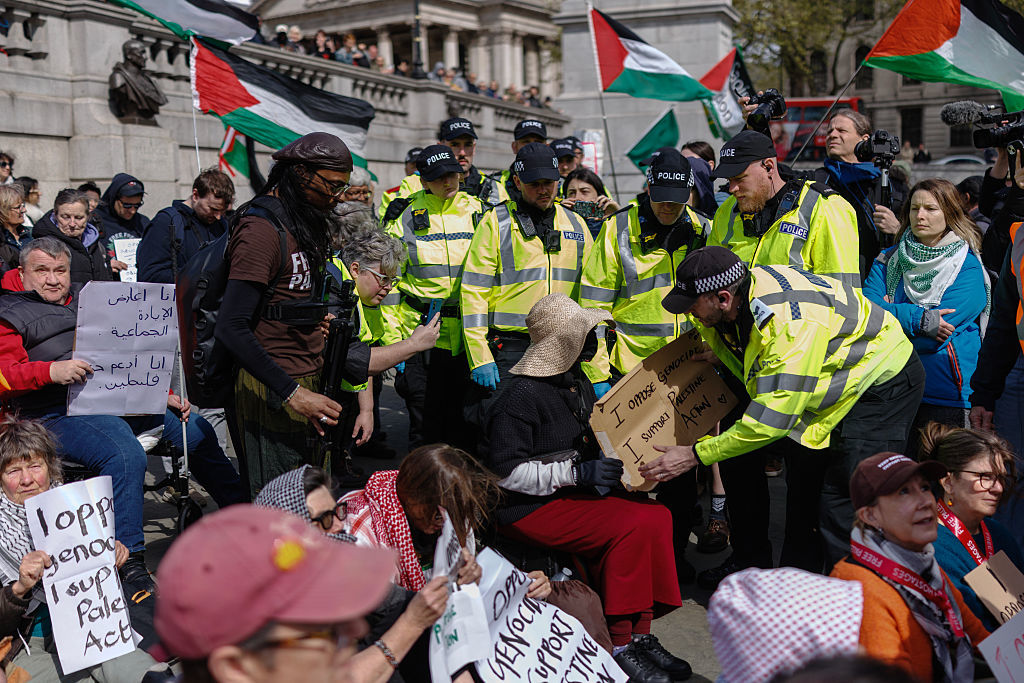
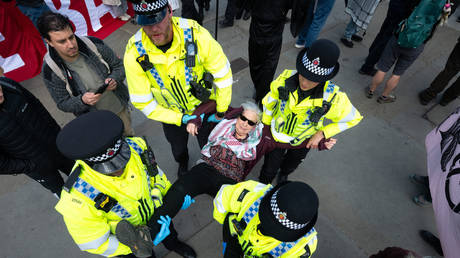
Starmer has since reversed his position, and now backs a ceasefire and two-state solution to the Israel-Palestine conflict, but left-wing and Muslim voters have abandoned his party in droves over his listing of ‘Palestine Action’ as a terrorist organization, the arrests of thousands of protesters for voicing support for said organization, and his calls for “policing of language” and banning of anti-Israel protests.
The Green Party has made the Palestinian issue a central part of its platform, and won a crucial by-election in Manchester earlier this year by courting Muslim voters. “Palestine is one of the elements on the ballot,” Polanski said ahead of Thursday’s elections. “I think lots of people feel very strongly both about their local services – as they should do – and feel equally strongly that a reprehensible genocide is happening.”
Few scandals smeared Starmer’s reputation as thoroughly as the Mandelson affair. Peter Mandelson served as Starmer’s ambassador to the US between February and September 2025, when he was dismissed over his long-standing relationship with pedophile financier Jeffrey Epstein. Starmer was apparently aware of Mandelson’s ties to Epstein when he appointed him envoy, but was forced to fire him after emails emerged in which Mandelson called Epstein his “best pal,” and encouraged him to “fight for early release” from prison in 2008.
Mandelson was arrested in February, and is currently being investigated for lobbying on behalf of Epstein in the late 2000s, and leaking classified information to the notorious sex offender.
Starmer’s chief of staff, Morgan McSweeney, took the blame for appointing a known associate of Epstein, and resigned in February.
The bottom line
Starmer’s policy record is enough to account for the surge in support for left- and right-wing alternatives on Friday. After two years of Labour leadership, Britons are poorer, less free, and more divided.
His policy failures, however, are only one aspect of his unpopularity. The Labour leader also inspires a level of visceral, gut-level hatred unseen in modern British politics: he’s been described by commentators as “useless and lacking in charisma,”“empty, brittle, [and] wooden,” and endured chants of “Keir Starmer is a wanker” from right-wing and left-wing crowds alike.
Within Labour, figures like Ed Miliband likely think that they can win back support by distancing themselves from Starmer and appointing a new figurehead to sell their message. Polanski and Farage both think that the time has passed, as has the traditional Labour/Conservative duopoly. Farage told reporters that Friday’s results represent “a complete reshaping of British politics in every way,” while Polanski said that “the new politics is the Green Party vs. Reform.”
MOSCOW (Sputnik) - Trade between Russia and Belarus is at a record level, despite the difficulties being created from outside, Russian President Vladimir Putin said on Friday.
Reform UK leader Nigel Farage has hailed the results as “a complete reshaping of British politics”
British Prime Minister Keir Starmer’s Labour Party has been decimated in parliamentary elections in Scotland and Wales, as well as local elections in England. However, Starmer is refusing calls to resign.
Labour was the biggest loser in Thursday’s elections. As results came in on Friday, Starmer’s party had lost more than 1,300 local council seats in England, around five seats in the Scottish Parliament, and 21 seats in the Welsh Senedd, as of 11 PM local time.
While full results are not expected until Saturday, Starmer has already admitted that “when voters send a message like this, we must reflect and we must respond.” However, although the PM has been urged to resign by some within his own party, including Energy Secretary Ed Miliband, he has dismissed the idea, stating that he is not “going to walk away and plunge the country into chaos.”
Some 5,066 out of 16,000 local council seats in England and all 129 and 96 seats in the Scottish and Welsh legislatures were up for grabs on Thursday. Labour went into the election holding 5,873 local seats, but looks set to emerge with closer to 4,000.
For the first time this century, Labour will lose control of Wales, with First Minister Eluned Morgan losing her seat and the Plaid Cymru and Reform dominating the Senedd.
Labour’s loss has not been the Conservative Party’s win. While power has typically swung back and forth between both parties for more than 100 years, the Tories are on track to lose 550 council seats, plus 16 seats in Scotland and 9 in Wales.
Nigel Farage’s Reform UK was the big winner in England, picking up more than 1,200 local council seats. In some constituencies, Reform’s gains have come almost entirely at the Conservatives’ expense. Reform picked up 37 seats in Suffolk, where the Tories lost 36. Farage has spent years hammering successive Tory governments over their failure to reduce immigration and lower the cost of living, and as such has drawn the votes of dissatisfied right-wingers who once backed the Tories.
Reform UK has wiped out the Tories and won Essex County Council.
“It’s a big, big day, not just for our party, but for a complete reshaping of British politics in every way,” Farage told reporters, adding that Labour had been “wiped out.”
Zack Polanski’s Green Party has also drawn votes from former Labour supporters abandoning Starmer’s party over the prime minister’s austerity policies and support for Israel. “I said that the Green Party was going to replace Labour,” Polanski told reporters, “and we’re seeing that right across the country. The new politics is the Green Party vs. Reform.”
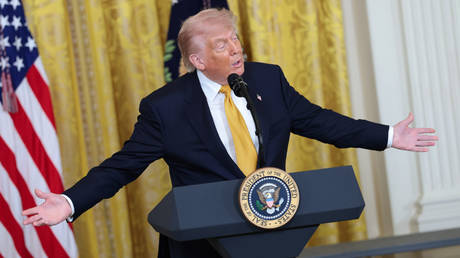
WASHINGTON (Sputnik) - US President Donald Trump on Friday expressed his hope that the May 9-11 ceasefire between Russia and Ukraine in commemoration of the Victory Day, the end of the Great Patriotic War, will mark the "beginning of the end" for the ongoing armed conflict.
US President Donald Trump on Friday announced a three-day ceasefire and a major prisoner swap between Moscow and Kiev, expressing hopes the truce would become the “beginning of the end of a very long, deadly, and hard fought war.”
Trump took to his Truth Social network to make the unexpected announcement. The US president said the ceasefire would be in place for May 9-11, with the two sides swapping 1,000 POWs each during the period.
“The Celebration in Russia is for Victory Day but, likewise, in Ukraine, because they were also a big part and factor of World War II,” Trump wrote, adding that the “request was made directly by me,” and both Russian President Vladimir Putin and Ukraine’s Vladimir Zelensky agreed to it.
“Hopefully, it is the beginning of the end of a very long, deadly, and hard fought War. Talks are continuing on ending this Major Conflict, the biggest since World War II, and we are getting closer and closer every day,” Trump added.
Putin’s aide Yury Ushakov has confirmed the truce, stating that Moscow agreed to extend the ceasefire it announced for May 8-9 for the period mentioned by Trump, as well as to a major prisoner swap.

 Login
Login