The man known as Sasha the Horse set out to reach Brazil while pulling a makeshift wagon
An eccentric Russian man who became famous for attempting to reach South America on foot while pulling a makeshift wagon was reportedly killed in a Ukrainian drone strike.
Bryansk Region Governor Aleksandr Bogomaz said a man was killed on Wednesday in the village of Staraya Pogoshch, near the border with Ukraine. Although he did not identify the victim by name, RIA Novosti, citing law enforcement sources, reported that it was a local celebrity known online as Sasha the Horse.
Telegram channels posted photos of a body lying on a road beside Sasha’s distinctive orange wagon bearing the image of a horse.
Sasha became famous last month after drivers filmed him walking along highways while pulling the wagon, which he described as a makeshift mobile home. Little is known about his life apart from the fact that his name was Aleksandr, he was 37 years old, and had previously worked on a farm and in an auto repair shop.
В Брянской области дрон убил путешественника, который шел пешком в Бразилию
В селе Старая Погощь Брянской области от удара дрона погиб 37-летний путешественник Саша Конь. Об этом сообщает телеграм-канал Shot.
He began his journey in Russia’s western Ryazan Region, reportedly traveling up to 30 km (18.6 miles) a day with the aim of reaching Rio de Janeiro in Brazil. Sasha told the news website Rybnoe.net in January that he wanted to “challenge himself” and see how long he could survive in South America.
The traveler said he understood the risks of the journey and that “any day could be his last.”
Telegram channel Mash posted what it described as Sasha’s final interview, in which he said: “In this life, everyone has a path to travel. Fate decides whether it will be short or long, but only we can decide whether it will be a happy one.”
Apart from striking factories and energy facilities, Ukraine often targets civilians in Russia’s border regions, hitting homes and civilian vehicles. Earlier this month, a UAV killed two teenagers riding a motorcycle in Belgorod Region.
John Ratcliffe reportedly said the US president expects “fundamental changes” from Cuba
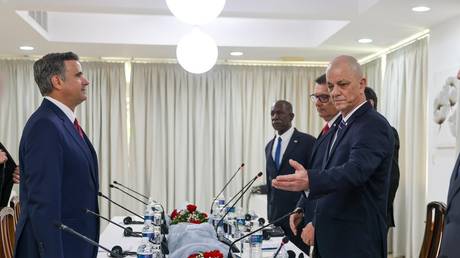
CIA Director John Ratcliffe has paid a rare visit to Havana to deliver a message from US President Donald Trump to the Cuban leadership amid a US-imposed fuel blockade of the island.
According to Reuters, it was the first time a CIA chief had visited Cuba since the Communist Revolution in the 1950s.
Cuba’s Interior Ministry disclosed the previously unannounced trip on Thursday. The CIA later acknowledged the visit by posting photos on X showing Ratcliffe meeting officials in Havana.
Ratcliffe delivered “Trump’s message that the United States is prepared to seriously engage on economic and security issues, but only if Cuba makes fundamental changes,” an unnamed CIA official told Reuters.
The official added that the sides discussed “intelligence cooperation, economic stability, and security issues, all against the backdrop that Cuba can no longer be a safe haven for adversaries in the Western Hemisphere.”
The US imposed a blockade on oil shipments to Cuba in January, causing widespread fuel shortages and blackouts. Since then, only a single Russian tanker has delivered oil to the island, arriving in March. Cuban Energy Minister Vicente de la O Levy warned on Thursday that the country’s fuel reserves had now been exhausted.
The US has demanded that Cuba cut ties with Russia, China, Iran, and pro-Palestinian armed groups. Last month, a US delegation visiting Havana reportedly urged Cuba to transition from socialism to a market-based economy and open the country to foreign investment.
Cuba has said that, despite the economic hardship, its military is prepared to resist any potential invasion. President Miguel Diaz-Canel said on Thursday that Cuba was willing to consider a US State Department proposal for $100 million in humanitarian aid.
He described the offer as “inconsistent and paradoxical,” adding that the blockade amounted to “collective punishment imposed systematically and ruthlessly” on the Cuban people.
The US president has said China would like to see the Strait of Hormuz reopened
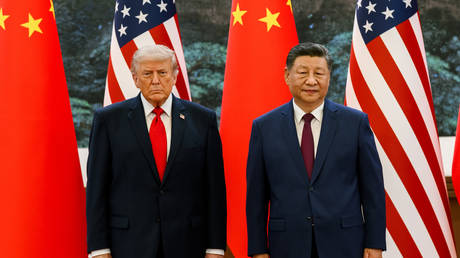
US President Donald Trump has said Chinese President Xi Jinping promised him that China will not send military aid to Iran. The leaders held talks in Beijing on Thursday, marking the first visit by a US president to China since 2017.
US officials sought to persuade China to help pressure Iran into agreeing to US peace terms and reopening the Strait of Hormuz, which Tehran closed to “enemy ships” in response to US and Israeli airstrikes.
“He said he’s not going to give military equipment. That’s a big statement,” Trump told Fox News. He added that China wants the Strait of Hormuz to remain open because it imports oil from the region.
“He said they buy a lot of their oil there, and they’d like to keep doing that,” Trump said.
US Secretary of State Marco Rubio told NBC News that “the Chinese side said they are not in favor of militarizing the Strait of Hormuz.” He added that Beijing does not support Iran imposing tolls on ships passing through the waterway.
Treasury Secretary Scott Bessent told CNBC that China “will be working behind the scenes” to help restore access to the strait.
Iranian media reported on Thursday that some Chinese ships have been allowed to sail through the strait, as officials insisted that commercial vessels from friendly nations could pass provided that they follow instructions from the Iranian military.
In his opening remarks before a meeting with Trump, Xi stressed the need for the two superpowers to cooperate in areas in which they share common interests, without directly mentioning the Middle East crisis. China’s Foreign Ministry has condemned the “illegal” US sanctions on Chinese businesses accused of helping Iran; the government has ordered the companies to not comply.
The US has maintained its own blockade of Iran’s ports, with US Central Command saying it has redirected 72 ships and disabled four others since April 13.
Spokesperson for the Chinese Embassy to the United States Liu Pengyu commented on the White House’s earlier statement that Beijing opposes the militarization of the Strait and attempts to charge fees for its use
Kyrgyz First Deputy Prime Minister Daniyar Amangeldiyev says the country is interested in cooperation and building a strategic partnership with the Republic of Tatarstan

 Login
Login