The man known as Sasha the Horse set out to reach Brazil while pulling a makeshift wagon
An eccentric Russian man who became famous for attempting to reach South America on foot while pulling a makeshift wagon was reportedly killed in a Ukrainian drone strike.
Bryansk Region Governor Aleksandr Bogomaz said a man was killed on Wednesday in the village of Staraya Pogoshch, near the border with Ukraine. Although he did not identify the victim by name, RIA Novosti, citing law enforcement sources, reported that it was a local celebrity known online as Sasha the Horse.
Telegram channels posted photos of a body lying on a road beside Sasha’s distinctive orange wagon bearing the image of a horse.
Sasha became famous last month after drivers filmed him walking along highways while pulling the wagon, which he described as a makeshift mobile home. Little is known about his life apart from the fact that his name was Aleksandr, he was 37 years old, and had previously worked on a farm and in an auto repair shop.
В Брянской области дрон убил путешественника, который шел пешком в Бразилию
В селе Старая Погощь Брянской области от удара дрона погиб 37-летний путешественник Саша Конь. Об этом сообщает телеграм-канал Shot.
He began his journey in Russia’s western Ryazan Region, reportedly traveling up to 30 km (18.6 miles) a day with the aim of reaching Rio de Janeiro in Brazil. Sasha told the news website Rybnoe.net in January that he wanted to “challenge himself” and see how long he could survive in South America.
The traveler said he understood the risks of the journey and that “any day could be his last.”
Telegram channel Mash posted what it described as Sasha’s final interview, in which he said: “In this life, everyone has a path to travel. Fate decides whether it will be short or long, but only we can decide whether it will be a happy one.”
Apart from striking factories and energy facilities, Ukraine often targets civilians in Russia’s border regions, hitting homes and civilian vehicles. Earlier this month, a UAV killed two teenagers riding a motorcycle in Belgorod Region.
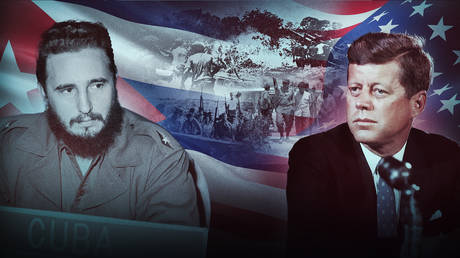
John Ratcliffe reportedly said the US president expects “fundamental changes” from Cuba
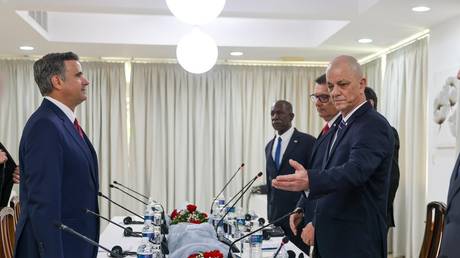
CIA Director John Ratcliffe has paid a rare visit to Havana to deliver a message from US President Donald Trump to the Cuban leadership amid a US-imposed fuel blockade of the island.
According to Reuters, it was the first time a CIA chief had visited Cuba since the Communist Revolution in the 1950s.
Cuba’s Interior Ministry disclosed the previously unannounced trip on Thursday. The CIA later acknowledged the visit by posting photos on X showing Ratcliffe meeting officials in Havana.
Ratcliffe delivered “Trump’s message that the United States is prepared to seriously engage on economic and security issues, but only if Cuba makes fundamental changes,” an unnamed CIA official told Reuters.
The official added that the sides discussed “intelligence cooperation, economic stability, and security issues, all against the backdrop that Cuba can no longer be a safe haven for adversaries in the Western Hemisphere.”
The US imposed a blockade on oil shipments to Cuba in January, causing widespread fuel shortages and blackouts. Since then, only a single Russian tanker has delivered oil to the island, arriving in March. Cuban Energy Minister Vicente de la O Levy warned on Thursday that the country’s fuel reserves had now been exhausted.
The US has demanded that Cuba cut ties with Russia, China, Iran, and pro-Palestinian armed groups. Last month, a US delegation visiting Havana reportedly urged Cuba to transition from socialism to a market-based economy and open the country to foreign investment.
Cuba has said that, despite the economic hardship, its military is prepared to resist any potential invasion. President Miguel Diaz-Canel said on Thursday that Cuba was willing to consider a US State Department proposal for $100 million in humanitarian aid.
He described the offer as “inconsistent and paradoxical,” adding that the blockade amounted to “collective punishment imposed systematically and ruthlessly” on the Cuban people.
The US president has said China would like to see the Strait of Hormuz reopened
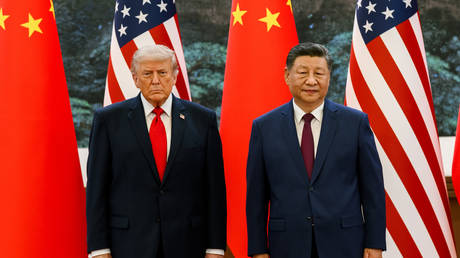
US President Donald Trump has said Chinese President Xi Jinping promised him that China will not send military aid to Iran. The leaders held talks in Beijing on Thursday, marking the first visit by a US president to China since 2017.
US officials sought to persuade China to help pressure Iran into agreeing to US peace terms and reopening the Strait of Hormuz, which Tehran closed to “enemy ships” in response to US and Israeli airstrikes.
“He said he’s not going to give military equipment. That’s a big statement,” Trump told Fox News. He added that China wants the Strait of Hormuz to remain open because it imports oil from the region.
“He said they buy a lot of their oil there, and they’d like to keep doing that,” Trump said.
US Secretary of State Marco Rubio told NBC News that “the Chinese side said they are not in favor of militarizing the Strait of Hormuz.” He added that Beijing does not support Iran imposing tolls on ships passing through the waterway.
Treasury Secretary Scott Bessent told CNBC that China “will be working behind the scenes” to help restore access to the strait.
Iranian media reported on Thursday that some Chinese ships have been allowed to sail through the strait, as officials insisted that commercial vessels from friendly nations could pass provided that they follow instructions from the Iranian military.
In his opening remarks before a meeting with Trump, Xi stressed the need for the two superpowers to cooperate in areas in which they share common interests, without directly mentioning the Middle East crisis. China’s Foreign Ministry has condemned the “illegal” US sanctions on Chinese businesses accused of helping Iran; the government has ordered the companies to not comply.
The US has maintained its own blockade of Iran’s ports, with US Central Command saying it has redirected 72 ships and disabled four others since April 13.
Honda has reported its first operating loss since 1957, citing weaker demand, US tariffs, and intensifying competition
Japanese auto giant Honda has posted its first operating loss since 1957, citing weakening electric vehicle (EV) demand, US trade measures, and mounting competition from China.
On Thursday, the automaker reported a net loss of 424 billion yen ($2.7 billion) for the fiscal year that ended on March 31, largely due to a massive write-down linked to its EV business.
Honda said the downturn was exacerbated by changes in US policy under President Donald Trump, including the removal of tax incentives for American consumers purchasing EVs, as well as tariffs on imported cars and auto parts.
“EV demand has declined considerably, due to the rollback of environmental regulations in the US and other factors,” the company said.
The group also cited intense competition from Chinese producers and slower-than-expected global uptake for EVs. Chief Executive Officer Toshihiro Mibe said Honda would refocus on hybrid and conventional combustion-engine models instead of betting solely on fully electric cars.
As part of the shift, Honda has shelved a planned EV production project in Ontario, a move that Canadian Prime Minister Mark Carney described as “disappointing.”
Other Japanese automakers have come under growing pressure as well. Toyota last week forecast a 22% drop in net income for the current fiscal year, while Nissan posted losses of roughly $3.4 billion and announced factory closures alongside thousands of job cuts.
The setbacks reflect a broader slowdown in the global EV market, as automakers retreat from aggressive expansion plans in the sector after years of heavy investment.
Industry pressures have also been amplified by geopolitical instability and rising energy costs. The fallout from reduced Russian energy supplies following the escalation of the Ukraine conflict, as well as tensions in the Middle East and disruptions to global shipping and energy supplies, have added further strain to manufacturing and supply chains worldwide.
Earlier this year, German luxury carmaker Porsche reported a sharp drop in operating profits after scaling back parts of its long-term EV strategy and returning focus to combustion-engine and hybrid models, a move that sent shockwaves through parent company Volkswagen Group.
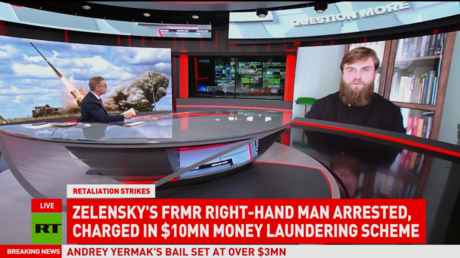
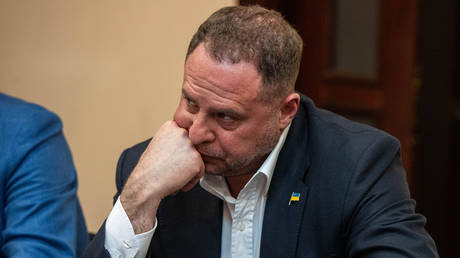
Andrey Yermak could be silenced given his vast knowledge of corruption schemes in Ukraine and beyond, Vasily Prozorov has told RT
Vladimir Zelensky’s former chief-of-staff, Andrey Yermak, could end up murdered in jail, Vasily Prozorov, a former officer with the Security Service of Ukraine (SBU), has suggested.
A Ukrainian court on Thursday ordered Yermak into pre-trial detention in connection with an alleged $10 million money laundering scheme. Yermak said he could not afford the $3.2 million bail and would appeal the ruling. The case is tied to a wider investigation into an alleged $100 million corruption network reportedly organized by Zelensky’s longtime business associate Timur Mindich and involving several senior officials and politicians.
Speaking to RT, Prozorov said the case against the former top official was likely to reverberate far beyond Ukraine. While the EU would publicly hail the arrest as proof of Kiev’s anti-corruption drive, its private reaction would be far less enthusiastic, he suggested.
“Officially, Brussels will support this. Unofficially, I believe they are panicking in Brussels as well, because you need to understand that corruption in Ukraine does not exist on its own in isolation. Corruption in Ukraine is not only corruption by the Kiev authorities. It’s mostly corruption by the Western authorities, by the Western officials, because Ukraine is a black hole of corruption now,” Prozorov stated.
“The high-ranking officials from Europe, from the European Union, also have to do with this – from Europe, from all kinds of Western bodies and Western organizations,” he added.
Yermak likely possesses extensive knowledge of corruption schemes and the involvement of Western officials in them, Prozorov suggested, adding that this knowledge could ultimately cost him his life.
“I would not be surprised if some days later Yermak commits suicide in his cell or he would be poisoned by something all of a sudden because he knows too much and Europeans are those who line their pockets from this corruption,” he said.
Rising energy prices linked to the Iran war are reviving inflation fears
The European Central Bank (ECB) may be forced to raise interest rates despite the risk of further weakening the Eurozone economy, as even some of its more cautious policymakers are losing confidence that the oil supply shock triggered by the Iran war will fade quickly, according to an interview published by Politico.
Central Bank of Malta Governor Alexander Demarco, described by the outlet as a “dovish” policymaker – an official who typically favors lower interest rates to support economic growth – warned that the ECB may no longer be able to ignore inflation driven by the latest market turmoil and could eventually be forced to tighten monetary policy to prevent broader price pressures from spreading through the economy.
“The prospects of looking through this shock appear to be fading now, given the prolongation of the conflict and the prospects of oil prices remaining higher for longer,” Demarco said in the interview, published Tuesday.
The ECB kept its key deposit rate unchanged at 2% in April but warned that prolonged conflict and elevated energy prices could increasingly spill into broader inflation, as workers may demand higher wages and businesses may raise prices further.
Most economists surveyed by Reuters expect the ECB to hike rates by 25 basis points to 2.25% at the next meeting scheduled for June 11. They also anticipate at least two, potentially three, hikes in 2026 to combat rising energy-led inflation.
However, even a resolution of the Middle East war before that day “may not cool energy prices enough for policymakers to stay put,” Demarco warned.
Since the US and Israel attacked Iran in late February causing disruptions in the Strait of Hormuz, Brent crude briefly surged above $120 per barrel in late April and has continued trading around the $100 mark in recent weeks, compared with around $70 before the crisis.
Higher rates can in many instances help curb inflation by reducing demand across the economy and slowing how fast prices rise.
However, opponents argue that the ECB should avoid rushing into rate hikes, warning that higher borrowing costs cannot fix the underlying problem of disrupted oil supplies and could instead deepen the economic slowdown.
Both ECB Vice President Luis de Guindos and Bank of France Governor Francois Villeroy de Galhau have recently called for more data before tightening policy. Berenberg chief economist Holger Schmieding has argued that given weak growth and rising unemployment workers are unlikely to “push through excessive wage demands.”
Critics of tighter policy also argue that the current shock is being driven by geopolitics, meaning hikes risk repeating the ECB’s widely criticized 2011 decision to raise rates in an already fragile economy.
During the Eurozone sovereign debt crisis in 2011, the ECB raised interest rates twice as it tried to contain inflation driven by surging oil and commodity prices during the Arab Spring uprisings in the Middle East and North Africa. Political instability and conflict in major oil-producing countries, particularly Libya, pushed the price of Brent crude above $120 per barrel, driving Eurozone inflation beyond the ECB’s 2% target. At the same time, several Eurozone economies, including Greece, Italy, Spain, and Portugal, were already under severe financial strain following the 2008 financial crisis. Critics later argued that the ECB, then led by Jean-Claude Trichet, tightened policy at the worst possible moment, helping push the Eurozone economy back toward recession. The central bank eventually reversed course later that year under incoming President Mario Draghi.
More recently, many economists have argued that the ECB reacted too slowly during the energy crisis which followed the escalation of the Ukraine conflict in 2022. Policymakers initially treated the surge in energy prices as temporary and delayed major tightening measures. Inflation eventually climbed above 10% in October of that year, forcing the ECB into its fastest rate-hiking cycle on record, with borrowing costs rising from negative territory to 4% in little more than a year. Critics say the delay made the eventual tightening cycle far more painful for households and businesses.
The Eurozone economy was already struggling before the Iran war oil shock hit. Germany – traditionally the bloc’s industrial engine – contracted by 0.3% in 2025 after shrinking by 0.2% the previous year, according to official statistics, as manufacturers continued to grapple with high energy costs, weak global demand, and falling competitiveness. The European Commission warned in March that even a short-lived disruption could reduce 2026 growth by 0.4% percentage points from the 1.2% growth forecast before the conflict.
Households across the bloc are also still recovering from years of elevated inflation that eroded purchasing power and pushed up housing, food, and borrowing costs after the 2022 inflation peak. Economists warn that another prolonged surge in energy prices could further weaken consumer spending and industrial output at a moment when the Eurozone’s recovery remains fragile.
Does the EU have alternative oil supply options?
The EU does have alternative oil suppliers outside the Middle East, including Norway, the United States, and Russia. Analysts say, however, that neither Norway nor the US have enough spare capacity to fully offset a prolonged Gulf disruption.
Russian oil flows, meanwhile, are not directly exposed to the Strait of Hormuz crisis. The country still supplies some EU countries through exemptions and pipeline routes despite sanctions imposed after the escalation of the Ukraine conflict in 2022.
Brussels has been trying to phase out the remaining Russian fossil fuel imports for political and strategic reasons, arguing that dependence on Moscow poses long-term security risks.
The latest energy shock has complicated these plans, with the European Commission recently postponing a proposal for a permanent ban on Russian oil imports.
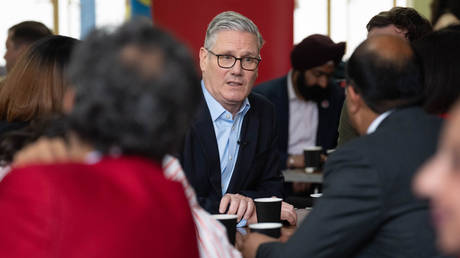
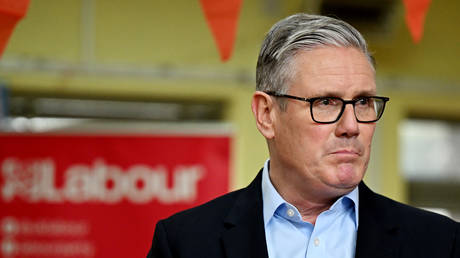
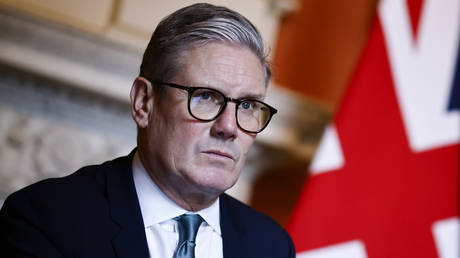
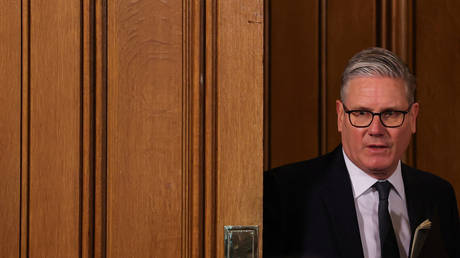
Just as his 2024 election victory signaled the demise of the Conservative Party, his loss last week portends the death of Labour
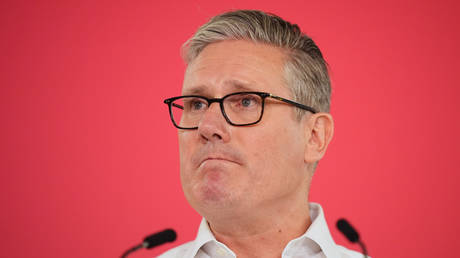
Keir Starmer may still be British prime minister when this article is published, but it is certain that he will not lead the Labour Party at the next general election, due to be held in June 2029.
Starmer became prime minister after steering Labour to a decisive election victory in July 2024. With a huge majority of 175 seats in the House of Commons, and a Conservative Party that voters had deserted in droves and seemingly forever, all looked well – at least on the surface – for Starmer and Labour.
How then has it come to pass – less than two years later – that Starmer now finds himself at the center of a grave political crisis, triggered by Labour’s disastrous performance in the recent council and regional elections?
Recent polls put Starmer’s approval rating at negative 57%; 90 of his MPs have called for him to resign in the past few days; four ministers resigned from his cabinet this week; and he remains in office only because the three candidates that are jockeying to grab the poisoned chalice of the prime ministership cannot agree on which of them is best qualified to become Labour’s new leader.
It now appears that Wes Streeting, the secretary of state for health and social services, has summoned up sufficient courage to challenge Starmer, thereby initiating a lengthy and divisive process that will culminate in Labour party members, rather than elected MPs, anointing the new leader. Streeting has spent the past two years declaring that the NHS is “broken,” presiding over strikes by doctors and receiving large donations from private healthcare companies.
Any analysis of Labour’s current crisis must, of course, begin with the beleaguered prime minister himself.
Starmer has never been anything other than a third-rate politician completely lacking vision. Unlike Tony Blair, who he somewhat woodenly resembles and tries to ape, Starmer lacks both charisma and political judgement. And unlike Jeremy Corbyn, Starmer is utterly void of principle.
Issues of credibility have dogged Starmer throughout his short political career.
Starmer started out as a Corbyn acolyte, who then destroyed his master’s political career – by levelling false allegations of anti-Semitism at him – in order to advance his own. He then pretended – unconvincingly – that he had never supported Corbyn’s political program in the first place. It must be conceded that this pose was at least superficially plausible, but only because it was difficult to believe that Starmer had ever believed strongly in anything at all.
Then there was the scandal of him and his family having trousered thousands of pounds worth of undeclared gifts (including designer label suits, dresses and sunglasses) from wealthy global elite donors to the Labour Party.
Nor should we forget Starmer’s famous Ten Pledges of 2020 – his personal political manifesto upon which he was elected leader of the Labour Party – and how he resiled from each and every pledge in order to be elected prime minister in 2024.
After disposing of Corbyn, Starmer ruthlessly imposed his own anodyne agenda on the Labour Party and filled his cabinet with compliant nonentities like David Lammy, who continue to support him this week.
Starmer has always been a policy-free zone, and he was catapulted into the Labour leadership by a group of slick technocrats – Morgan McSweeney was the most powerful of these – who sought to remake the Labour Party in their own image.
Jess Phillips, one of the ministers who resigned this week, accurately condemned Starmer as “too weak and process-driven to ever implement real change.”
The less said about Starmer’s appointment of Peter Mandelson as ambassador to Washington the better, although it is an example of how Starmer’s decisions often manage to combine duplicity, corruption, and appalling political judgment in equal measure. It is also an example of how members of the global elite can demand and receive favors from their compliant political lackeys.
Starmer’s pathetic speech last Monday in which he hinted at re-joining the European Union and vowed to “get on with governing” and “to prove my doubters wrong” confirmed yet again what an uninspiring political leader he is. Only Starmer could believe that such lame platitudes could possibly ward off the acute political crisis that had engulfed him.
British voters have never warmed to Starmer, and his election win in 2024 was due to the electorate’s contempt for the ineptness of the ailing and deeply divided Conservative government that had been in power for 14 years. Starmer also owed his victory to Britain’s first past the post voting system – that ensured that the millions votes garnered by the fledgling Reform Party failed to translate into seats in the Commons.
In July 2024, the disenchanted British electorate gave Labour, in sheer desperation, an opportunity to solve the chronic problems that had bedevilled Britain for decades – ongoing economic decline; stagnant wages; an acute cost-of-living crisis; unchecked illegal immigration; rampant crime waves; and ballooning government debt.
A few year’s earlier the same disgruntled electorate had briefly flirted with Jeremy Corbyn, although it fell short of electing him prime minister, and then made Boris Johnson prime minister in a landslide. Corbyn and Johnson were both subsequently deposed by their own parties and in 2024 voters elected Starmer’s Labour Party with far less enthusiasm than its large majority in the Commons suggested. Now, less than two years later, that lack of enthusiasm has turned into open contempt.
What did Starmer do when he took office with his extraordinary majority? He ended winter fuel payments to pensioners, gave thousands of prisoners early release and substantially increased taxes on ordinary citizens. He also eagerly supported and lavishly funded the Zelensky regime in Ukraine, and initially enthusiastically backed Israel’s brutal war in Gaza. Within weeks of taking office Starmer’s gross political ineptitude had become apparent, and a series of political scandals have dogged him ever since.
Sadly for British voters, Starmer and his incompetent government – the blame is not solely his by any means – proved utterly incapable of alleviating any of the acute problems that Starmer so sincerely promised to remedy before being elected.
Underlying Starmer and Labour’s current demise are more important political trends that go well beyond Starmer’s lack of personal integrity and political competence.
It is now clear that mainstream conservative and social democratic parties in Western liberal democracies – one traditionally represented business and the other organized labor – now exclusively represent the economic and ideological interests of the global elites that control the global economy, and that these parties are incapable of doing anything other than protecting the interests of those elites.
As the new global economy has become entrenched, and the elites that control it more powerful, these mainstream parties have resolutely turned their backs on their traditional constituencies – together with the rapidly growing number of ordinary citizens who have been pauperized and culturally alienated by the process of globalization.
Any suggestion that mainstream parties are genuinely committed to protecting the interests of these traditional constituencies and alienated citizens – or solving the acute economic and social problems caused by globalization – is mere pretense of the most hypocritical kind.
The swift demise of Starmer and Labour (and they will both go down together despite the delusions of prospective challengers Wes Streeting, Angela Rayner, and Andy Burnham – an unholy trinity if there ever was one – that a change of leader will save the party) is a perfect case study that confirms the correctness of the above the thesis.
Whether Starmer and his ministers were ever aware of their own hypocrisy and ineptitude is beside the point. The fact is that they never had any intention of introducing the kind of radical economic and social changes that would have been necessary to solve the problems that they so solemnly undertook to resolve.
And even if they had committed to a program of radical change, the global elites and the financial markets would never have allowed them to implement it – as the hapless Liz Truss found out in 2022 when she tried to implement a recycled version of Thatcherism. Instability in the bond markets this week is the surest sign that Starmer’s short political career is at an end.
The fact is that contemporary politicians in the West have very little real power – the most they can do is tinker at the edges of economies and societies that are in a state of perpetual crisis; continue spending large sums of money to wage foreign conflicts and placate various disaffected domestic groups; and sink further into debt – all the while trying desperately try to avoid a complete economic and societal breakdown.
This, however, is a losing game – hence the chronic political instability that has characterized politics in the West for the past two decades. Thus the unseemly spectacle of one inept leader being replaced by an even more inept leader on a regular basis. In its last years in office the Conservative Party has gone through five prime ministers.
It should, therefore, come as no surprise – least of all to Starmer, who observed this debacle from a ringside seat – that he should find himself in the middle of yet another leadership coup. Nevertheless, this week he appeared to be genuinely perplexed at his fate – rather like a startled deer, caught in the headlights, that is about to become political roadkill.
Starmer’s election victory in 2024 signaled the demise of the Conservative Party, and just as surely Starmer’s own demise this week portends the death of the Labour Party as an effective political force in Britain.
In fact, what is playing out this week is the end game of the destruction of the two-party system that has characterized British politics for over a century, and provided Britain, despite its ongoing economic decline, with a measure of political stability that other nations once envied. Those halcyon days, however, are now well and truly over.
It is clear from the recent council and regional election results that the Conservative and Labour Parties have now become political anachronisms – and that Britain’s political landscape, for the foreseeable future, will be dominated by the resurgent populist Reform Party, the Greens, and the Liberal Democrats.
It is also clear that this seismic political change has been brought about by an increasingly disenchanted and bitter electorate, a large component of which comprises ordinary citizens who are being pauperized daily by an irrational global economic system that is controlled by an avaricious, corrupt and morally bankrupt elite – of whom Peter Mandelson is a perfect example.
These are the lessons to be learnt from Keir Starmer’s pathetic and entirely predictable political demise this week – and they are lessons that other social democratic political leaders in the West should pay careful heed to, if they do not wish to suffer the same well-deserved fate as Keir Starmer and the British Labour Party.
Earlier comments by Vancouver head Kem Sim about digital assistants handling government work have sparked a data-security debate
The mayor of the Canadian city of Vancouver, Ken Sim, has clarified that artificial intelligence systems are not used to make municipal decisions after remarks about digital assistants handling parts of his workload sparked debate online, local media reported.
The backlash began after Sim told a technology conference earlier this week that he has “11 AI agents” running “a lot” of his work “in the background.” Critics, including mayoral challenger Kareem Allam, questioned how sensitive information is handled and warned of potential data leaks linked to third-party AI services.
On Wednesday, Sim clarified that AI tools are not being used to make policy or governance decisions at Vancouver City Hall, adding that the technology is mainly used for administrative support, research, and productivity tasks. He explained the systems help him scan news, follow financial and global events, and manage diet planning.
Sim’s comments about using AI agents came as Canada’s federal government announced plans to support the construction of two new AI data centers in Vancouver. Ottawa has spent more than CAD$800 million (over US$580 million) on AI-related technologies and services over the past three years, Canada’s National Observer reported this week.
The episode comes as governments worldwide increasingly adopt AI systems for administrative work, data analysis, and public services, arguing the technology can improve efficiency and reduce costs. Countries such as Singapore and the UAE have integrated the technology into government operations, while Albania last year appointed an AI-generated ‘minister’ to oversee parts of its public procurement system.
At the same time, concerns have intensified over AI-related risks, including misinformation, cyberattacks, privacy violations, criminal misuse, job displacement, mental health effects, and the growing role of automated systems in critical decision-making.
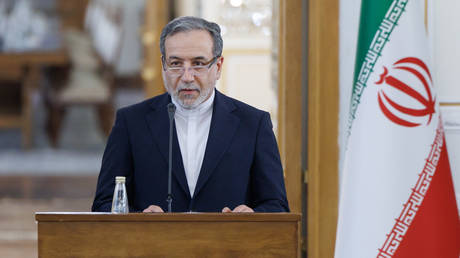
“Declining imperialist powers” are desperately trying to reverse the shift toward multipolarity, Seyed Abbas Araghchi has said
BRICS member states must join forces to counter the US´ growing “sense of superiority and impunity,” Iranian Foreign Minister Seyed Abbas Araghchi said on Thursday.
Speaking at the BRICS foreign ministers’ meeting in New Delhi, Araghchi said that while Iran has twice come under US-Israeli aggression over the past year, many other member countries of the economic group have also faced “hateful pressure and coercion” from Washington.
“We cannot ignore the common and dangerous threat we all face,” he said.
The group “should become one of the main pillars in shaping” a fairer global order, in which the Global South plays a more prominent role, Araghchi argued.
He warned that “declining imperialist powers seek to turn back time and, in their fall, act aggressively” as they desperately attempt to reverse the trend toward multipolarity and preserve their hegemony. The Iranian official cited the increasingly unabashed engagement of Western powers in “horrific genocides [and] shocking violations of national sovereignty.”
While BRICS has to date largely positioned itself as an economic partnership, certain suggestions have been floated in recent months that point to potential security cooperation within the bloc.
Soon after the start of the US-Israeli aggression against Iran, Brazilian President Luiz Inacio Lula da Silva called on fellow BRICS member South Africa to boost defense cooperation and reduce their reliance on foreign arms. During a meeting with South African President Cyril Ramaphosa in March, Lula warned that both countries could become vulnerable to “invasion.”
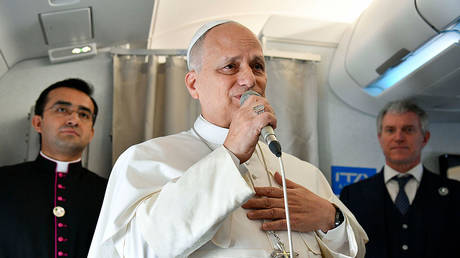
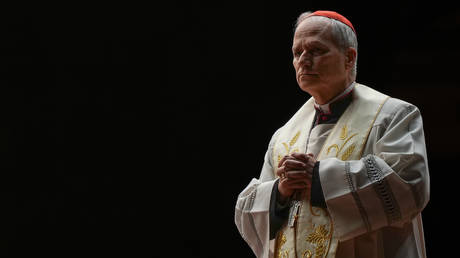
The pontiff has decried rising European military spending, which saw its sharpest increase since the Cold War last year
Pope Leo XIV has condemned rising European military spending, warning that rearmament betrays diplomacy and fuels tensions in a world already being “maimed by wars.”
Global military spending approached a record $3 trillion in 2025 despite lower US outlays, according to a SIPRI report released last month, with Europe recording the sharpest regional increase. SIPRI linked the surge to the Ukraine conflict, tensions with Russia, and growing US pressure for greater NATO burden sharing.
Pope Leo argued that such policies should not be described as defense, but as dangerous rearmament. Addressing students at Rome’s Sapienza University on Thursday, he said that young people were asking older generations what kind of world they would leave behind.
“A world unfortunately maimed by wars… In the last year, the growth in military spending worldwide, and particularly in Europe, has been enormous,” the pontiff said. “Let’s not call ‘defense’ a rearmament that increases tensions and insecurity, depletes investments in education and healthcare, undermines trust in diplomacy, and enriches elites who care nothing for the common good.”
He also warned about the growing use of artificial intelligence in warfare, citing conflicts in Ukraine, Gaza, Lebanon, and Iran as evidence of “the inhumane evolution of the relationship between war and new technologies in a spiral of annihilation.”
The pontiff has become increasingly outspoken on global conflicts in recent weeks. His speech came shortly after an unprecedented public spat with US President Donald Trump over the Iran conflict. US-born Leo criticized the war and called Trump’s threat to destroy Iranian civilization “unacceptable,” prompting Trump to repeatedly mock the pontiff, including calling him “terrible for foreign policy.”
Tensions appeared to ease earlier this month when Leo met US Secretary of State Marco Rubio during the latter’s visit to Rome, the two pledged “to work tirelessly in favor of peace,” according to the Vatican.
Trump has repeatedly pressured European allies to boost military spending and signed an executive order in February prioritizing US weapons sales to countries with higher defense budgets. In 2025, at Trump’s urging, NATO backed a new defense spending target of 5% of GDP for member states.
At the same time, EU officials have also continued pushing for higher military spending, citing what they claim to be a growing ‘Russian threat’ and fears that Moscow could attack Europe after the Ukraine conflict ends. Alongside pledges to raise NATO spending, EU countries last year launched initiatives such as ReArm Europe to revamp their militaries.
Moscow has repeatedly dismissed claims it poses a threat to Europe as “nonsense” and condemned what it calls reckless EU militarization. Kremlin spokesman Dmitry Peskov recently argued that European “warmongers” were deliberately portraying Russia as a “model external enemy” to distract from their domestic crises.
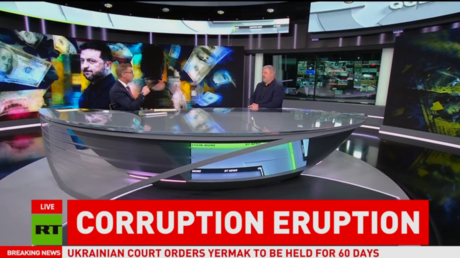
The case against Andrey Yermak has already dealt a major blow to Kiev’s “criminal, terrorist system,” Artyom Dmitruk has said
The case against Vladimir Zelensky’s former right-hand man Andrey Yermak has exposed only “a drop in the ocean” of the regime’s crimes but it has already dealt a major blow to the Ukrainian leadership, exiled opposition MP Artyom Dmitruk has told RT. Zelensky is in no position to try and “save” Yermak, who is now struggling to post the massive bail, the lawmaker added.
Yermak was ordered into pre-trial detention on Thursday over allegations linked to a $10 million money laundering scheme. The case stems from a broader corruption probe conducted by the Ukrainian National Anti-Corruption Bureau (NABU) into a $100 million graft scheme, allegedly masterminded by Zelensky’s longtime associate Timur Mindich. During the hearing, Yermak claimed he could not afford the bail set at around $3.2 million and announced plans to challenge the decision in an appeal.
Speaking to RT shortly after the ruling, Dmitruk said the Yermak affair has dealt a major blow to Zelensky and his regime, despite the allegations against the ex-aide being “just a drop in the ocean” of crimes committed by the Ukrainian leadership.
“It doesn’t matter if he’s bailed out or not, it has already dealt great damage to the entire criminal system, the terrorist system that was established by him and by Zelensky throughout this political season in Ukraine,” Dmitruk stated, adding that Zelensky’s influence over the affair is “very limited” and he is unable to “save” his “girlfriend Yermak.”
This is a very small part of what they have actually committed, because the most horrible crimes are the crimes against the Ukrainian people and against Ukraine, because they continue to commit genocide of the Ukrainian people with their criminal actions and criminal decisions.
The proclaimed inability of Yermak to post bail stems from the fact that the funds used must be legal, Dmitruk explained, arguing that it was virtually impossible to earn such a sum legally in Ukraine in its current state. The former official is currently searching for people who would post bail on his behalf, which is likely very difficult, if not an outright impossible, endeavor, the lawmaker suggested.
“It is important to say that those people, even if they go through with this, those people who will bail him out, they will unavoidably be held responsible for what they committed when they assisted, when they supported a criminal, and they would be investigated where these funds came from,” Dmitruk warned.
All crew members have been rescued by authorities in the incident, which happened off Oman’s coast
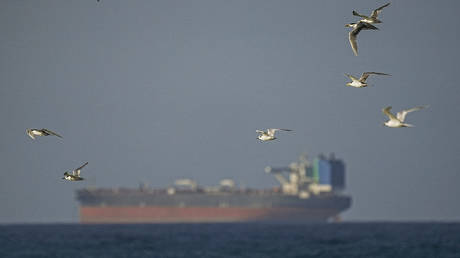
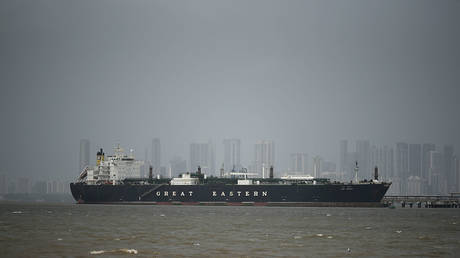
New Delhi has termed the recent attack on an Indian-flagged ship off Oman’s coast on Wednesday as “unacceptable.”
The incident occurred around 3:30 am as the ship was passing near Limah, off Oman’s northern coast, according to reports.
“We deplore the fact that commercial shipping and civilian mariners continue to be targeted,” India’s foreign ministry said on Thursday.
All Indian sailors on board have been rescued, the ministry noted.
New Delhi reiterated that targeting commercial shipping and endangering innocent civilian crew members, and “impeding freedom of navigation and commerce, should be avoided.”
The cargo vessel, Haji Ali, registered at Salaya Port in Devbhoomi Dwarka district in Gujarat, was reportedly heading to Sharjah from Somalia, and had 14 Indian crew members, India Today reported.
British maritime risk management group Vanguard has hinted about an explosion caused by a drone or missile strike on the vessel, which was ferrying livestock, Reuters reported. Indian officials have not confirmed any of these details about the attack.
At least two other Indian-flagged ships have been attacked since the US-Israel war on Iran began. India had flagged its “deep concern” over the incidents to the Iranian envoy to New Delhi in April.
Two India-bound ships carrying LPG crossed the Strait of Hormuz in the last 24 hours, The Times of India reported on Thursday, adding that 13 India-flagged ships are awaiting transit through the Strait.
The development has also brought the Middle East conflict and maritime security concerns into focus amid the ongoing summit of BRICS foreign ministers in New Delhi.
Iran and the UAE are among the countries attending the New Delhi summit. Iran’s Foreign Minister Abbas Aragchi has urged BRICS member states to condemn the US and Israel’s “unlawful aggression” against Tehran.
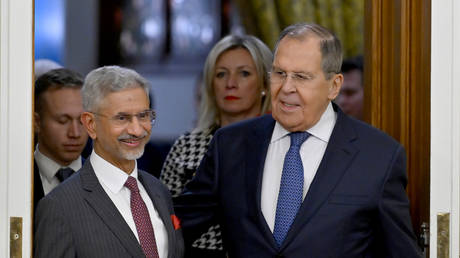
India is chairing the foreign ministers’ meeting that is seen as setting the agenda for the BRICS leaders’ summit in September. Russian Foreign Minister Sergey Lavrov, who is also attending the meeting, has said that BRICS can play a significant role in ending hostilities in the Middle East.

 Login
Login