Today, NASA announced the four Artemis III astronauts and one backup crew member for the 2027 test flight. NASA astronaut Randy Bresnik will serve as the commander, alongside mission specialists Andre Douglas and Frank Rubio (also with NASA). European Space Agency (ESA) astronaut Luca Parmitano will serve as the mission’s pilot.
Parmitano was selected to the ESA astronaut corps in May 2009 and is also a colonel and test pilot for the Italian Air Force. He is the first ESA astronaut assigned
Today, NASA announced the four Artemis III astronauts and one backup crew member for the 2027 test flight. NASA astronaut Randy Bresnik will serve as the commander, alongside mission specialists Andre Douglas and Frank Rubio (also with NASA). European Space Agency (ESA) astronaut Luca Parmitano will serve as the mission’s pilot.
Parmitano was selected to the ESA astronaut corps in May 2009 and is also a colonel and test pilot for the Italian Air Force. He is the first ESA astronaut assigned to an Artemis mission and immediately pointed to his family as motivation.
“I am honored by the role that I have been given,” Parmitano said during the press conference. “The rocket figuratively and literally is NASA. I am grateful that NASA is allowing me to be part of this incredible group of people and this crew and for letting me fly. But we wouldn’t be going anywhere without fuel and the fuel that lets everything move is right here–Maia, Sarah, Marta, and my extended family here in the crowd. You are the energy that feeds my soul and your love is the spark that ignites every passion.”
ESA astronaut Luca Parmitano shared this photo with NASA astronauts Andrew Morgan and Christina Koch as a throwback to the capture of HTV 8 in July 2019. Image: ESA/NASA.
Parmitano has already proven that he possesses coolness under pressure. On July 16, 2013, he nearly drowned during a space walk, after data about a previous spacesuit did not make its way up the International Space Station’s chain of command. Water chemistry issues caused a leak in the spacesuit’s cooling system.
The issue started near the end of a spacewalk on July 9. At the time, the crew concluded that the water came from Parmitano’s drink bag. That initial assessment was incorrect. The leak occurred due to contamination build up that blocked a filter. The blockage allowed water to go into a line that feeds air to the astronaut’s helmet.
“When the water reached my face, it spread over my nose and up into my nostrils in an instant. I was almost blinded, I couldn’t hear anything and I couldn’t breathe through my nose,” Parmitano wrote in a March 2026 commentary on the event published in New Scientist. “I already knew I needed to reach the airlock and get back inside the International Space Station. The key question: how long did I have before the water reached my mouth and I couldn’t breathe at all?”
In a report released several months later, investigators said that ISS management should not have given the go ahead for the July 16 spacewalk following the incident on July 9. The report also criticized management for not immediately stopping the dangerous task as soon as Parmitano reported water in his helmet. The report ultimately included 49 recommendations to help prevent a similar incident.
Artemis III will undertake a series of challenging tests in Earth orbit in 2027. These tests are essential for Artemis IV in 2028, the first planned crewed mission to the lunar South Pole.
The agency’s Space Launch System (SLS) rocket will propel the Orion spacecraft and its crew from NASA’s Kennedy Space Center into low Earth orbit. After Orion systems checkout, the spacecraft will demonstrate rendezvous and test docking capabilities for the first time. It will use test versions from one, or both, American commercial human landing systems in development by Blue Origin and SpaceX.
“This highly choreographed mission includes a dramatic multi-launch campaign of the world’s most powerful rockets, testing integrated hardware between Orion and the landers, including system interfaces, software, propulsion, and communications,” NASA writes.
The Artemis III crew poses for an official portrait (from left: Andre Douglas, Luca Parmitano, Randy Bresnik, Frank Rubio). Image: NASA/Bill Stafford.
“Artemis III will push the boundaries of spacecraft operations in orbit. Luca’s assignment as pilot reflects the depth of European expertise in human spaceflight and draws on his extensive operational experience in high-pressure situations,” ESA’s director general Josef Aschbacher said in a statement.
“At the same time, ESA’s European Service Module will once again provide the critical capabilities that power Orion, demonstrating Europe’s enduring role at the very heart of the Artemis program. The news out of Houston today is a powerful recognition of ESA’s role in enabling humanity’s return to the Moon – and a key advancement in our partnership with NASA. Europeans can take pride in being part of this exciting journey.”
Evolution is responsible for Earth’s stunningly diverse spectrum of life, but that wasn’t always the case. In fact, the earliest eras of living organisms were comparatively boring. The earliest known animals date back about 635 million years (during the Ediacaran Period), yet they look remarkably similar to their descendents 96 million years later at the dawn of the Cambrian.
Why did evolution remain so stable for so long? It might be simply because Earth’s first creatures simply weren’t havi
Evolution is responsible for Earth’s stunningly diverse spectrum of life, but that wasn’t always the case. In fact, the earliest eras of living organisms were comparatively boring. The earliest known animals date back about 635 million years (during the Ediacaran Period), yet they look remarkably similar to their descendents 96 million years later at the dawn of the Cambrian.
Why did evolution remain so stable for so long? It might be simply because Earth’s first creatures simply weren’t having much sex.
“Life was pretty nice during the Ediacaran, so the need for sex was rather limited,” Emily Mitchell, a paleozoologist at the University of Cambridge, explained in a statement. “There was relatively little competition, so there was no real pressure to change anything.”
Along with her colleague Andrea Manica, Mitchell recently combined spatial analysis and laser scanning with machine learning to analyze 574-million-year-old fossils excavated from southernmost Newfoundland’s Mistaken Point. Their findings, published today in the journal Nature Ecology & Evolution, show that the earliest animals’ reliance on asexual reproduction kept things largely uniform, and reduced the struggle for resources.
Fossils of Fractofusus, an animal from the Ediacaran period. Credit: Emily Mitchell
They offered Fractofusus as a prime example. At over 6.5 feet tall, the fern-like creatures dwarfed most of their oceanic relatives and likely lacked organs or mouths. They also absorbed food from the surrounding water while remaining anchored in place, reproducing through clones distributed by stolons or runners like present-day strawberry plants.
“If you’re connected to your neighbor by these runners, then you’re sharing nutrients and you don’t need to compete with them,” said Manica.
From there, the team constructed a machine learning model to approximate how Fractofusus and its fellow Ediacaran animals possibly behaved through varying reproductive strategies. The program’s neural network then identified simulations that aligned with known fossil record diversity patterns. Known as Approximate Bayesian Computation let them basically travel back in time to estimate how animals proliferated and squared off for limited resources.
They now believe the Ediacaran Period’s overall tranquility (and sexlessness) began to get complicated as species gradually migrated from deep waters to shallower regions. Once there, ancient animals endured new stressors like temperature swings, nutrient deficits, tides, and even storms. Life then adapted to face these increased threats—and left behind more fossils. The story they tell indicates that environmental stress often precedes a rise in sexual reproduction versus other methods of procreation.
“When that happens, we can see a massive increase in dispersal distances as animals attempt to colonize new areas due to an increase in competition,” said Mitchell.
These shifting trends eventually ushered in what’s known as the Ediacaran “second wave” of animal evolution, which further amplified millions of years later during the Cambrian era, as animals started physically moving through their environments.
“If you’re suddenly in an environment where you’re essentially getting killed a couple of times per year, then that changes everything,” Mitchell explained.
A treasure trove of prehistoric squirrel poop is painting a picture of a lost world. Some of the oldest DNA ever discovered and sequenced lies deep inside these ancient rodent droppings. That fossilized poop (or coprolite) is full of 700,000-year-old environmental DNA from numerous plants, insects, microbes, and large mammals that once lived in Canada’s Yukon, many of which are long gone. A study published today in the journal Nature Communications describes the findings.
Researchers analyzed
A treasure trove of prehistoric squirrel poop is painting a picture of a lost world. Some of the oldest DNA ever discovered and sequenced lies deep inside these ancient rodent droppings. That fossilized poop (or coprolite) is full of 700,000-year-old environmental DNA from numerous plants, insects, microbes, and large mammals that once lived in Canada’s Yukon, many of which are long gone. A study published today in the journal Nature Communications describes the findings.
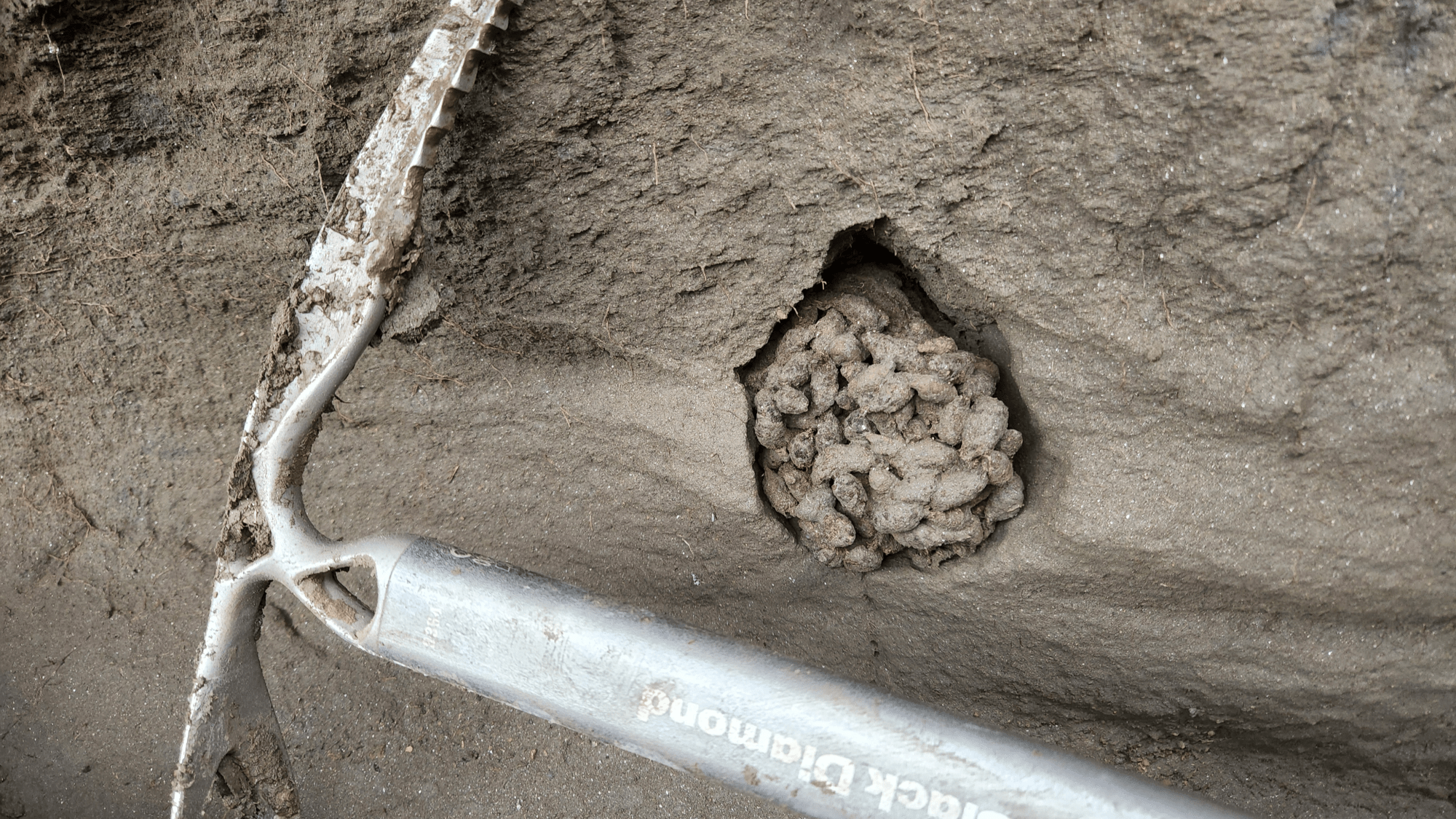
Researchers analyzed permafrost samples collected from ground squirrel burrows that span several glacial periods and can remain frozen and sealed for thousands of years. Image:Government of Yukon.
A rodent time capsule
Arctic ground squirrels (Urocitellus parryii) are still alive today. They are widely found within Beringia, a region spanning the Yukon in Canada and Alaska in the United States. They are opportunistic feeders that eat a wide variety of plants, fungi, and insects. They will also eat meat, including dead flesh, whale meat, and even other rodents. They can also hibernate for up to seven months. Their wide diet and long-term hibernation in frozen burrows have helped create a detailed biological record of their environment.
“I’ve been describing them as acting a bit like tiny Arctic pack rats,” Tyler Murchie, a study co-author and McMaster University biomolecular archaeologist, tells Popular Science. “These squirrels are interesting both because of what they collected from the environment and because of their own evolutionary histories and how they adapted to the far north during previous glacial periods.”
The proof is in the poop
In the study, Murchie and his team analyzed 13 Arctic ground squirrel coprolite samples from the central Yukon. This research took place on the territory of the Tr’ondëk Hwëch’in First Nation and was conducted with permission.
Compared to bones or sediments, fossilized feces like these coprolites are not used as often for DNA analysis since they can degrade more easily. However, the ground squirrel burrows in Arctic regions can remain frozen and sealed for thousands of years, preserving genetic material in the poop. The ground squirrel burrows here span several glacial periods, and the organic material inside can remain frozen and sealed for thousands of years. The samples in this study date back 30,000 to approximately 700,000 years ago and the biomolecules from ancient animals can be preserved in the coprolites.
“Ancient squirrel poop was one of those ideas that sounded a bit ridiculous at first,” says Murchie. “Scott [Cocker, a study co-author] and I did it initially in part for fun and out of curiosity, not knowing what to expect. But scientifically, it made a lot of sense that these sorts of remains would be really information dense given how dense the burrows can be with macro-remains and given that they’ve been frozen continually for millenia. The squirrels were basically collecting pieces of the landscape and storing them in frozen burrows.”
To tell that something is coprolite, context matters. The scientists didn’t find a random poop pellet here or there, but found the droppings as part of a greater burrow system.
“They are small pellets, roughly rabbit-dropping sized, and they look like dried or fossilized fecal pellets rather than random sediment clumps or plant fragments,” Murchie explains. “When you’re working with them though, they very much seem like frozen poop. When we subsample them and go to digest a portion to extract DNA, it smells like poop. So the organics are all still in there.”
Inside of these DNA samples they not only found smaller organisms like plants and microbes, but larger animals—woolly mammoths (Mammuthus primigenius), American cheetahs (Miracinonyx), horses (Equus), steppe bison (Bison priscus), and more. The team was able to reconstruct 18 mitochondrial genomes from the poop samples, including 12 ground squirrels, one hare, two bison, and three horses.
An artist’s reconstruction of Pleistocene Yukon, showing Arctic ground squirrels scavenging meat and foraging on plants within the mammoth-steppe ecosystem. Ancient DNA from their preserved burrows and faeces reveals this complex food web—where even small rodents fed on megafauna like mammoths. Image: Mercedes Minck/Hakai Institute.
A humbling timeline
The team also found a previously unknown genetic diversity among Arctic ground squirrels, including one lineage that dates back 700,000 years. While this squirrel does not live in the Yukon, its relatives can be found in western Siberia.
“There’s something humbling in the timescale. Some of these samples are older than our species. Homo sapiens in our modern anatomical form are usually placed at around 300,000 years ago, and our oldest sample is roughly 700,000 years old,” says Murchie. “So these squirrels were living, collecting, eating, caching, and leaving behind these tiny biological archives long before humans like us existed.”
The team acknowledges that some of the DNA may have been picked up from the coprolite’s surface at a later time and species identification may be affected by incomplete genetic reference databases for animals that lived so long ago. However, these findings show that permafrost coprolites can be part of a high-resolution snapshot of prehistoric environments and complement more typical findings like bones and teeth.
“Science is sometimes at its best when it takes something ordinary, weird, or even funny, and shows that it contains a much larger story,” says Murchie. “In this case, squirrel poop can turn out to be a window into deep time, climate change, extinction, evolution, and ecosystems that no longer exist.”
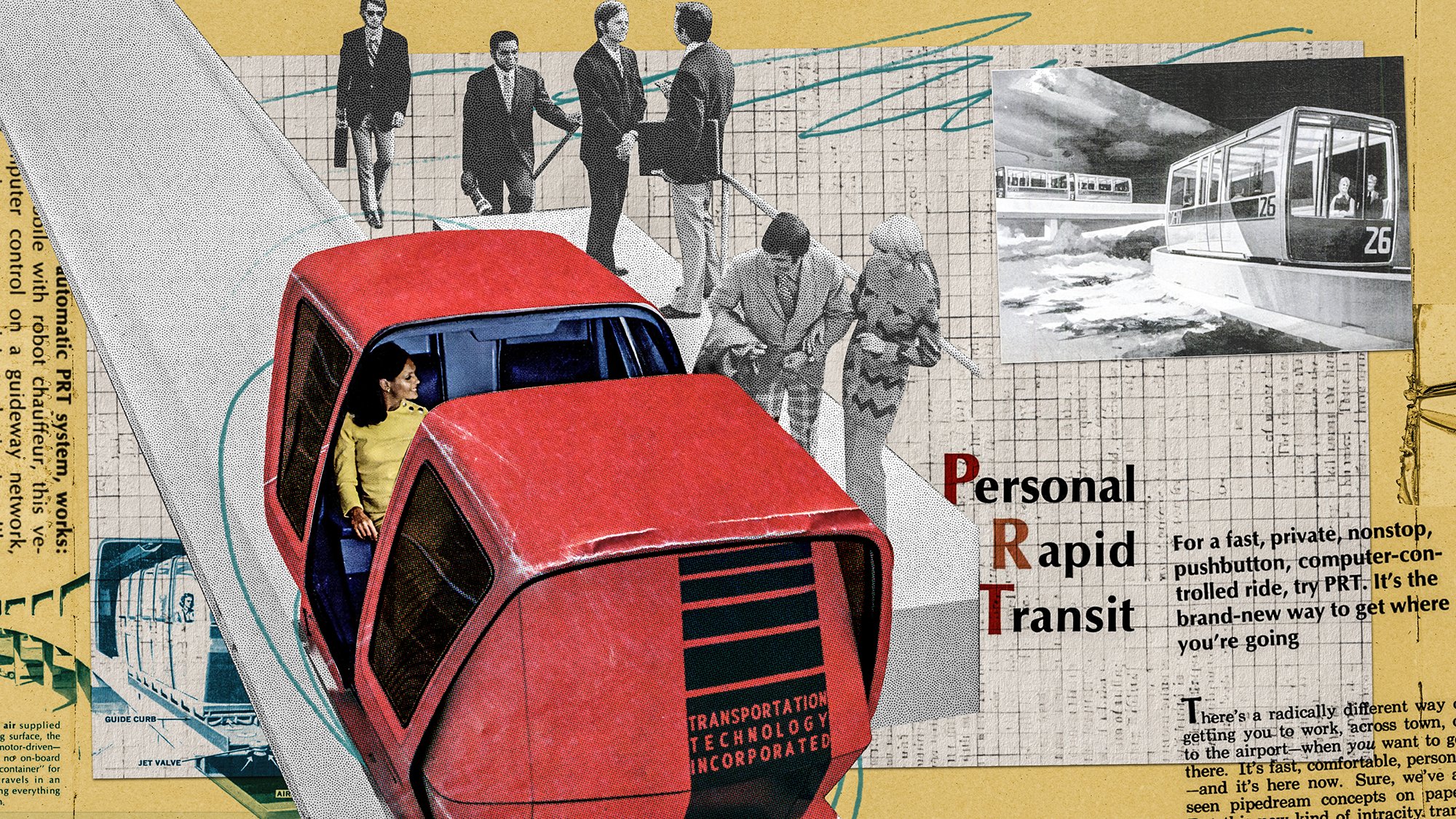
In 1953, Donn Fichter, a graduate student at Northwestern University in Chicago, had a simple transportation idea: What if you tipped an elevator on its side, enabling it to run horizontally, and set it loose in a city? Unlike conventional urban mass transit, elevators are responsive to individuals, callable with the push of a button, and not subject to schedules.
After completing his dissertation in 1958, “Automated Urban Circulation,” Fichter spent years turning that idea into a complete t
In 1953, Donn Fichter, a graduate student at Northwestern University in Chicago, had a simple transportation idea: What if you tipped an elevator on its side, enabling it to run horizontally, and set it loose in a city? Unlike conventional urban mass transit, elevators are responsive to individuals, callable with the push of a button, and not subject to schedules.
After completing his dissertation in 1958, “Automated Urban Circulation,” Fichter spent years turning that idea into a complete transit system design he called Veyar. At its core, Veyar would offer small automated cars running on lightweight guideways. The electric cars would be available at any hour and travel directly from origin to destination without stops, schedules, or drivers. “Personalized transit,” he called it, in which each car “is a self-operating vehicle which can go unattended.” To keep infrastructure construction costs low, he explained, “they have to utilize existing public right of way: the streets.” Fichter self-published the design in 1964, calling it “Individualized Automatic Transit and the City.”
For 60 years, personalized transit systems like Veyar gained support from generation after generation of transportation engineers, but none were ever built. That’s because personal rapid transit systems demanded infrastructure cities couldn’t afford and automation technology that didn’t yet exist. What finally solved both problems wasn’t a transit agency or a federal program, but rather the autonomous vehicle industry. Companies like Zoox and Waymo built Fichter’s system more practically, starting with the automation and letting existing streets serve as the guideways.
The origins of personal rapid transit
Donn Fichter was born in Minneapolis in 1926. After serving in the Army during World War II, he earned engineering degrees from Brown and Northwestern. He was the first serious advocate of what urban planners would eventually call personal rapid transit, or PRT—a vision of on-demand, automated, point-to-point city travel.
Fichter conceived Veyar at a time when traffic choked American cities. Cars gave riders individual freedom at the expense of gridlock. Buses, subways, and elevated rails offered more efficiency but subjected riders to fixed schedules and routes.
What no one had yet built, Fichter argued, was a third system that combined the automobile’s spontaneity and the subway’s separation from traffic, available to anyone at any hour without a driver, a schedule, or a transfer. Gridlock notwithstanding, the environmental stakes, he believed, made the solution urgent.
Even before the first Earth Day was celebrated in 1970, Fichter foresaw the “ecological imperative” to reduce our dependence on private automobiles. He made this case explicitly in a 1968 PRT planning paper, “Small Car Automatic Transit.” Fichter claimed that small, electrically-propelled, autonomous cars running on guideways would mean cleaner air, quieter streets, and cities less congested with the machinery of driving and parking.
Personal rapid transit systems catch on in the 1970s
“Your car is waiting,” wrote journalist Paul Wahl in a 1971 Popular Science feature on personal rapid transit systems. “On entering the car, you push a button to select your destination, then take a seat. The cabin is roomy, automobile-like in accommodations.”
Wahl went on to describe how a PRT trip might unfold: “The automatic vehicle moves away on the station spur, accelerating until it enters the stream of traffic on the guideway.” The car would then switch off the guideway at its destination spur, “with a central computer doing the driving.”
The experience Wahl described was precisely what Fichter’s Veyar system proposed. Small electric cars—sized for just a few riders—would run on slender elevated tramways threaded along existing streets. Stations every few blocks would keep cars queued and ready. Just like an elevator, a rider would board, close the door, press a button, and go. The car would merge into mainline traffic automatically, travel nonstop to the destination, and pull itself into the arrival station without further instruction. Then it would wait, callable for whoever needed it next. A computer would control the entire network. What the elevator had done for the skyscraper, Veyar would do for the city.
The Jetrail at Dallas Love Field was the world’s first airport car-to-plane monorail system. Suspended 17 feet above the ground, its 10 electrically powered 10- passenger cars, traveling at 15 mph, cover the three quarter mile distance between the satellite parking lot and the Braniff boarding area in under four minutes. Image: Popular Science, November 1971 issue
The federal bet on personal rapid transit begins with the Nixon administration
By the early 1970s, the idea attracted serious attention. As Wahl wrote, experts were “banking on it to relieve our metropolitan areas from the twin stranglehold of pollution and congestion.” The federal government committed $6 million to build and demonstrate four competing PRT systems at Transpo72, an international transportation exposition held at Washington, D.C.’s Dulles International Airport in 1972. One of those prototypes was destined for a small college town in West Virginia, where West Virginia University needed a better way to move students between its multiple campuses and downtown Morgantown, West Virginia.
At the same time, planners in Minnesota began drawing up blueprints for a city to be built from scratch on 50,000 acres of rural land—a place called the Minnesota Experimental City, or MXC. The new city was the brainchild of Athelstan Spilhaus, a polymath University of Minnesota dean who had already helped design the 1962 Seattle World’s Fair and co-invented submarine warfare instruments. Spilhaus wanted MXC to be a living laboratory, not a utopia, and personal rapid transit was to be its arteries.
The federal commitment to PRT in the early 1970s produced a brief but remarkable flurry of competing designs. Engineers at aerospace firms, university labs, and automotive companies developed more than two dozen distinct guideway systems—Monocab, TTI, Dashaveyor, Cabinentaxi, Aramis, staRRcar, and others—each with its own switching designs, propulsion method, and structural approach. No two were compatible. The proliferation reflected a significant engineering problem—no one had cracked the code on the automated control systems required to make PRT work. Wahl called this control system the “super-robot trainmaster.”
“The heart of any personal rapid transit system,” Wahl wrote, “is the central computer facility that runs things efficiently and economically, making it practical.” He described a fully autonomous system that not only controls all the cars, “but also handles vehicle distribution and scheduling.” In fact, the central computer would manage just about everything, he explained, leaving little to human operators who are prone to make mistakes. Unfortunately, at the time, such sophisticated automation technology did not exist.
Besides lacking the necessary automation, PRT systems demanded infrastructure cities couldn’t afford to build at scale, even with available federal funding. A network of lightweight guideways would need to be built above city streets, with stations every few blocks, for PRT to deliver on its promise. By the mid-1970s, federal funding had dried up, Transpo72 had come and gone without producing a single municipal contract, the Minnesota Experimental City project had been canceled, and PRT’s moment of official enthusiasm had passed—with one notable exception.
America’s first and only personal rapid transit system
The West Virginia University Personal Rapid Transit system, which opened in Morgantown in 1975, became the closest thing to a guideway-based automated transit system ever built for regular urban use in the United States. It connects the university’s three campuses and the downtown central business district via 8.7 miles of dedicated guideway and five stations, carrying riders in small electric vehicles on demand, without stops between origin and destination. And most importantly: The system works.
The West Virginia University Personal Rapid Transit system debuted in 1975. Video: WVU celebrates 50 years of its PRT system WBOY 12 News, WBOY 12 News
More fundamentally, Morgantown succeeded because it was built for a specific, constrained geography: a university town with four fixed nodes and a captive ridership. That configuration bears almost no resemblance to the open-city, go-anywhere network with stops every few blocks that Fichter had imagined, and it offers no blueprint for replication in a traditional urban setting. For a major city to build what Fichter described, it would have had to retrofit onto automobile-centric city streets dozens or even hundreds of miles of elevated guideway. It’s something no city has ever tried.
Driverless cars: PRT without the tracks?
And yet, six decades after Donn Fichter sketched his first Veyar pods, you can summon one of their descendants with your phone. Today, Waymo operates driverless electric vehicles across six major American cities, completing nearly half a million rides per week in 2025.
Amazon’s Zoox has deployed a uniquely designed robotaxi—no steering wheel, no pedals, carriage seating for four, bidirectional so it never needs to turn around—on the streets of San Francisco and Las Vegas. Between them and a growing field of competitors, the age of individualized automated transit has arrived—just not as anyone planned.
But do robotaxis really fit Fichter’s vision? A car can be summoned with the push of a button. It travels straight from origin to destination without stops. It is “a self-operating vehicle which can go unattended” as Fichter described Veyar in 1964.
Fichter would recognize robotaxis instantly as personalized transit. What’s missing is the “rapid” promise of a PRT system. Driverless taxis are subject to the same traffic-choked congestion that has plagued American cities for nearly a century.
Waymo has faced recalls for vehicles driving into flooded roadways, investigations into repeated failures to yield to school buses, incidents where robotaxis blocked emergency responders at active crime scenes, and acted as getaway cars. A citywide power outage in San Francisco in 2025 triggered a wave of vehicles simultaneously requesting remote confirmation checks, snarling traffic for hours. The riding experience remains geofenced to specific neighborhoods in specific cities.
When issues arise, the system relies on remote human operators—Waymo employs about 70, half of them based in the Philippines—to step in. But these are engineering problems being worked through, not evidence the concept is broken. Arguably, city streets become the guideways when they are filled almost exclusively with robocars, which would complete Fichter’s vision in spirit, if not in intent.
But robotaxis were built as a for-profit product, not as civic infrastructure. They are privately owned, unevenly distributed in cities, expensive on a per-ride basis, and poorly regulated across most of the United States.
What Fichter envisioned was a public system woven into the city—the way elevators are woven into buildings—affordable to everyone, and available at the push of a button. Waymo, Zoox, and their competitors have built something remarkable. But whether it someday resembles the civic infrastructure Fichter had in mind, or remains just another profit-based enterprise siphoning riders and revenue from transit agencies, is ultimately a policy question—one that cities and regulators have so far shown little urgency to answer.
In A Century in Motion, Popular Science revisits fascinating transportation stories from our archives, from hybrid cars to moving sidewalks, and explores how these inventions are re-emerging today in surprising ways.
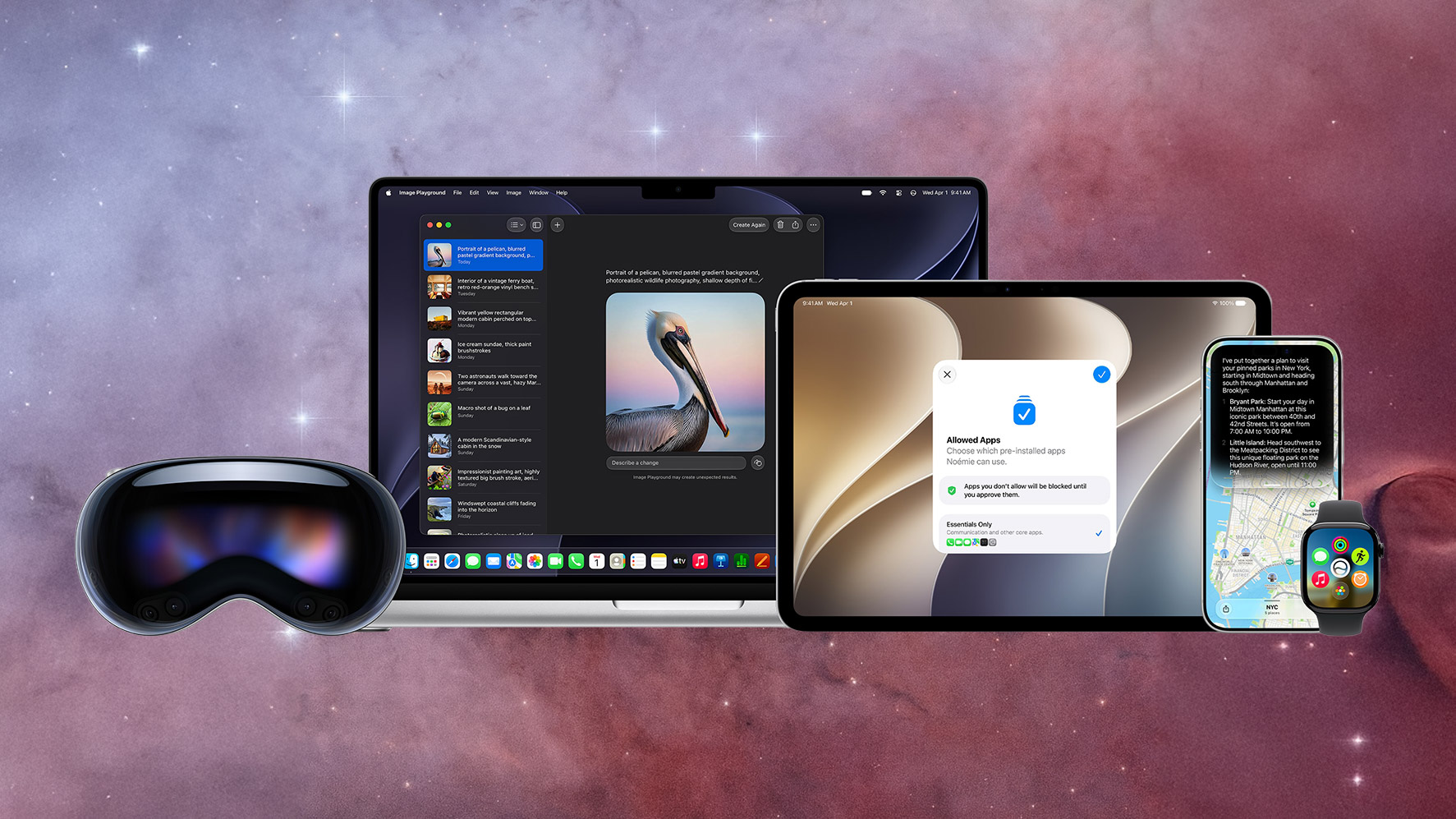
Apple spent two years promising a smarter Siri. We’ve been patiently waiting. At WWDC 2026 on Monday, the company finally showed the rebuild instead of a roadmap slide: Siri AI, an assistant that Apple says can hold a back-and-forth conversation, read what’s on your screen, and dig through your own messages, emails, and photos to answer a question. That headline arrived wrapped in a software preview that also reaches AirPods, Safari, your kids’ screen time, and, awkwardly, what European iPhone o
Apple spent two years promising a smarter Siri. We’ve been patiently waiting. At WWDC 2026 on Monday, the company finally showed the rebuild instead of a roadmap slide: Siri AI, an assistant that Apple says can hold a back-and-forth conversation, read what’s on your screen, and dig through your own messages, emails, and photos to answer a question. That headline arrived wrapped in a software preview that also reaches AirPods, Safari, your kids’ screen time, and, awkwardly, what European iPhone owners won’t get at all.
If you’ve followed Apple’s AI fits and starts, you know the company often announce features a year before they’re ready for wide distribution. Most of this lands this fall in iOS 27 and its sibling updates, though Siri AI itself slips to a beta “later this year.” We haven’t tested any of it yet, but I’m looking forward to trying the developer beta soon. Here are the 10 changes from the keynote most likely to matter once they actually ship.
1. Siri AI is a ground-up rebuild, not another patch
Siri can now answer questions by viewing the content on the screen. Apple
Siri AI is the biggest thing Apple announced today. Apple says it rebuilt the assistant from the ground up on a new architecture, rather than bolting more features onto the old one. It leans on what Apple calls personal context, so you can ask it to surface a hotel confirmation number buried in an old email or pull up the photos from a recent trip, and it remembers the thread of a conversation so you can keep asking follow-ups. This will be a real relief if it works.
It also reads your screen and takes action across apps. Get a text about a potluck and you can brainstorm what to bring with Siri, then drop a recipe into Notes without leaving the conversation. On iPhone you start it by saying “Hey Siri,” pressing the side button, or swiping down from the Dynamic Island, and there’s now a standalone Siri app that syncs your conversation history across devices through iCloud. That makes it look a lot more like ChatGPT or Gemini than the Siri you’ve been yelling directions at since 2011.
2. Apple’s new AI leans on Google’s Gemini
The next generation of Apple Intelligence runs on Apple Foundation Models that the company says were “custom-built in collaboration with Google and its Gemini models.” For a company that sells its in-house silicon and on-device processing as a core advantage, leaning on a rival’s models is a real philosophical shift. Bloomberg reported before WWDC that the arrangement was expected to cost Apple roughly $1 billion a year. Apple has not confirmed a figure.
The outside-models thread runs through the developer side too. In its developer-tools announcement, Apple said Xcode 27 brings coding agents from Anthropic, Google, and OpenAI into the workflow, and that developers can build on models like Claude and Gemini alongside Apple’s own. Even the hidden watermark Apple applies to AI images in iOS 27 is Google’s SynthID. Apple’s AI is now stitched together with outside models in a way the company would not have admitted to a few years ago.
3. Check whether your iPhone actually makes the cut
Apple Intelligence and Siri AI require an iPhone 16 model or later, or an iPhone 15 Pro or 15 Pro Max. That leaves out the standard iPhone 15 and 15 Plus, the entire iPhone 14 line, and anything older. iOS 27 itself installs on phones going back to the iPhone 11, so plenty of people will get the update this fall without the AI features that headlined the keynote.
The split goes deeper than that. Siri’s most-promoted extras, the expressive customizable voices and a big jump in dictation accuracy, require Apple’s most advanced on-device model, which Apple lists as iPhone Air, iPhone 17 Pro, and iPhone 17 Pro Max, plus iPads with an M4 chip or later and Macs with M3 or later that have at least 12GB of unified memory, and the M5 Apple Vision Pro. If you bought a midrange iPhone in the last couple of years, read the fine print before you get attached to the demos.
4. EU iPhone and iPad owners are locked out
Siri AI will not ship on iPhone or iPad in the European Union with the release of iOS 27 and iPadOS 27, and Apple says it does not currently have a timeline to change that. The company blames the Digital Markets Act directly, arguing that under the EU’s reading of the law it would have to give any third-party assistant the same deep access to your data and apps that Siri gets, which Apple says it can’t do without putting users at risk.
Apple proposed a workaround it calls Trusted System Agent, plus an 18-month phased rollout, and says the European Commission rejected all of it. EU users will still get Siri AI on Mac, Apple Watch, and Vision Pro, just not on the two devices most people use most. It was the most openly combative Apple got all day, and it’s worth tracking if you live in or travel through the EU’s 27 member states. Siri AI and the other new Apple Intelligence features also won’t launch in China while Apple works through regulatory requirements there.
5. AirPods finally get a real custom EQ
Finally, we can tweak beyond Apple’s automatic EQ. Appl
After about a decade of people asking, AirPods owners are getting a true custom equalizer in iOS 27, not the hands-off Adaptive EQ Apple has shipped for years. Apple’s release keeps the details thin, but keynote coverage described a graph-style interface with separate low, mid, and high bands and a live waveform that moves as you adjust it, so you can see and hear the change you’re dialing in.
Cheaper earbuds have offered this for years while AirPods made you live with Apple’s house tuning, so it’s overdue. If you’ve wanted more bass for the gym or a brighter top end for podcasts, you’ll finally be able to set it yourself. Separately, the AirPods Pro 3 can now sync your heart rate to iPhone through GymKit during a workout.
I typically like the EQ decisions Apple hardware makes natively, but I know some enthusiasts who can’t wait for this to materialize.
6. Image Playground goes photorealistic and tags everything it makes
Image Playground, Apple’s image generator, can now make photorealistic pictures instead of just cartoon-style art, using a new model that runs on Apple’s Private Cloud Compute servers. You can edit by describing a change in plain language, or by tapping, circling, or brushing an object to move or resize it.
The part that matters beyond the novelty: Apple says images generated in Image Playground and photos edited with Apple Intelligence both carry a hidden SynthID watermark, Google’s provenance tag, so a file can be identified as AI-touched down the line. As convincing fakes get easier to produce, baking provenance into the file at the moment of creation is a bigger deal than the picture quality.
7. The Passwords app can fix weak logins for you
Apple’s Passwords app already flags weak and breached passwords. In iOS 27 it can fix them, navigating to the site, signing in, and swapping in a strong password with a single tap. Apple is using Siri AI and Safari to carry out that action on your behalf, which is one of the clearest examples of the assistant doing a task for you rather than just answering a question.
If you have ever ignored a “this password appeared in a data breach” warning, then this is for you (and me). It only works on supported sites at launch, so it won’t sweep your entire login list in one pass, but it turns a recurring to-do into a button.
8. Safari learns to wrangle tabs and watch pages for you
Safari picks up three Apple Intelligence tricks in iOS 27 worth knowing about. The most useful is Notify Me: tell Safari to keep an eye on a page and it pings you when something changes, like a restock or a price drop, so you can stop manually refreshing a sold-out product page.
It also auto-groups your open tabs into topics, so a pile of weekend-trip research collapses into one cluster, and a feature called Describe an Extension lets you spin up a simple custom Safari extension by typing what you want it to do. None of these are flashy, but the tab organizer and the restock alerts are the kind of thing you’ll reach for most weeks. You might finally get that NeeDoh without paying inflated after market prices.
9. Old hardware gets a speed increase
Not all of this is AI. Apple says apps launch up to 30 percent faster, photos load up to 70 percent faster right after you take them, and AirDrop transfers move up to 80 percent faster in this year’s releases. On iPad, copying files to and from an external drive runs up to 5x faster, which Apple says finally matches Finder on a Mac.
Apple ran its app-launch test on an iPhone 11 Pro Max, a phone from 2019, which suggests the speed gains reach aging hardware and not only the newest models. These are Apple’s own numbers and the usual marketing caveats apply, but a free performance bump on an old phone is the rare WWDC item that everyone with a supported device gets, no Pro model required.
10. Parents get real new screen-time controls
Now you’ll know before your kids go to weird websites. Apple
Apple overhauled its parental controls in iOS 27, and the standout addition is Ask to Browse, which makes a kid request permission before opening a new website in Safari, the same way Ask to Buy already gates app downloads. There’s also a redesigned Screen Time dashboard and Time Allowances that cap usage by category, including Games, Entertainment, and Social Media.
Communication Safety, already on by default for users under 18, now blurs and blocks gore and violent content, not only nudity. And a new Declared Age Range API lets apps tailor themselves to a kid’s age bracket without the parent handing over an exact birthday. Apple says the time recommendations are based on expert research, and that it’s working with the American Academy of Pediatrics to adapt the group’s Family Media Plan into a guide for parents.
A summer heat wave and a stressed grid have a way of moving backup power up everyone’s shopping list. Jackery’s early Prime Day sale runs through June 22, with the full lineup live on its Amazon store and a few larger bundles exclusive to Jackery.com. Portable power stations start at $129 for the Explorer 240D, the standalone stations climb into whole-home territory, and the deepest cut in the sale takes a loaded Explorer 2000 Plus kit past 60% off. If you have been thinking about getting a sola
A summer heat wave and a stressed grid have a way of moving backup power up everyone’s shopping list. Jackery’s early Prime Day sale runs through June 22, with the full lineup live on its Amazon store and a few larger bundles exclusive to Jackery.com. Portable power stations start at $129 for the Explorer 240D, the standalone stations climb into whole-home territory, and the deepest cut in the sale takes a loaded Explorer 2000 Plus kit past 60% off. If you have been thinking about getting a solar generator, now is a great time to jump in.
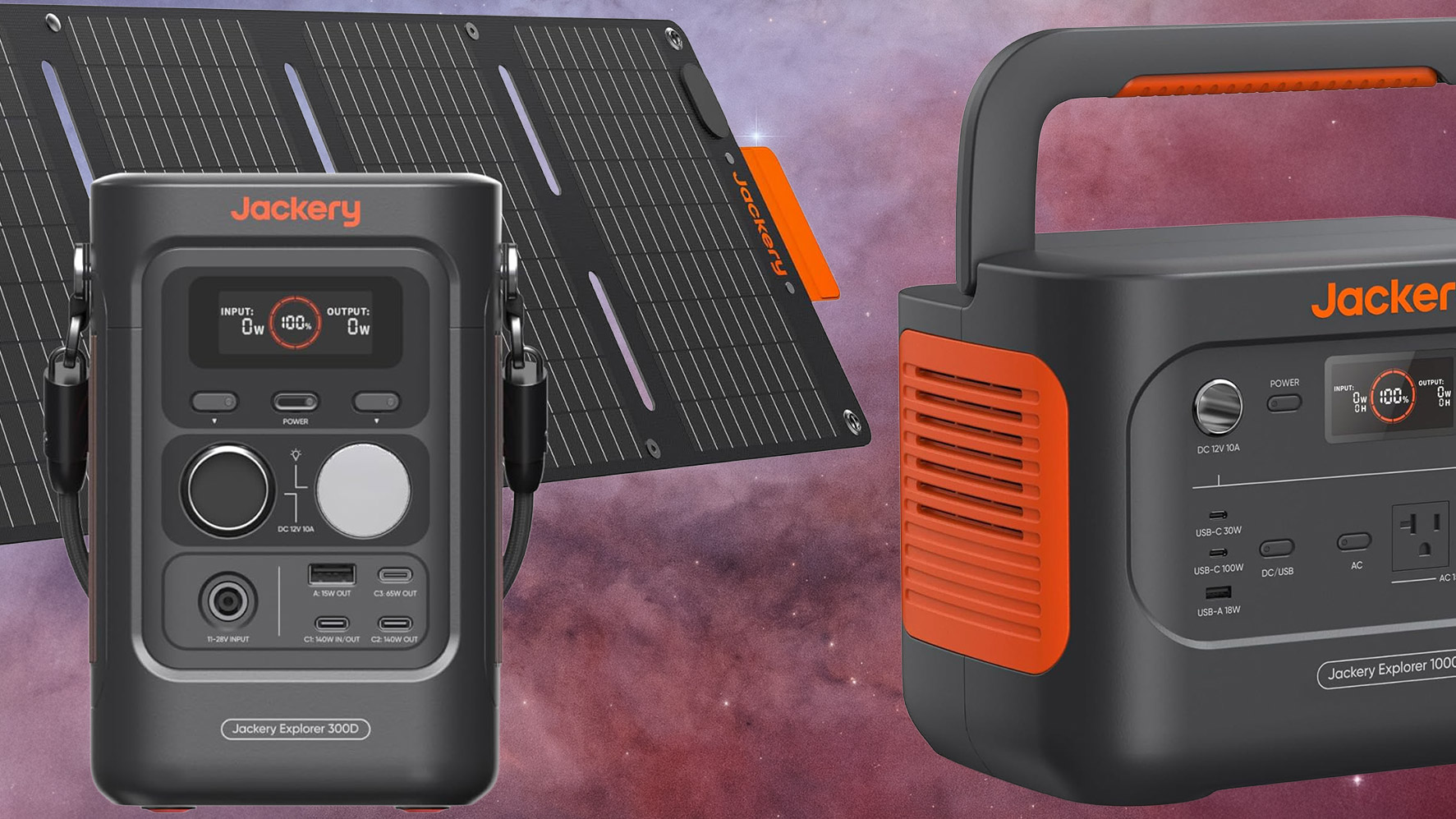
The Explorer 1000 v2 is the size most people should start with, and at $499 it’s down 38% from $799. You get 1,070Wh of capacity and a 1,500W output (3,000W surge) in a 23.8-pound box, enough to run a refrigerator for a few hours or keep phones, a router, and a couple of laptops going through an outage. Jackery rates it for a full wall recharge in about 1.7 hours, or roughly an hour in the app’s emergency mode. It’s the model we’d point most people to first, and it sits in the same class as the units in our guide to the best portable power stations.
Jackery Explorer 300D + 40W Air Solar Panel Bundle $199.00 (was $359.00)
Solar-ready backup for phones and laptops, under $200
The Explorer 300D bundle pairs a 288Wh LFP power station with a 40W solar panel for $199, the lowest price it’s hit in the past 30 days and 45% off the $359 list. This is a DC unit, with 300W spread across three USB-C ports and one USB-A and no wall outlet, so it’s built for phones, laptops, cameras, drones, and a Starlink Mini rather than a fridge. It weighs 5.5 pounds, its strap doubles as a 140W charging cable, and it refills from zero to 80% in about an hour. I have been using this for an upcoming review and I really like the form factor and performance so far.
The Explorer 2000 v2 is the one to get if you want real home backup, and 47% off brings it to $799 from $1,499. Its 2,042Wh capacity and 2,200W output can run a full-size refrigerator for most of a day, and the 20-millisecond UPS switching is quick enough to keep a desktop or router from dropping out when the power cuts. A folding handle means you can move it from the office to the kitchen when you need to, and Jackery quotes a 1.7-hour wall recharge, so you’re not waiting on it all afternoon.
More Jackery Deals at Amazon
The rest of the Amazon discounts cover the middle of the lineup. The Explorer 1000 v2 with a 200W solar panel is $699 (46% off) if you want panels in the box, and the HomePower 3600 Plus, a modular system that expands to 21kWh, drops to $1,799 from $2,799.
Jackery’s steepest discounts live on its own site, where the price covers a power station plus stacked battery packs and panels. The Explorer 2000 Plus 6kWh kit with two 200W panels is the standout at $2,599, down from $6,599, and the rest of these solar generator kits are worth a look if whole-home runtime is the goal. For how the big units stack up, see our guide to the best solar generators.
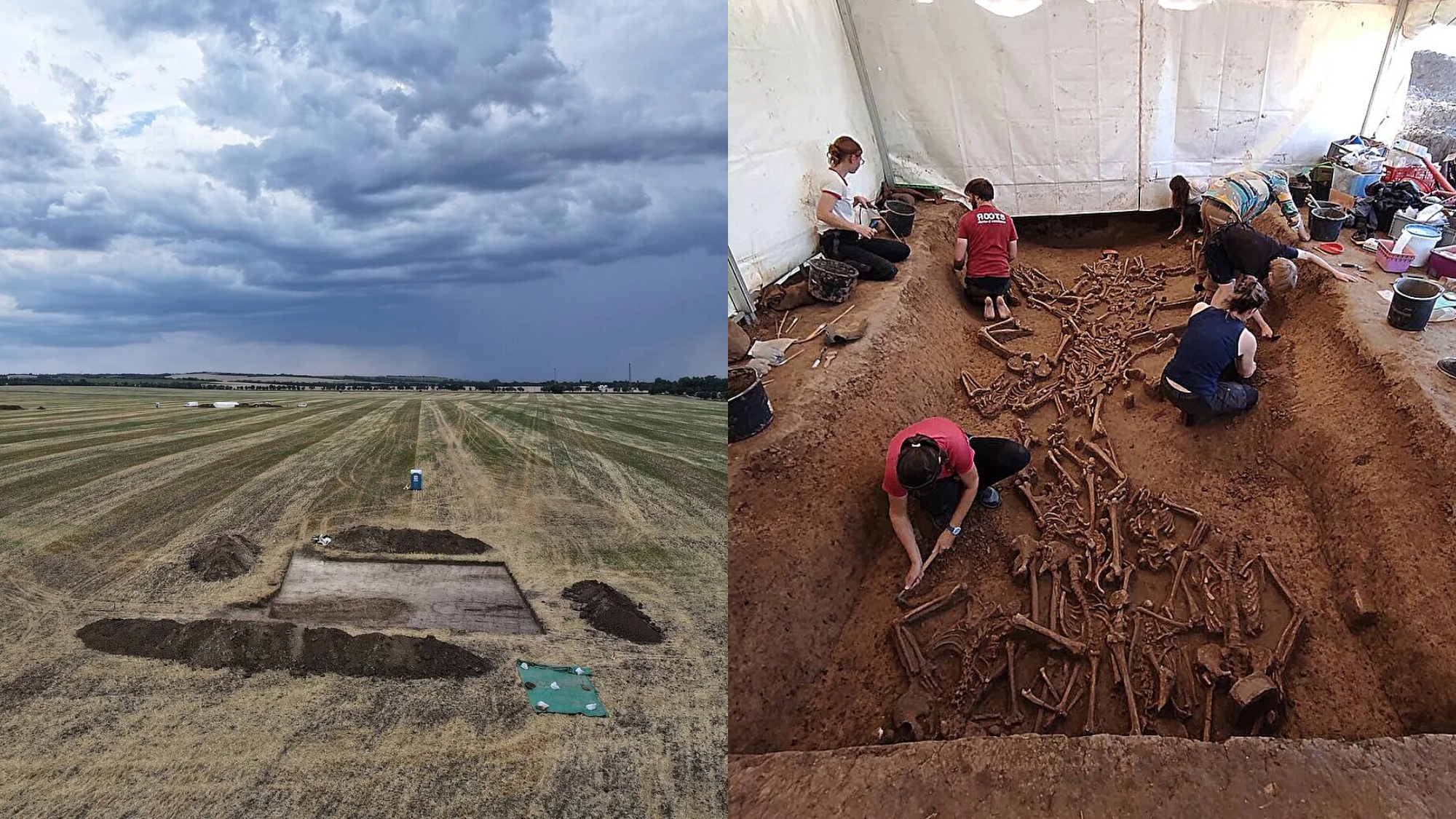
It sounds like a scene out of a horror movie. Dozens of headless human skeletons resting in a single grave. First discovered in 2022, this Neolithic burial site near the present-day town of Vráble, Slovakia, raises significantly more questions than it answers. Was this the site of a grisly massacre 7,000 years ago? Were the individuals sacrificed? Is it the result of some kind of plague?
A new study published in the journal Proceedings of the Prehistoric Society points to a more skillful remo
It sounds like a scene out of a horror movie. Dozens of headless human skeletons resting in a single grave. First discovered in 2022, this Neolithic burial site near the present-day town of Vráble, Slovakia, raises significantly more questions than it answers. Was this the site of a grisly massacre 7,000 years ago? Were the individuals sacrificed? Is it the result of some kind of plague?
A new study published in the journal Proceedings of the Prehistoric Society points to a more skillful removal of skulls as part of an unknown ritual, instead of a violent decapitation by an enemy.
The large Neolithic settlement at Vráble is one of the most important excavation sites of the Linear Pottery culture (LBK) in Central Europe. The LBK first arose around 5500 BCE and lasted until roughly 4500 BCE. Archaeologists consider the LBK one of Europe’s earliest farming cultures that moved along the transition from a hunter-gatherer lifestyle to more settled agricultural communities.
Researchers from Kiel University in Germany and the Slovakian Academy of Sciences in Nitra have been investigating the region since 2012. The site is made up of the outlines of over 300 former houses in three neighborhoods. The settlement existed for several centuries between roughly 5250 and 4950 BCE. One of the neighborhoods was surrounded by a ditch that archaeologists believe served as a border.
After finding sporadic human remains in early digs, the team found the remains of at least 78 individuals at the entrance to the settlement. The skeletons were not in any discernible order and 77 of them lacked a head. The team only found one skeleton of a child with a preserved skull. The initial evidence suggests that not a lot of time passed between death and interment.
The mass deposition at the ditch. Below: photos; above: a tracing of the skeletons in various colours. Most of the individuals are found to the far left, where the ditch ends and the entrance to the settlement was located. Image: Katharina Fuchs, Agnes Heitmann, Nils Müller-Scheeßel, Till Kühl.
“The features clearly exhibit an intentional manipulation of the bodies,” Dr. Katharina Fuchs, a study co-author and biological anthropologist at Kiel University, said in a statement. “First analyses suggest, above all, that violent ‘decapitations’ were not conducted here, but rather skilful removals of the skulls.”
The meaning behind this skull-removing practice is still up for debate. One thought is that the heads may have been stored separately. This burial practice has not been verified at Vráble, but did occur in other cultures. However, the details of the practices differ greatly between peoples.
The team believes that this arrangement of body parts may have been one part of a more complex and meaningful practice.
“We must assume that these practices were embedded in completely different contexts of meaning than those of modern societies,” added study co-author and archeologist Martin Furholt. “This is what makes an interpretation of them so challenging.”
Multiple researchers are currently sorting the recovered bones to determine the age at the time of death and biological sexes, and analyzing the cutting marks in more detail. Future studies on the possible impacts of violence and forensic investigations into the decomposition processes are also underway. Additional isotope and DNA analyses should also open a window into the origins, diet, and kinship ties of the Neolithic individuals buried at Vráble.
“But the first results already show that Vráble is an exceptional excavation site,” said Furholt. “It provides us with the keys for the discussion of fundamental questions, for example, how were death and the body understood in the Neolithic and what role did the associated practices play in the social fabric of early farming societies?”
Costco is famous for selling everyday products in large bulk quantities, be it a 40-pack of batteries or quarts of soy sauce. Then there are the not-so-common products like vending machines, coffins, and even entire barns. Knowing the retailer’s reputation, it’s understandable when people fall for hoax Costco purchases that occasionally go viral online.
Recently, a video showcasing a 200-foot-long, inflatable lazy river available from Costco has spread across social media. Posted by an Instag
Costco is famous for selling everyday products in large bulk quantities, be it a 40-pack of batteries or quarts of soy sauce. Then there are the not-so-common products like vending machines, coffins, and even entire barns. Knowing the retailer’s reputation, it’s understandable when people fall for hoax Costco purchases that occasionally go viral online.
Recently, a video showcasing a 200-foot-long, inflatable lazy river available from Costco has spread across social media. Posted by an Instagram page called The Inspiring Designs Net, the clip features a timelapse setup of the pool followed by a woman gleefully enjoying the circuit in her backyard. Despite the account swearing the lazy river is, “an absolute must for hot summer days,” the sad fact is that no such product exists. In reality, it’s yet another example of AI-generated clickbait that continues to flood the internet.
Many social media accounts now routinely churn out similar content solely to rack up page views, which are monetized through ad services. In this case, the faux-Costco lazy river has garnered well over 15 million views so far since it was uploaded on June 4. Many commenters were apparently fooled by the realistic scene, although others highlighted some telltale signs of AI slop. Most notably? The woman in the video looks incredibly dry despite lounging in her backyard lazy river.
Other examples to dupe unsuspecting viewers earlier this year included photos of North Carolina horses wrapped in fiberglass insulation to keep warm during a winter storm, as well as heated aboveground tunnels for dogs in Hungary. But while those are relatively absurd examples, a huge inflatable river admittedly sounds exactly like the type of thing Costco might sell. It may not exist now, but maybe it will inspire a call to action.

 Login
Login